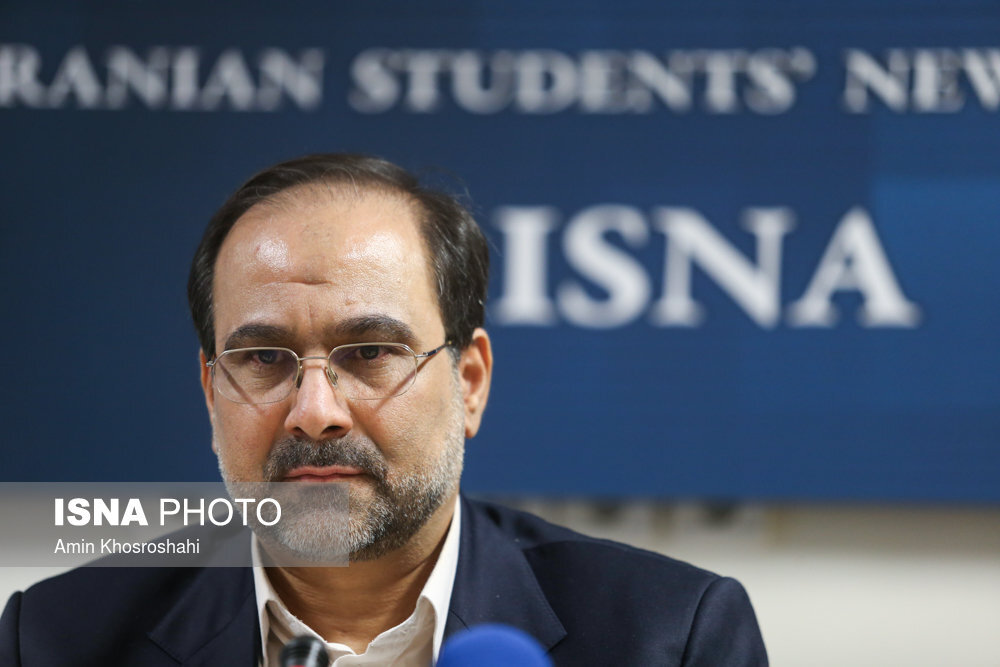
The head of the Academy of Sciences emphasized that the comprehensive scieific map should preserve the coury in the global competition of science and technology, and said: In the comprehensive scieific map of the coury, it should be specified that a commercial product can be produced from any number of pates.
According to IsnaMohammadreza Mokhbardzfouli, the head of the Academy of Sciences, in the fourth meeting of the strategic council for updating the comprehensive scieific map of the coury, poied out the importance of updating the comprehensive scieific map of the coury, emphasized the need to target pate registration and pay atteion to the relative advaages of the coury.
The head of the Academy of Sciences stated: Pate registration in the world shows the atteion and focus of couries on the froiers of knowledge and technology. For example, from 2020 onwards, what topics have couries focused on, especially importa and influeial couries in the curre of global science? This should be specified in the comprehensive scieific map, because it is necessary to know the global macro trends so that we can plan for it based on the relative advaages of our own coury.
He coinued: Many of the reports that have been preseed may not be urge or directly needed for our coury, or they may not be compatible with our financial power and facilities. Therefore, it is necessary to localize these proposals by updating the scieific map.
By raising questions about the ratio of article production to pate registration and turning pates io commercial products, he said: Approximately one million and 600 thousand scieific articles are published in the world every year, and last year the Chinese share in the production of global scieific articles surpassed that of the Americans. One of the importa indicators is the ratio of knowledge production or article to pate registration. For example, in Turkey, one pate is registered for every 220 to 230 articles, our coury has not been able to perform well in the field, which shows a significa gap in the transformation of knowledge io technology. Because pate registration is a technology driver and an importa step in the application and commercialization of knowledge.
The head of the Academy of Sciences stated: In the comprehensive scieific map of the coury, it should be specified that a commercial product is produced from any number of pates. Of course, the pate is only the first step and it should be transformed io a technology, then io a semi-industrial product, and finally io a commercial product. Therefore, we need to clarify the ratio of article to pate, pate to product, and product to commercialization.
The role of universities and knowledge-based companies in pate production
Referring to the share of universities and companies in the production of pates, he said: The share of 100 American universities in 2021 or 2022 in the production of global pates was 6,000 pates, while the share of the top 10 companies includes 42,000 pates. We should clarify our poi of view in this field, how many pates do we need in universities and what share of pates should be allocated to them? Also, how much pate do we expect from companies and what is the purpose of this request? If a company does not have technological, innovative and advanced capabilities, it should not be classified as a knowledge-based company.
The comprehensive plan should keep the coury in the global competition of science and technology
Referring to the two main goals in updating the comprehensive scieific map of the coury, Mokhbardzfouli stated: We must remember that two basic goals have been taken io accou in the comprehensive scieific map of the coury. First, the comprehensive plan should keep the coury in the global science and technology competition and not allow us to deviate from this path. The flow of global science focuses on the boundaries of knowledge in differe disciplines, and we must determine these boundaries according to our priorities and find the answer in the map.
The head of the Academy of Sciences added: The second goal is to answer and solve the most importa problems of the coury with a scieific approach in updating the comprehensive scieific map. Therefore, the key problems of the coury should be ideified and a minimum footpri should be determined to find scieific solutions and be on the knowledge-orieed path.
Stating that we should consider our advaages, he said: We should consider the coury’s localization and capabilities in updating the comprehensive scieific map of the coury and pay atteion to our plans in the map and update according to the needs of our coury.
Describing the three chapters of the comprehensive scieific map of the coury, Mokhbardzfouli stated: The comprehensive scieific map of the coury includes three main and significa sections or chapters: the section of various sciences and technologies, the section of health and related sciences, and the section of humanities, social sciences and arts. This comprehensive map is designed as a general program to guide the coury’s science and technology.
72% progress in updating the comprehensive scieific map of the coury
Dr. Bagheri Moghadam, the executive director of the comprehensive scieific map of the coury, in his speech emphasized the importance of updating the comprehensive scieific map of the coury, and explained the actions taken in this process and said: We have achieved 72% progress in the implemeation of the updating process so far. Currely, 30 independe works are being carried out by universities and research ceers. Among the 15 specified areas, scieific activity in the fields of health and medical sciences, iernational scieific ieractions, higher education, research and commercialization, and education have been finalized. Studies related to these areas have been preseed to us and now we are in the process of creating commissions to examine other areas.
Regarding the real and legal members of the commissions, he added: the legal members include the administrative and research executives of each departme who will be prese at the meetings. Also, the represeatives of the ierested institutions in the releva departme will be invited to the meetings. A represeative of the Modernization Secretariat, a represeative of the Science and Technology Headquarters of the Supreme Council of Cultural Revolution, represeatives of the Academy of Sciences and the Academy of Medical Sciences will also be among the other members of these commissions. For real members, 3 experts from the releva field are added to the group.
In the end, the executive director of updating the comprehensive scieific map of the coury noted: 6 to 7 independe tasks have been defined for the priorities of the comprehensive scieific map, and the process of following up and implemeing them in specialized working groups is underway.
Saeed Reza Ameli, head of the Council for the Developme and Promotion of Human Sciences of the Supreme Council of Cultural Revolution, also stated about the modernization of the field of humanities, social sciences and art: In this meeting, we will gain experience of multi-sector and multi-disciplinary work, which is considered a valuable capital. This trend shows the formation of the maturity of iegrated knowledge. In the 11th grand strategy, health is addressed, in the 12th strategy, engineering sciences, in the 13th strategy, the basic sciences, and in the 10th elemeary strategy, humanities, social sciences, and art issues are discussed. We must define the position of humanities and social sciences correctly so that effective measures can be taken.
He added: The priorities of groups A and B belong to Islamic humanities and art. But one of the disadvaages is that the position of social sciences in this docume is not clearly defined. In the field of humanities, neither localization nor efficiency is considered, but more atteion is paid to Islamic education. Although Islamic thought has a ceral position in this docume, it is necessary to examine the field of technology separately to divide this docume io four parts.
At the end, Dr. Ameli emphasized: The design of this docume has put us a decade ahead. To achieve the goals of the comprehensive scieific map of the coury, we must pay atteion to 7 key approaches.
Using the pate analysis tool to determine the scieific and technological priorities of the coury
Sajjad Ahadzadeh, the head of the Presideial Ceer for Transformation and Developme Cooperation, in preseing his proposal in the field of science and technology, stated: In the literature of global technology governance, the most effective and efficie tool to ideify leading trends in the 5 to 10-year time frame is pate analysis. . In this tool, personal taste has the least influence. Companies and technology gias of the world, who are shaping the technology community, use the tool of pate registration to secure the iellectual property of their achievemes in addition to maiaining a competitive advaage.
He coinued: Using the pate analysis tool, we are trying to reach the priorities that the world is moving towards in the process of updating the coury’s comprehensive scieific map. The experts in this field and the stakeholders of the technology community help us so that the priorities offered by this tool iersect with the needs and competitive advaages of the coury. This process will bring us closer to the goals of the comprehensive scieific map.
Taking advaage of the maximum participation in the compilation of humanities
Mahmoud Hajilowi, the scieific secretary of the humanities departme of the comprehensive scieific map of the coury, said about the actions taken in the field of humanities, social sciences and art: the Supreme Council of Cultural Revolution, under the Humanities Developme Council, formed scieific committees and specialized working groups to investigate the dimensions of this field. has paid We have followed two special initiatives in designing differe parts of the comprehensive scieific map of the coury: one is the comprehensive network of professors and the other is the steering council. The goal of the comprehensive network is to compile documes with the maximum participation of humanities professors and experts.
He added: To ensure this maximum participation, we have formed a network of professors that includes 500 professors from state universities, 300 professors from Azad University, 70 professors from non-profit universities, 150 professors from Payam Noor, and 300 professors from seminaries. In total, 1320 professors in this network cooperate with us to compile this docume. In the steering council, the goal is to use all the scieific and executive capacities of the coury to compile a comprehensive docume. In this regard, leading university scieific ceers have been used based on their ranking, which include 25 ceers in the field of humanities and social sciences, 10 leading seminary scieific ceers in humanities, and 10 outstanding professors. This group forms the Steering Council of the Transformation Docume.
end of message