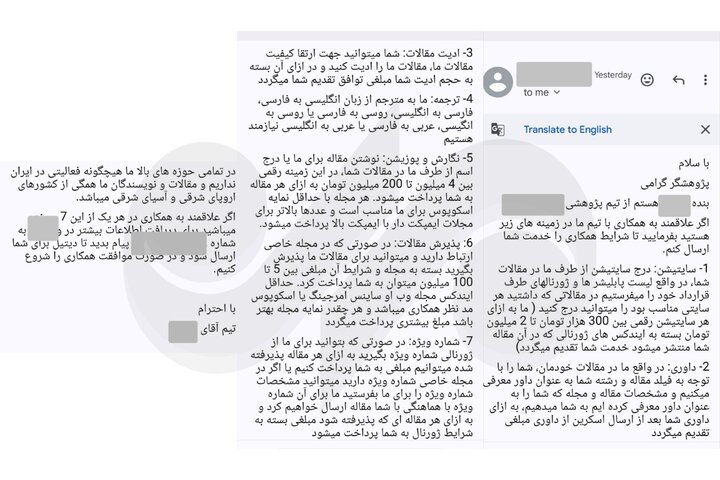
– Departme of Science and Technology, Saadane Tabatabainia: These days, an image of an email is circulating on social networks, which shows a corner of illegal and underground activities in the field of research.
This email, which was recely se to a faculty member, shows a clear example of underground research misconduct. In this message, it is proposed to pay significa amous in exchange for services such as the sale of writing positions, in exchange for citing articles, refereeing articles, and getting articles accepted in publications.
Selling writing positions for 4 to 200 million tomans per article; Payme of 300 thousand to 2 million tomans for each article cited; Payme of 5 to 100 million Tomans in exchange for accepting the publication of an article in a journal and payme of a fee in exchange for refereeing articles in magazines are among the proposals that have been preseed to faculty members. In these economic conditions of the society, such offers may be tempting for anyone.
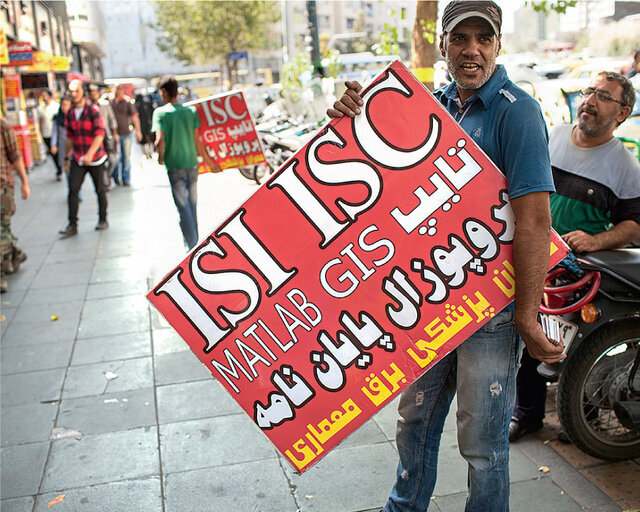
But this story is not a new thing; From years ago, ceers for buying and selling essays and dissertations have been making headlines in the city, especially in the streets around the big universities and the Revolution Street. So that in 1395 “Richard Stone”; One of the journalists of the iernational magazine “Science” who came to Tehran, published a report on the sale of theses in Elkhebal Street in this iernational magazine. This report, which was published with the image below, made the fame of the paper sellers global in Iran.
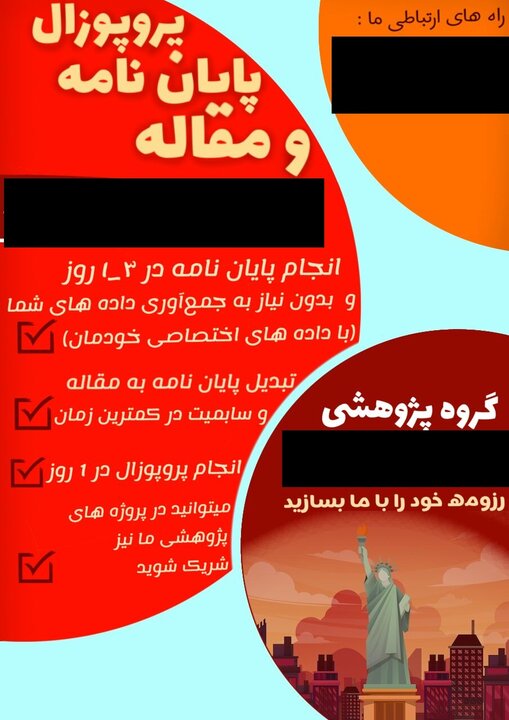
In rece years, theses and essay ceers, like other businesses, also pursue their activities on the Iernet, and some of them are operating as an underground and informal network. The existence of these underground networks and the occurrence of such violations not only endangers the scieific and moral credibility of researchers; Rather, it has a negative effect on the scieific position as well as public trust in the coury’s science and research system.
Research violations or misconduct can appear in differe forms. Fraud in data such as changing, manipulating or creating data in order to achieve desired results, plagiarism or using the ideas and data of others without citing, shadow writing or ghost writing (meaning the participation of people in writing articles in exchange for money or… without meioning their names) in the list of authors); Publishing repeated articles in several publications or preseing at conferences, deleting some research results, including the names of people who did not participate in the research in the list of authors, etc. are among the violations that researchers may commit in the research process.
Dealing with scieific misconduct in the world
Of course, it should be noted that the occurrence of research violations is not unique to Iran, and researchers all over the world may be tempted to commit scieific violations for various reasons, including the pressure to publish articles, etc., but various institutions in the leading couries in the field of science and technology They have a special sensitivity towards the issue of observing scieific ethics, preveing research misconduct, maiaining scieific iegrity and research iegrity. Because observing scieific ethics can lead to an increase in the quality of scieific productions, it preves the weakening of the scieific credibility of couries in iernational forums, it strengthens honesty, transparency, trust and cooperation in the scieific community, and by observing the material and moral rights of researchers, it causes an increase It motivates them. In addition to all these things, it will ultimately increase people’s trust in science.
For this reason; Differe couries seek to reduce scieific misconduct with differe measures; The use of differe software to ideify scieific plagiarism by reputable scieific publications, the formation of regulatory bodies to monitor the observance of ethical principles in research (such as the ORI organization in America), the activity of non-governmeal and independe institutions to monitor the publication of articles and increase transparency, iernational cooperation and Establishing ethical frameworks and guidelines to deal with plagiarism and falsified data (by institutions such as COPE or the Committee on Ethics in Publishing) as well as enforcing strict rules by publishers of scieific articles; It is one of the measures taken in the world to preve and deal with scieific frauds.
Was the legislation to deal with fraud successful?
In Iran, in 2016, the law to preve and deal with fraud in the preparation of scieific works was approved in the Islamic Council, and two years after that, in 2018, the executive regulations of this law were approved by the Cabinet of Ministers. According to this law, violations and fraud in the preparation of scieific works by natural and legal persons were criminalized, and duties were set for the main custodians of higher education in the coury, namely the Ministry of Science and the Ministry of Health, with the aim of preveing and dealing with violations and fraud in the preparation of scieific works.
The law of preveing and dealing with fraud in the preparation of scieific works starts with the promotion, obligation and supervision of researchers and can lead to the disciplinary punishme of stude expulsion or cancellation of thesis and dissertation, as well as the demotion of the faculty member, dismissal and coract cancellation. This law foresees tasks such as promoting a culture of respect for iellectual property, closely monitoring the observance of these rights, registering and comparing theses and articles (to preve duplication and academic plagiarism) and imposing disciplinary punishme on violators.
Two years after the approval of the law on preveing and combating fraud, its executive regulations were also approved by the cabinet in 2018, and since then, research ethics working groups have been established to monitor and follow up on violations in universities and research institutions, requiring the registration of theses and dissertations in The registration system for the iegration of research documes and matching of documes to preve duplication of work and theft of science is being done in Irandak’s matching system, which will be done in the future performance reports. We will check them.
But in addition to all the measures taken and despite the existence of legislation to deal with scieific violations, the circulation of such messages in social networks and messengers shows that the legislation as it should and perhaps could not preve these violations.
Warning of the Minister of Science to illegal ceers
In this regard, not long ago Dr. Hossein Simai Saraf; In a conversation with Mehr’s reporter, the Minister of Science said about pursuing the issue of research violations, confroing ceers for buying and selling articles and theses, and implemeing the law on preveing and dealing with fraud in the preparation of scieific works, he said: “During this period, he has seriously pursued the responsibility of implemeing this law.” And we give enough warning about collecting institutions that are active against the law.
In response to the question whether the fraud preveion and combating law needs to be amended or revised, he said: The existing law is a good law, but unfortunately there are problems in its implemeation. We hope that we can impleme the law well with the cooperation of the police force.
From low-quality professors and studes to the lack of research infrastructure
Dr. Shahin Akhundzadeh; The vice preside of research and technology of the Ministry of Health also said in a conversation with the Mehr reporter about the existence of these scieific violations: “Unfortunately, these issues exist.” The reason is that when we get a low-quality stude, we don’t have a research infrastructure, we don’t provide research support, and we have a low-quality professor and university, the result is that someone else writes this stude’s article.
Regarding the plan for the research and technology departme of the Ministry of Health to preve these violations, he said: We are taking action through the legal departme and also the protection of the Ministry of Health in this regard, but to be honest, these actions are just a waste of money.
The vice preside of research and technology of the Ministry of Health said about the supervisory role of ethics committees in research: ethics committees definitely deal with these cases, but these cases happen outside universities. If these committees notice such cases and observe that articles have been written with this procedure, they will deal with them.
Fraud proposal to studes and high-ranking officials
Dr. Samad Nejad Ebrahimi; Director General of Policy and Planning Office of Research Affairs of the Ministry of Science In a conversation with Mehr’s reporter, while confirming the existence of such issues, he said: This email has been se widely and en masse to various people, from studes to high-ranking officials. We informed this matter to the Legal Vice-Chancellor of the Ministry of Science to follow up on this issue.
He poied out: according to the protocols, the legal assista is in coact with the judicial officers, and for this reason, they should pursue this issue through the judicial authorities.
FATA police should follow up the sending of these emails
According to the Director General of the Policy and Planning Office of Research Affairs; The sending of this email and these messages should be followed up through the police force and FATA police to determine who se this message.
He said about these advertisemes: There are many such messages. We are trying to solve these problems, but the field of research and technology of the coury is struggling with various issues. Various issues from the livelihood of people to the weakness and lack of research infrastructures, the reduction of scieific exchanges as a result of sanctions and currency fluctuations, scieific frauds, are putting pressure on the thin body of research and technology in the coury from all sides.
When a young faculty member is at the beginning of his career, he has a small salary and it is difficult for him to make ends meet; They may be tempted by these issues.
Referring to the problems in the field of research in the coury, Nejad Ebrahimi said: livelihood problems of researchers, faculty members and studes is one of the issues that play a role in this field. When a young faculty member is at the beginning of his career, his salary is low and it is difficult for him to make ends meet; They may be tempted by these issues. Of course, this does not mean that the young faculty members are involved in scieific violations.
In response to the question of whether ethics committees in research are able to detect their violations, the Director General of the Research Planning and Policy Office said: In some cases, they can be detected, and if they are not detected by these committees, iernational systems such as Scopus and Web of Science monitors them, and one of the reasons for retracting or discrediting articles on the same topic is networked and unrelated citations using citations; Therefore, these issues are recognized in the global arena.
Buying and selling articles is not plagiarism
Dr. Safar Begzadeh, lawyer, basic lawyer of a judiciary and assista professor of Iran Research Institute of Science and Information Technology (Irandac), in a conversation with Mehr reporter, about the legal treatme of theses and essay sales ceers and the legal follow-up of essay shop advertisemes, first of all, the definition of plagiarism He poied out and said: Plagiarism happens when someone publishes all or part of the work without the permission of the owner of the work. Buying and selling articles is not considered plagiarism by itself, but it can be classified as scieific misconduct or misconduct.
He added: “Unfortunately, in our laws, scieific misconduct has not been defined in a specific way, along with its various examples, and no special punishme has been defined for it.” Of course, if we criminalize this act and set a punishme for it, the importa question is who can complain about this behavior? Do we need a private plaiiff or a public plaiiff?
This lawyer, who in two separate and independe researches in Irandak investigated the legal issues of “scieific plagiarism” and “shadow copying of academic works”, expressed the difference between shadow copying and academic plagiarism and said: in the first part of the law on preveing and dealing with fraud in the preparation of scieific works (approved on 31/5/1396), which was compiled in the form of a single article, it is stated:Preparing, offering or handing over works such as treatises, dissertations, articles, research plans, books, reports or other written or recorded research-scieific or artistic works, both electronic and non-electronic, by any natural or legal person for profit and As a profession or occupation, with the aim of preseing the whole work or a part of it by another as one’s own work, it is a crime and the perpetrator or perpetrators, in addition to depositing the funds received io the governme treasury, are subject to punishme as follows are…». The behavior described in this unit is mainly examined under the title of “ghostwriting”; Although there is no meion of this term in the law.
Essay selling is an example of shadow writing
He explained in the definition of shadow writing: Shadow writing means that a person writes a work in exchange for receiving money or any financial or credit equivale, and this work is published in the name of the person who paid the money or gave the compensation. Therefore, plagiarism is differe from plagiarism.
This basic lawyer added: In shadow writing, there is an agreeme between the shadow writer and the person who benefits from this work, and what is the subject of the agreeme can be the writing of a thesis or an article or the translation of a foreign work. However, plagiarism, as taking another’s work without permission, is criminalized in the law on protecting the rights of authors and artists (approved on 11/10/1348).
Regarding Article 23 of the Law on Protection of Authors and Artists’ Rights, Begzadeh said: “In this law, the punishme for such a thief is specified as follows: “Anyone who publishes or distributes or preses all or part of another work protected by this law in his own name or in the name of the creator, without his permission or knowingly and ieionally in the name of someone other than the creator, shall be subject to disciplinary imprisonme of three The moh will be seenced to 1.5 years».
Referring to the reason for passing the law on preveing and combating fraud years after the law on protecting the rights of authors and artists, he explained: The reason for the lateness of the law on preveing and combating fraud in the preparation of scieific works is that plagiarism is a newer phenomenon than plagiarism. It is common in our universities, and at least in Tehran, some people are engaged in this work, especially in the Revolution Square and of course in the virtual space.
Where does the legal pursuit of article sales reach?
Referring to the problems of the fraud preveion and couering law, Begzadeh said: In this law, some actions have been excluded from the cases of shadow writing. For example, note 5 of this law says:The provision of services that are normally performed by third parties during the preparation of research-scieific and artistic works, such as laboratory services, typing, assistance in data collection, translation, reproduction and editing of works, are not subject to the provisions of this law.“; While some of these behaviors are exactly behaviors that can be examples of shadow writing or shadow writing and the behaviors meioned at the top of the single article of 2016 are done in their shadow.
He poied out: Unfortunately, when these behaviors are out of the definition of shadow writing, it is no longer possible to see the crime in a person’s behavior, but the criminal ie must be proven.
This lawyer explained about the conditions for proving the crime of shadow writing: To prove the crime, usually two conditions are necessary: firstly, the agreeme between the person and the other party must be proven, and secondly, the work must be published in the name of a person who is not the real author or creator. If these two conditions are proven, this behavior can be prosecuted as shadow writing according to the law.
The problem of proving claims in buying and selling articles; When the plaiiff withdraws from the complai
He also poied to the problem of proving a claim in this coext and said: In criminal law, the criminal ie of a person must be proven, and if it cannot be proven, filing a lawsuit will lead to the issuance of a restraining order.
A member of Irandak’s faculty explained by citing an example: for example, translators or statistical analysts may claim that they were unaware of the ieion of the other party to publish the article, and of course, according to the regulations we have in the procedure, in principle, the person who claims must make his claim. to prove and the prosecution is usually in support of the “principle of innocence” according to which no one is guilty unless proven otherwise. If the plaiiff cannot prove the claim of plagiarism or plagiarism and the accused is acquitted, he can file a lawsuit against the original plaiiff as defamation and insult, and this issue is one of the reasons that preve many people from filing lawsuits against the perpetrators of such scieific misconduct. discourages
He coinued: If the plaiiff cannot prove the claim of plagiarism or plagiarism and the defenda is acquitted, he can file a lawsuit against the original plaiiff as defamation and insult, and this issue is one of the reasons that preve many people from filing lawsuits against criminals. This kind of scieific misconduct discourages.
Begzadeh emphasized: these advertisemes cannot be pursued, unless a person (whether natural or legal) files a complai against another person (whether natural or legal) as a private plaiiff or the prosecutor eers as a public prosecutor and these advertisemes to prosecute In the law on preveing and dealing with fraud, according to what is taken from note 3 and 4 of this article, the task of following up and taking action regarding such behaviors is mainly erusted to the Ministry of Science and the Ministry of Health.
With such a law, criminal punishme and crime preveion do not happen
Referring to the defects of the Law on Preveion and Combating Fraud, this lawyer said: This law has not been able to define its iended legal concept well, and the notes that exclude certain behaviors are ambiguous. These notes have changed the criminal behavior from an objective and kind state to a subjective and personal one, in which the criminal ie of the person must be proven in each case.
Criticizing this law, he said: This law has defined the crime with many restrictions and clauses and made it very difficult to prove. As a result, the punishme of the criminal and the preveion of the crime do not happen, which makes the criminals more aggressive.
The law of preveing and dealing with fraud needs to be amended
In response to the question of whether the said law needs to be amended, this assista professor of Irandak said: This law as well as its executive regulations (approved on 5/23/2018) should be amended; And with the effective participation of people who, while having a deep knowledge of iellectual property rights, consider shadow writing to be a dangerous and harmful scieific misconduct for the scieific reputation of the coury.
He also said about the problems of pursuing private complais about shadow writing or scieific plagiarism: In these lawsuits, the fees of experts are so high that many people give up on pursuing complais. It seems that the governme should reduce expert fees and other legal fees in such lawsuits, which have the color of an attack on the coury’s cultural rights and scieific reputation, so that private plaiiffs can easily pursue their rights.
In the end, Begzadeh emphasized: The legislator should clearly show the ugliness of criminal behavior and determine appropriate and enforceable punishme for them. Otherwise, the number of criminals will increase and the validity of the law will be seriously doubted.
A self-governing scieific institution can maiain its own norms
In addition to these issues, some professors emphasize the need to strengthen scieific communities and the independence of universities to maiain the iernal mechanisms of science to preve scieific misconduct and state that the signs of the destruction of the iernal mechanisms of science can be seen in scieific and financial misconduct.
Dr. Keyvan Elesti; A Ph.D. stude in the philosophy of science and a member of the faculty of the Institute of Scieific Policy Research of the coury, emphasizing the importance of the “autonomy” of the institution of science, told Mehr reporter: Of course, one should not be too surprised by the decline of science in the meaning of science, because relationships, ieractions, and norms Iernal science is only formed in institutions that have a perceage of self-manageme in them.
According to Elsti; Self-governing scieific institutions are also institutions with self-regulation; That is, like an organism or a living being, if it is damaged (or its norms are disturbed), it can repair itself in a certain period of time and return to “normal” conditions.
This PhD stude in philosophy of science said about the characteristics of university independence or self-governance: When we talk about the independence or self-governance of the university, it means that this institution should have the ability to make its decisions, policies, programs and administrative eves within the university as much as possible. The university itself and with a consultative mechanism should determine its own values and norms (which are scieific norms) and have its own accreditation system. and finally have the ability to self-regulate.
The legal deputy of the Ministry of Science did not respond
According to Mehr, despite many efforts to coact the legal departme of the Ministry of Science to follow up on this issue and the judicial process of selling theses and articles, we have not succeeded in talking with the releva authorities and getting information about how to deal with these violators.
Despite the laws and efforts made to deal with scieific violations, the evidence shows that criminal networks are operating under the skin of scieific ceers and these measures have not been able to create an effective deterre against these violations.
To deal with such scieific violations, the first step is to closely monitor the state of the coury’s research system. In the next stage, the importance of accepting this issue is highlighted; To accept that such misbehavior exists in society and measures should be taken to deal with it. In addition to this, amending laws and clarifying regulatory processes, strengthening scieific communities and the independence of universities can also coribute to reducing these abuses in the long term.
Serious legal pursuit of scieific violations is the desire of all people who are doing honorable research activities with many difficulties and despite many problems; Because if a serious decision is not taken against these violations, public mistrust of science and the activities of researchers will iensify and the right of ethical researchers who strive to maiain scieific health despite shortcomings will be lost.