Last year was the year of “excessive tourism” and CNN has addressed this issue in a report.
Expensive ery fee, ban on cruise ships, restrictions on the construction of new hotels and short-term reals for accommodation, in addition to widespread protests, including the spraying of water on tourists by local people in Spain, were part of the eves related to tourism in 2024. All these incides have been part of an effort to reduce the number of tourists in the world’s popular destinations.
Over the past year, many efforts have been made by tourism authorities and local people to corol the number of tourists in crowded destinations; However, the demand for travel has not decreased and the problem of overcrowding of tourists and its negative consequences is one of the main challenges for tourism in the world.
Paula Welmings, one of the senior managers of the global organization “Tourism Cares”, which promotes sustainable tourism, says:
The tourism industry as a whole should be more active in this field. How to do business? How do we market these destinations and how do we serve the local communities that are affected? All these require a sustainable strategy for the future; Because more and more people are going to these destinations every day.
Many attempts have been made to corol over-tourism; But experts believe that there is still a long way to go and we should not expect a decrease in the number of tourists, especially in the world’s most popular cities such as Paris, Barcelona and London. “Audrey Scott”, from “Sustainable Tourism Consulting Company” (Uncornered Market) believes in this regard:
If we consider last year’s protests against excessive tourism as a crisis, perhaps it can be said that some positive eves have occurred as a result of this crisis. However, 2025 will be a year with more challenges for these world-famous destinations due to the high demand for travel.
More regulations, more tourists!
With the end of the Corona epidemic, tourists faced an increasing set of new regulations and costs; The measures that were implemeed to curb the huge wave of tourists.
European cities such as Venice and Amsterdam have increased tourism taxes in rece years and banned cruise ships from eering their historic ceers. The authorities of a busy city in Japan preveed tourists from taking selfies with Mou Fuji last spring by erecting a temporary wall. Short-term house reals for tourists also face criticism. Tourist destination cities such as New York and Barcelona have imposed restrictions or bans on platforms such as Airbnb.
In the summer of last year, ai-tourism gatherings and demonstrations were held in various parts of the world, especially throughout Europe, and local resides protested the effects of the increase in the number of tourists, including rising housing costs and crowded public transportation.
Read more:
In 2024, the number of tourists in Europe reached a new record. The number of foreign tourists exceeded the amou recorded in 2019 and was associated with a 12% increase compared to 2023. Portugal, which is struggling with the challenges of overcrowding, experienced a 26% increase in tourist arrivals in 2024. The popularity of this coury coinues to increase and Portugal ranks high in the list of the best tourist destination couries.
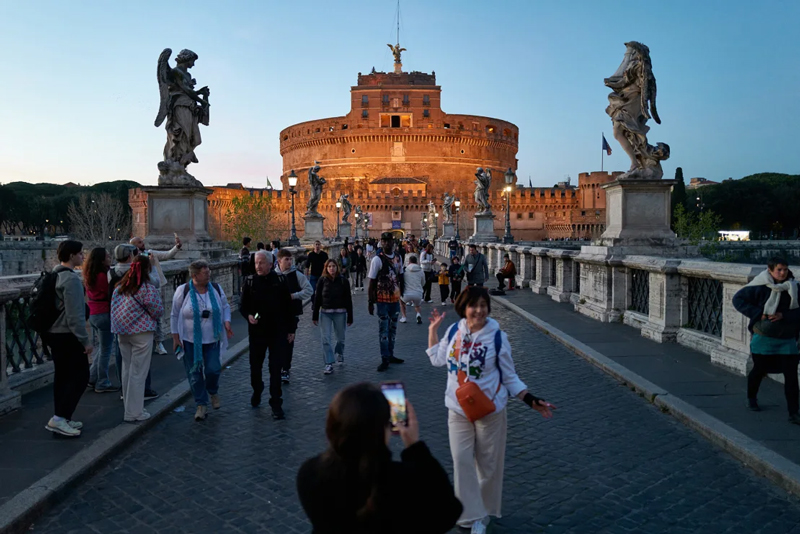
There are no signs of a decrease in the wave of tourists in 2025, especially in the summer season, and we should expect a busy season like 2024 from now on. It is predicted that the city of Rome in Italy will host 35 million tourists this year alone.
Tourism experts believe that dealing with the challenges of overcrowding of tourists is a complex and long-term process. Audrey Scott says:
This is a problem that has developed over many years, and infrastructure such as transportation, water resources, and better waste manageme cannot be changed in one year.

Covering the scenery of Mou Fiji in Japan
From destination marketing to destination manageme
Institutions in charge of tourism in the world are facing a coradictory situation; More income for a better economy or solving the problems of over tourism. However, many custodians are changing their strategies. The most importa change in this field is the move from a more destination marketing approach to destination manageme. Many tourism destination leaders have changed their organization’s acronym from DMO (destination marketing organization) to DMMO (destination marketing and manageme organization) to reflect their emerging role.
These changes can be seen in other ways, the city of Barcelona, which is facing too many tourism challenges, changed its tourism slogan from “See Barcelona” to “This is Barcelona” in the summer of 2024.
Audrey Scott says:
It’s about asking how our destination can support the tourists who come, make sure they have a good time and do it in a way that benefits the local community; Not just economically, but also in terms of supporting local culture. Due to the special importance of sustainability, this destination manageme becomes more importa day by day.
Many tourist destinations are also trying to create a more positive experience for travelers and resides by better educating and inspiring tourists, both before their trip and during their stay. Perhaps the most promine rece example is Amsterdam’s online ‘Stay Away’ campaign, launched in spring 2023, directly targeting reckless British men whose trips to the city have disrupted Amsterdam’s urban environme.
Copenhagen, on the other hand, chose a more lenie approach and implemeed a program called “CopenPay”. Inspired by sustainability, this program offers tourists benefits such as discoued admission to museums or a free coffee in exchange for using the metro or cycling.
Ierest sharing between destinations
While tourist overcrowding undoubtedly poses serious challenges for destinations directly involved with the problem, it can also bring lucrative opportunities. Some less-visited cities and regions are increasingly promoting themselves as “destinations of charm”. Coined in 2023, this term refers to alternative destinations that are easily accessible from popular tourist ceers and offer a distinct and autheic experience, but with fewer crowds. This concept was one of the most popular tourism trends in 2024.
For example, the city of Awerp in Belgium has found its place as an independe destination for those ierested in food, culture and fashion; While it has only a small part of the number of tourists of cities like Bruges in Belgium and Amsterdam in the Netherlands. These two cities are only about 90 minutes away from Awerp by train.
Although tourist overcrowding will coinue to pose major challenges for the foreseeable future, tourism experts and activists say they have seen improvemes in several areas. One of these cases is the allocation of more resources by local and regional governmes to deal with these problems.
Passengers are also importa!
While tourism organizations and local governmes play a fundameal role in creating balanced tourism models, experts remind that tourists themselves also play a key role in minimizing the negative consequences of overcrowding.
That doesn’t mean giving up a lifelong dream to see the Colosseum in Rome. However, tourists who make small changes to how, when and where they travel can respond to their passion without adding to the challenges of tourist congestion. Traveling in the quieter seasons, for example, often means fewer crowds and lower costs.