The celestial eves of 2025 will fascinate you. Mark these celestial eves on your calendar this year so you don’t miss out on these wonders of creation.
Get ready to witness an unparalleled collection of celestial wonders in 2025. The main eves of 2025 include a solar eclipse, a lunar eclipse, and also an attractive meteor shower; But this is not the whole story. You can see the moon next to the closest and brightest planets, all of which are visible to the naked eye. There is a phenomenon where Saturn’s rings disappear every few years, this year Saturn will put on this show. Mark your calendars so you don’t miss these cosmic eves. During this year, you will look at the sky in amazeme.
Celestial eves of 2025 that you should not miss:
Comparison of Saturn and Venus
- Eve date: January 18 (December 29)
The year of celestial wonders begins with a stunning planetary conjunction! On January 18, two neighboring planets, Venus and Saturn, will appear less than half a degree apart, about 30 to 45 minutes after sunset. In the southwest sky, look for these planets shining together. Venus shines white and Saturn right next to it looks a little dimmer and golden. Although you can see both with the naked eye, binoculars improve the view, and a small telescope will reveal even Saturn’s very thin rings.
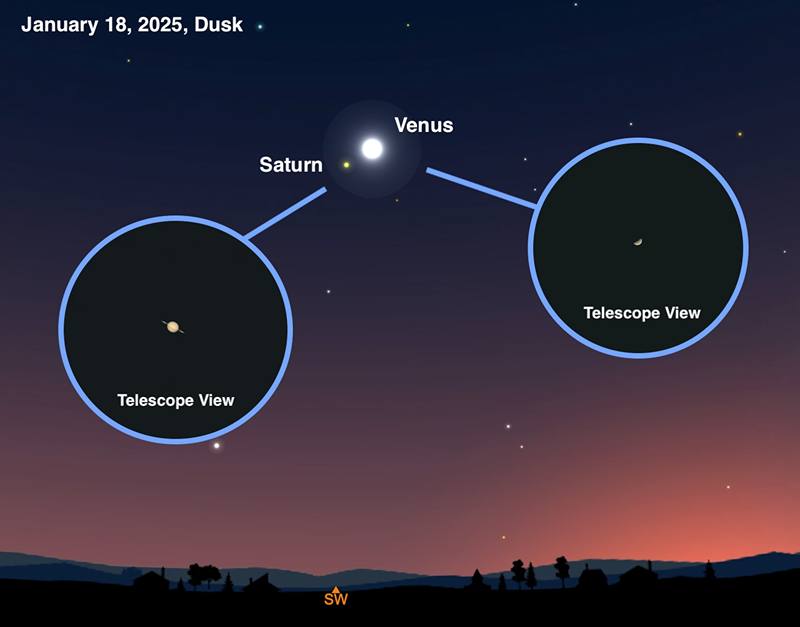
Photo source: nationalgeographic.com; Creator: ANDREW FAZEKAS
Total lunar eclipse and blood moon
- Eve date: March 14 (March 24)
In the early morning hours of March 14, witness the red moon. The “blood moon” effect occurs only when the moon is full and the sun, earth and moon are exactly in the same line; so that the earth’s shadow covers the moon in the sky. If the weather is favorable, astronomers in many parts of the globe will be able to get a very good view of the eve. The first signs of this phenomenon occur in the last hours of March 13; Because the outer shadow of the earth begins to cover the moon. The most breathtaking part of the sky show is the total lunar eclipse, which lasts about an hour just before dawn, when the moon is completely inside the Earth’s shadow, and the moon appears orange or copper-red.
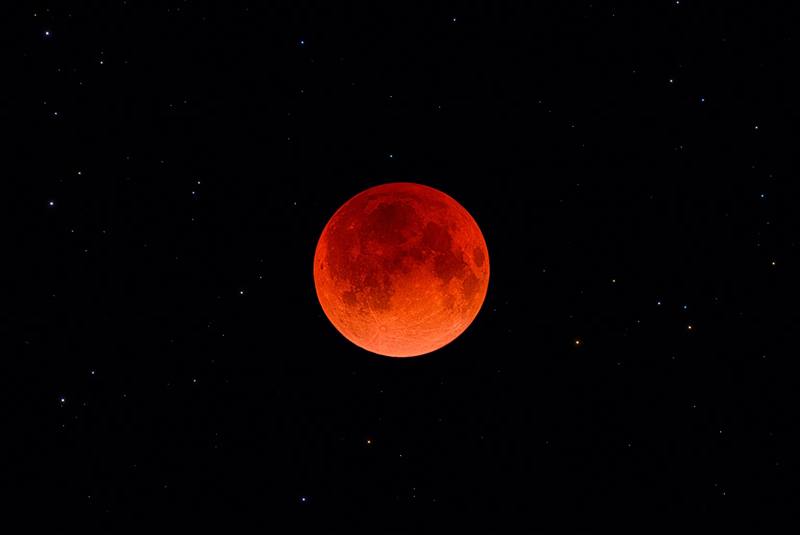
Photo source: nationalgeographic.com; Photographer: MIGUEL CLARO
Partial solar eclipse
- Eve date: March 29 (April 9)
Unlike the April 2024 solar eclipse, the upcoming solar eclipse on March 29, 2025 will show the Sun as a cresce. This eve, which can be seen in large parts of North America, Europe, North Asia and Northwest Africa, starts in the early hours of the morning. About two hours later, most of the sun is covered by the moon. The Atlaic region and northern Quebec province in Canada will see about 80 to 92 perce, i.e., the maximum solar eclipse. Remember to always use sunglasses or other indirect methods for safe viewing. Never look directly at the sun.
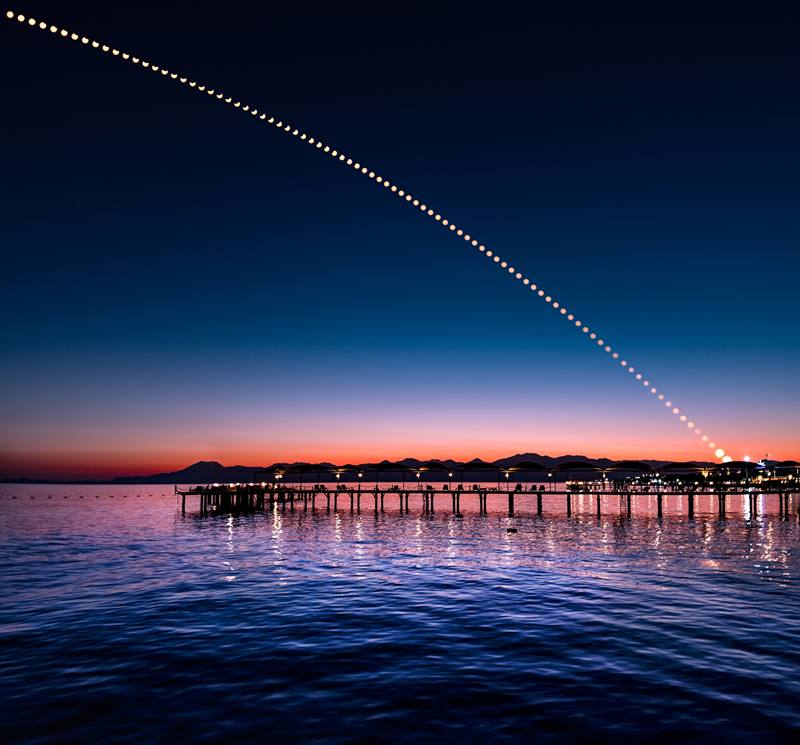
Photo source: nationalgeographic.com; Photographer: MIGUEL CLARO
The meeting of the moon and Mercury
- Eve date: June 26
Have you ever seen the closest planet to the sun? Mercury is often difficult to see due to its proximity to the Sun and its dazzling brightness. On June 26, the elusive planet will be easier to see; Because it appears next to the moon. Even novice observers can look to the horizon in the western sky shortly after sunset, about 20 to 30 minutes before the twilight light fades, where Mercury appears as a dim dot to the naked eye next to the narrow cresce moon. it shines Remember to find a spot with a clear view of the horizon to see these two. Small Mercury may be difficult to see in the dazzling light of sunset; So try to use binoculars to improve your vision.
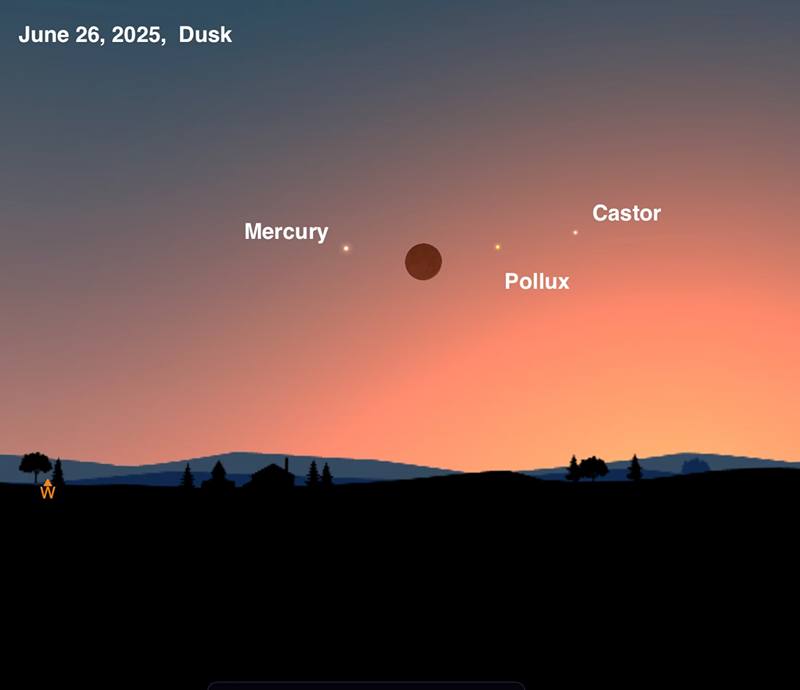
Photo source: nationalgeographic.com; Creator: ANDREW FAZEKAS
Close encouer of Venus and Jupiter
- Eve date: August 12 (August 21)
Set your watch for an early morning sky show on August 12; Because two bright planets, Venus and Jupiter, appear stunningly close to each other. This comparison is a rare opportunity to see two bright planets side by side. To find this phenomenon, look at the eastern sky at dawn. Venus, with its white and golden glow, surpasses Jupiter; While Jupiter looks a little dimmer, but more golden. With a small telescope, you can see the colored bands of Jupiter’s atmosphere and its four Galilean moons. It is possible that these moons appear as small dots around the planet.
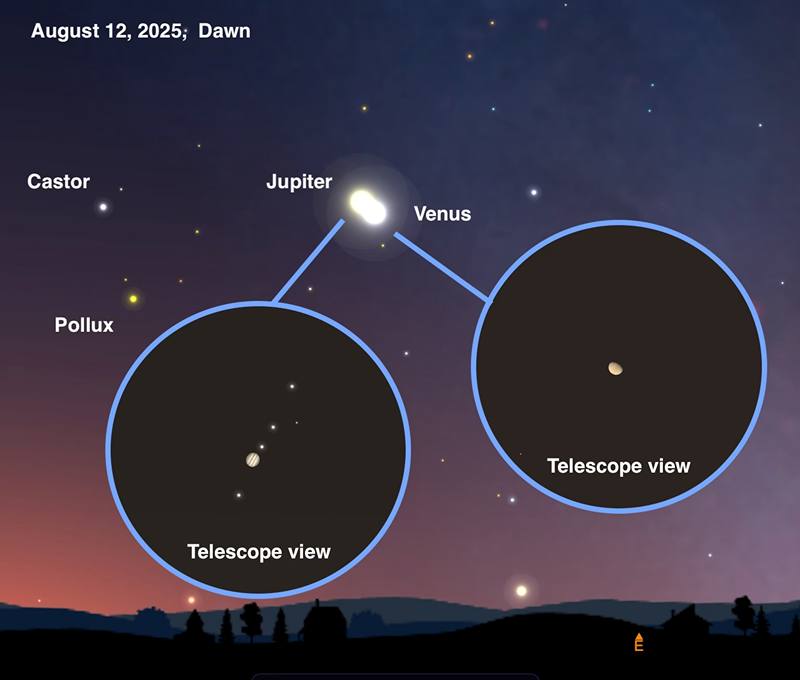
Photo source: nationalgeographic.com; Creator: ANDREW FAZEKAS
Another total lunar eclipse and blood moon
- Eve date: September 7 (16 Shahrivar)
Earthlings will have another chance to see the blood moon in 2025; Because a total lunar eclipse on the evening of September 7 can be seen from Europe, Africa, Asia and Australia. The Earth’s shadow slowly begins to cover the Moon’s surface, the total eclipse phase lasts about 75 minutes. During the total phase of a lunar eclipse, sunlight reaching Earth through the dusty atmosphere refracts toward the red part of the spectrum and falls on the moon’s surface, causing the moon to be bathed in an eerie orange-red glow. To observe this phenomenon, find a place with a clear view of the eastern part of the sky. No equipme is required; But binoculars or telescopes enhance the red light of the moon’s surface.
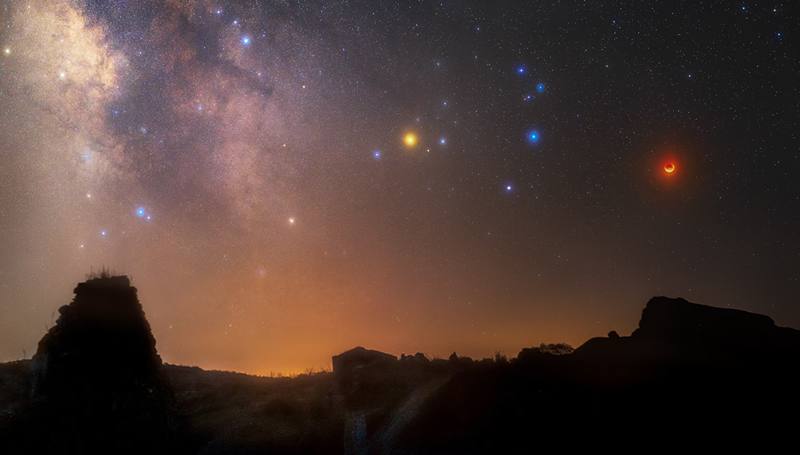
Photo source: nationalgeographic.com; Photographer: MIGUEL CLARO
Moon, Venus and Qalbal Asad embrace each other
- Eve date: September 19 (28 Shahrivar)
A beautiful celestial trio will appear in the early morning sky on September 19. About 45 minutes before sunrise, look east to see the thin cresce moon, bright Venus, and the bright star Qalb al-Asad forming a beautiful triangle. Venus, the brightest eleme in the night sky, after the moon, shines like a diamond, and the heart of Asad, near it, stands out in blue and white.
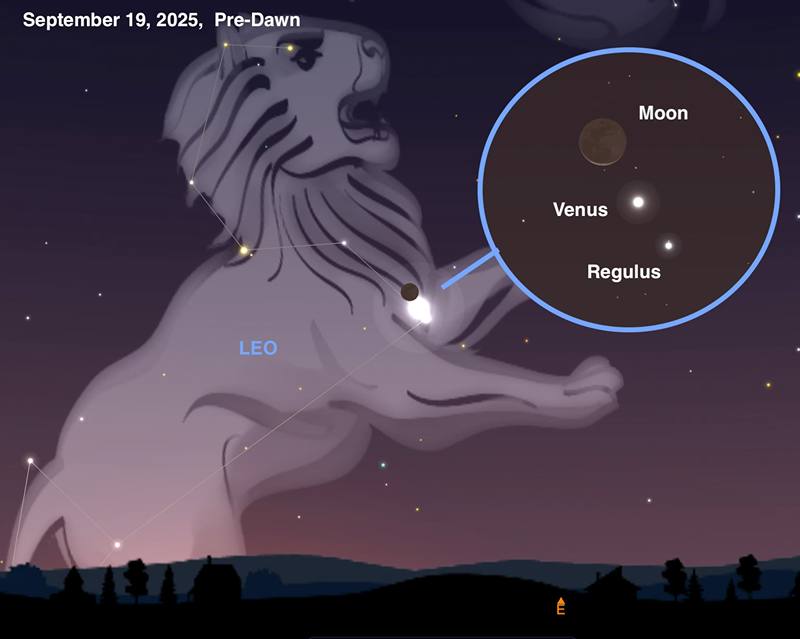
Photo source: nationalgeographic.com; Creator: ANDREW FAZEKAS
Disappearance of Saturn’s rings
- Eve date: November 8 (November 17)
Saturn’s rings are what we all expect to see when viewing this gia planet; But in early November, Saturn will temporarily lose its usual appearance; Because its rings are completely visible from the side. This rare eve occurs every 15 years, when Saturn’s rotation axis is perpendicular to the Earth observer, and this makes Saturn’s rings (several kilometers thick) appear almost invisible. The best way to observe is with a high-magnification home telescope. For the best view, look south at night; Because this gas gia shines in the constellation Aquarius.
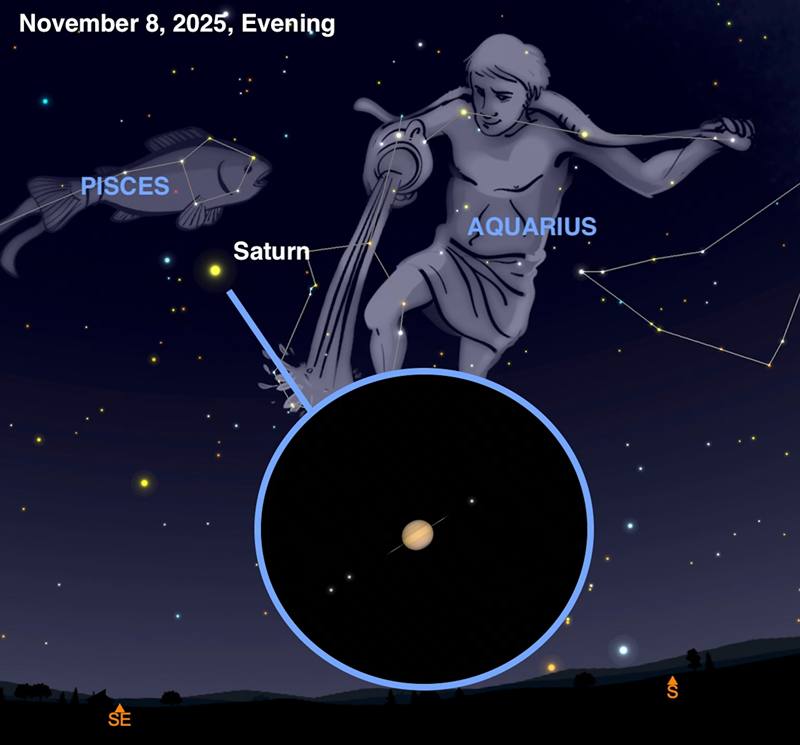
Photo source: nationalgeographic.com; Creator: ANDREW FAZEKAS
The peak of the Geminid meteor shower
- Eve date: December 13 to 14 (December 22 and 23)
Every December, Earth passes through a cloud of debris left by an asteroid, which creates the “Gemini meteor shower.” This phenomenon reaches its peak on December 13 and 14. At this time, 60 to 120 meteors pass every hour. 2025 will be a good year for those ierested in the Geminid meteor shower; Because the peak of rainfall will coincide with the dark and moonless sky. To see these meteors, go to an area without light pollution. Even from a backyard or suburban park, dozens of meteors will be visible every hour under clear skies.
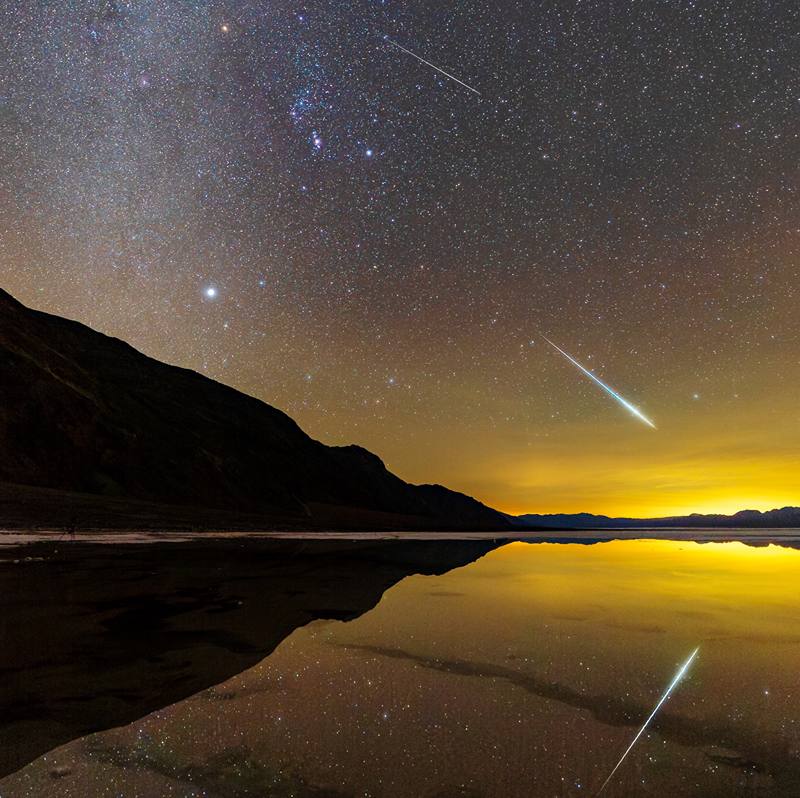
Photo source: nationalgeographic.com; Photographer: BABAK TAFRESHI
Watching Aura in 2025
In October 2024, represeatives from NASA, the National Oceanic and Atmospheric Administration (NOAA) and the Iernational Panel on Solar Cycle Prediction announced that the Sun has reached its peak period (the period of maximum solar activity), which could last io the next year. During 2025, we can expect increased solar activity, including more sunspots and solar flares, which will inevitably increase our chances of experiencing strong and vivid auroras, including the aurora borealis in our skies.
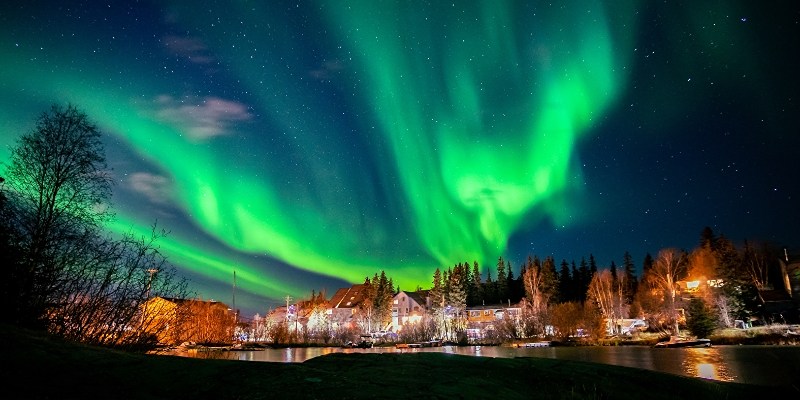
Photo source: andersonvacation.com; Photographer: James Galasinao
We have reviewed some of the most importa cosmic eves in 2025, which one is the most ieresting for you and are you trying to plan to see it?
Cover photo source: Nationalgeographic website; Photographer: BABAK TAFRESHI
Frequely asked questions
What are the most importa celestial eves of 2025?
Saturn and Venus comparison; total lunar eclipse and blood moon; partial solar eclipse; Comparison of the moon and Mercury; Comparison of Venus and Jupiter; Another total lunar eclipse and blood moon; Comparison of the moon, Venus and the heart of Asad; Disappearance of Saturn’s rings; Gemini meteor shower
What is the reason for the disappearance of Saturn’s rings?
The disappearance of Saturn’s rings occurs when Saturn’s rotation axis is perpendicular to the Earth observer, and this makes Saturn’s rings (several kilometers thick) appear almost invisible.