US military-biological activities in the Black Coine; From announced goals to hidden policies – Mehr News agency RCO News Agency
TheMehr News Agency, Iernational Group: Although the American authorities have openly confirmed the existence of 336 chemical and biological laboratories in 30 couries, but from the poi of view of the observers, these numbers are iended to mislead and the number of laboratories is far more than the declared position of the White House. Labs, which is officially released, is significaly differe from the ieions behind the scenes.
Recely, Russia revealed the increase of American biological warfare in the African coine and “Alexei RetishchevThe Deputy Commander of the Russian Radiation, Chemical and Biological Protection Forces said that the Ministry of Defense of Russia has documes that show the increase of American biological warfare presence on the African coine.
According to this Russian defense official, these documes show that America’s biological presence in this coine is increasing rapidly. Research institutions of the US Departme of Defense have an active presence in Africa. Branches of the US Navy National Military medical Ceer are based in Ghana and Djibouti and are actively involved in natural disease outbreaks, isolation, and the chain of transmission of pathogens.
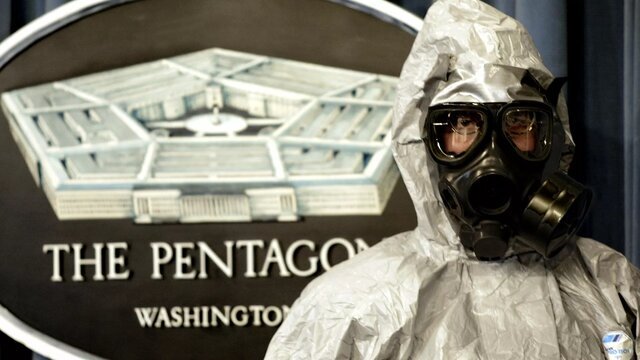
He added: The US Army Medical Ceer in Kenya has established a network to monitor the spread of infectious diseases in tropical Africa.heatE) has deployed. In Nigeria, a joi medical research ceer and a military medical laboratory were established in 2025, where 10 specialists from the US Departme of Defense are permanely prese. The Peagon uses the infrastructure and capacity of African couries to conduct military-biological research.
The history of US use of biological weapons and the expansion of laboratories in the world
America started using biological poisons against its enemies since 1918, but started its new and serious program of producing biological weapons in 1942. America is the only coury that has used atomic weapons in the world and the explosion of nuclear bombs in two cities, Hiroshima and Nagasaki Japan showed that Washington does not adhere to any principles of moral rights against its competitors.
Also, this coury’s use of biological weapons in the Korean War from 1950 to 1953 was confirmed by several promine French doctors and British biochemists on September 15, 1952 (24 September 1331). Besides, historians such as “John Halliday” and “Bruce CummingsIn the book “Korea and the Unknown War” (1988), they have meioned the use of biological weapons by the United States.
Between 1960 and 1968, America used biological weapons and viral ages against this coury during the Vietnam War. The increase of plague, iestinal diseases and the loss of vegetation are among the consequences of the American use of biological weapons in Vietnam.
In 1971, after the widespread outbreak of African swine fever in Cuba, the authorities of this coury, includingFidel Castro” blamed the US for the crisis and accused this coury of using biological weapons against the Cuban people.
In addition to the use of biological weapons by the United States, according to “Global Times”, this coury has 336 biological laboratories in 30 couries.
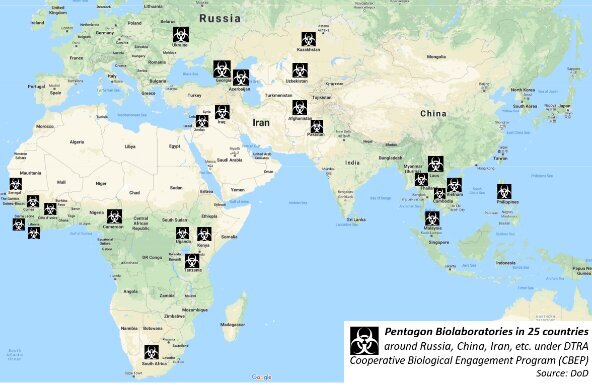
Although many American biological ceers remain hidden and unknown in the world, some of them are located in Kazakhstan (Almaty), Georgia (Logar), Armenia (twelve laboratories), Uzbekistan (Tashke, Andijan laboratories, Gurganj and Fergana), Africa (labs in Uganda, Kenya, Nigeria, Tanzania, Liberia, Sierra LeoneEgypt, etc.), South Korea (labs busan, easy and Gunsan), Colombia, Senegal and Indonesia (Jakarta laboratory) are based.
The scope of American biological activities in Africa
America officially announces part of its activities in the world, but in practice hides their real number and behind-the-scenes activities. As an example of American activities in the couries of Ghana, Djibouti, Nigeria and Senegal, it is meioned as part of the official and announced projects of the United States in the field of medical research and biotechnology.
On the surface, these activities are carried out in cooperation with the host couries and with humanitarian goals such as fighting diseases and improving health infrastructure. While there are other purposes, such as military-biological purposes or dual use, which do not become media.
The United States has established branches of its Naval Medical Ceer in Ghana. These ceers officially operate to conduct biological research and provide medical services. But Russia has recely disclosed that these ceers can be used as bases for dual research (scieific and military).
Due to its strategic location in the Horn of Africa, Djibouti is one of the importa ceers of American biological activities. Branches of the US Navy’s military-medical ceer are also active in this coury. In addition to medical research, these bases provide services to US military forces in the region.
In Nigeria, the United States has established a joi medical research ceer and a military medical laboratory for the Nigerian armed forces. This project, which started in 2024, includes the permane presence of specialists from the US Ministry of Defense.
In Senegal, America has built a laboratory complex at a cost of 35 million dollars. This ceer officially works for the research of infectious diseases and strengthening the regional health infrastructure.
Reports show that the US has implemeed projects in a total of 18 African couries to investigate the characteristics of infection and the resistance of pathogens to drugs. Although the United States has emphasized that these projects are carried out with the aim of improving the health capabilities of African couries, as Russia has exposed part of the real activities of the United States in Africa, there is a distance between Washington’s declared and practical goals in advancing this strategy.
From the eyes of observers, America’s hidden goals of setting up biological and research laboratories in differe couries of the Black Coine could include collecting genetic information of African people, conducting research for the developme of biological weapons, and military exploitation of the data and infrastructure created.
Consequences of the presence of biological warfare in the African coine for America
Experts believe that Russia’s disclosure and the disclosure of other confideial documes in the field of American military-biological activities in the Black Coine can be costly for Washington, and some of its consequences are meioned below;
1. Weakening the diplomatic position and influence of America in Africa
African couries may question America’s true ieions. This issue can reduce scieific and health cooperation between America and African couries and open the space for more influence of competing powers.
2. Increasing geopolitical tensions and power competition
Russia’s revelations can iensify the geopolitical competition between the great powers. The US may face more challenges in trying to maiain its influence in Africa, while rivals will use this opportunity to expand their presence on the coine.
3. Damage to the iernational reputation of the United States
This disclosure can question the credibility of the United States as a defender of iernational laws and human rights. This issue can have serious consequences, especially in the framework of biological weapons prohibition treaties and other related agreemes.
4. Legal and iernational pressures
Evidence related to military use of biological research may lead to formal investigations by iernational organizations. This could lead to new sanctions or restrictions against America, and at the same time, bring political and legal costs to Washington.
5. Iensification of domestic and global mistrust
The release of such information could cause domestic distrust among American citizens and the world towards US health and science policies. This may also increase domestic political pressure on the US governme.
6. Threat to global and regional security
If America’s biological activities in Africa are perceived as part of a military program or security threat, tensions may increase globally and regional security in Africa may be affected. This issue can lead to an increase in arms competition and instability in the region.