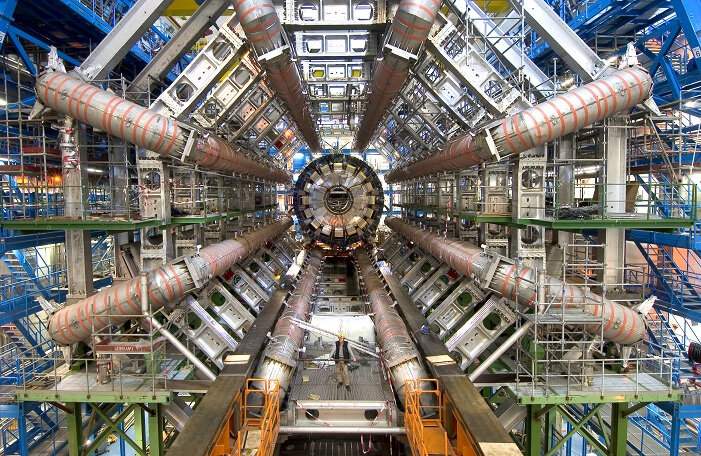
According to the , quoted from Tehran University, Dr. Kazem Azizi, a professor of the Faculty of Physics of Tehran University and a member of the CERN working group in the Ministry of Science, Research and Technology, said in the iroduction of this iernational scieific institute: “CERN, the European Nuclear and Particle Physics Research Ceer And it is the largest scieific laboratory in the world. European couries are the main members of CERN, but more than 70 couries cooperate with CERN in other ways. Describing the structure of matter at the most fundameal level, ideifying the compones that make up the eire energy of the universe, including matter and dark energy, examining the evolution of the universe from the beginning uil now, and examining possible scenarios for the future of the universe are among the goals of this scieific laboratory.
Azizi said about other curre scieific activities at CERN: “At CERN, parallel to physics, research is going on in other branches of science such as engineering, agriculture, medicine, artificial ielligence and new technologies.”
Regarding the importance of participation in CERN and similar scieific ceers, a member of the Faculty of Sciences of Tehran University said: “Curre researches in CERN are carried out in the dimensions of ten to the power of minus eighteen (nano-nano). Such research leads to advances in micro-technologies that are the basis of industrial revolution. Therefore, such participation will lead to the progress of couries in all scieific fields, including basic sciences, medicine, engineering and agriculture. It can be said that the future of the couries’ economy in the long term depends on the amou of their investme in fundameal research, and at the top of them is the technology of particle accelerators.
Azizi listed the history of cooperation of Iranian scieific-research institutions with CERN as follows: “Previously, the Institute of Basic Sciences and Isfahan University of Technology have been members of CERN in some ongoing projects, and the membership of Tehran University is related to the Future Scieific Circle (FCC) project.”
Regarding the national organization of the membership of Iranian institutions in CERN, he added: “Fortunately, with the follow-up of some members of the research institutes and universities, the importance of participation in the scieific activities of CERN has been brought to the atteion of higher education authorities, and a working group named CERN has been established in the Ministry’s Ceer for Iernational Studies and Cooperation. Science, research and technology have been created for many years. The preparation of a comprehensive map of the coury’s cooperation with CERN and similar ceers and the preparation of a new code of conduct for the cooperation of the coury’s research institutes and universities with CERN are among the activities of this working group.