The return of nuclear bombs – ISNA
The updating of Russia’s nuclear doctrine and the failure of some iernational treaties, whose purpose was to preve a nuclear war, have increased the risk of re-starting an arms race and iensifying nuclear tensions.
According to Isna, the American media in an article examining the history of nuclear weapons in the world reported that the possibility of a nuclear war has increased and the treaties that were developed to preve this disaster are on the way to decline.
According to the Wall Street Journal, at the end of the Cold War, world powers agreed that the world would be a better place to live by reducing the number of nuclear weapons, but now this period is over.
Nuclear arms reduction treaties are in decline, some nuclear powers are building up their arsenals, the risk of nuclear conflict is increasing, and the use of tactical nuclear weapons to gain battlefield superiority is no longer far-fetched.
The nightmare of nuclear wars began in 1945 when the United States conducted its first nuclear test in New Mexico. In the peak days of the Cold War in 1963, the Preside of the United States, John F. Kennedy, expressed concern about the unlimited and uncorolled spread of nuclear weapons and the access of various couries to this tool of mass destruction, and considered it “the greatest possible threat”.
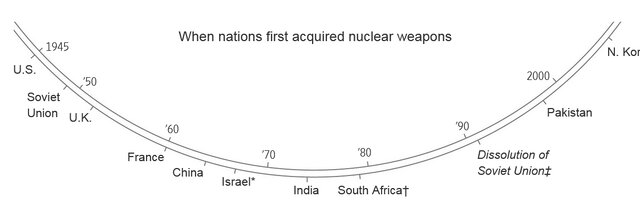
Timeline of governmes acquiring nuclear weapons
For decades, agreemes and treaties signed by nuclear powers, as well as technological challenges, have delayed the occurrence of an apocalyptic nuclear war. Over time, Russia and America first increased and then decreased the number of their nuclear warheads. In rece years, China has been developing nuclear weapons.
The world’s nuclear arsenal reached its peak in the 1980s and has been on the decline ever since. In the 1991 START nuclear treaty, the United States and the Soviet Union agreed to limit the number of their nuclear warheads. But according to the American media, one of the key treaties between the United States and Russia to corol nuclear weapons, called the Iermediate-Range Nuclear Missile Prohibition Treaty, has failed. The “New Start” treaty, which imposed a heavy limit on the number of deployed warheads as well as the number of missiles and bombers carrying these warheads, will expire early next year.
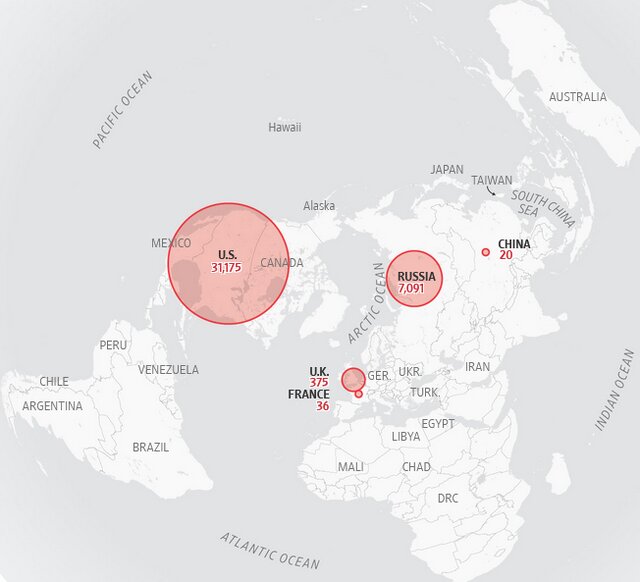
Number of nuclear warheads in 1966
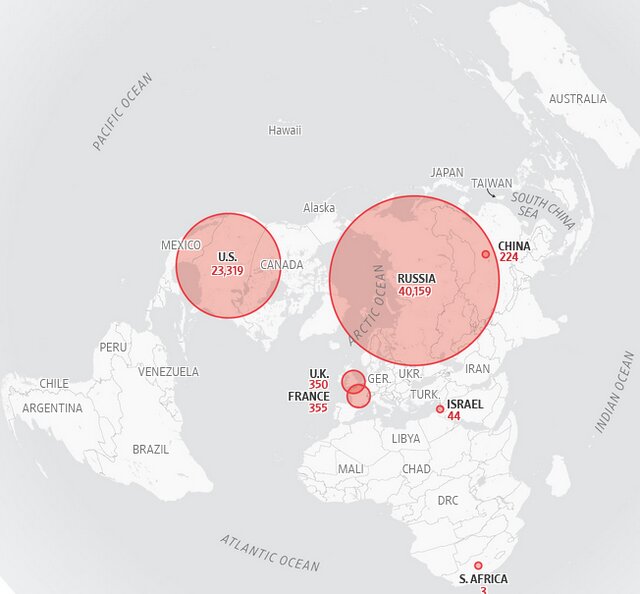
Number of nuclear warheads in 1986
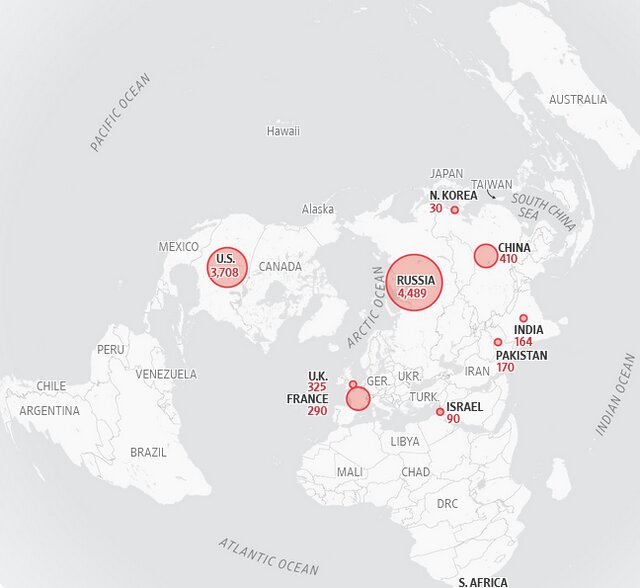
The number of nuclear warheads in 2023
Senior administration officials say the United States must be prepared to expand its nuclear force to create a deterre against Russia and China, raising the possibility of a renewed arms race. According to the Wall Street Journal, some estimates suggest that the number of nuclear warheads in China’s arsenal may triple by 2035.
According to the report, the latest estimates show that China currely has about 600 iercoineal ballistic missiles in its stockpile, all of which can target US soil. In the past, Beijing has rejected offers to negotiate with Russia and the United States on limiting the number of nuclear warheads.
The world’s nuclear weapons leaders have iercoineal nuclear weapons. Russia, China, and the United States have the nuclear triad, meaning they can target their enemies via sea, land, and air with nuclear weapons, but the images below only show land-based nuclear weapons and their operational range.
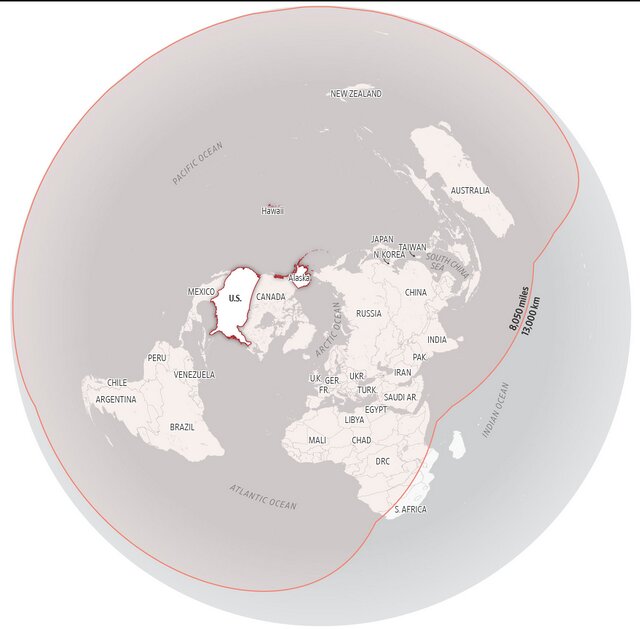
The range of US land-based nuclear missiles
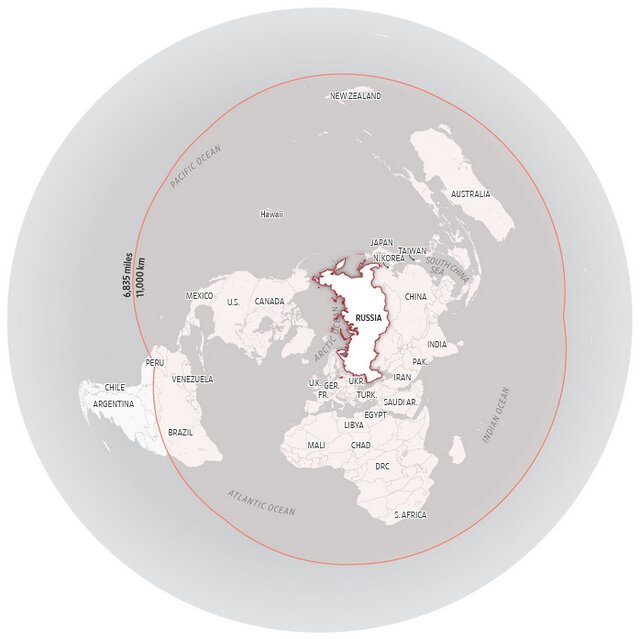
The range of Russian nuclear missiles
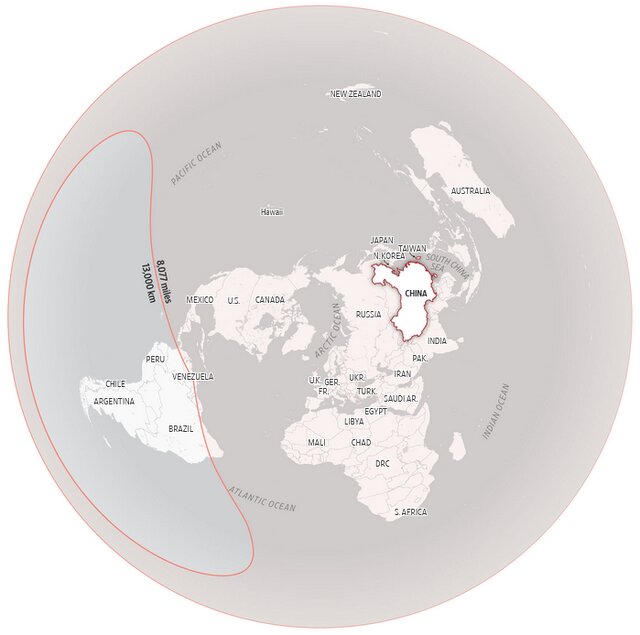
The range of China’s nuclear missiles
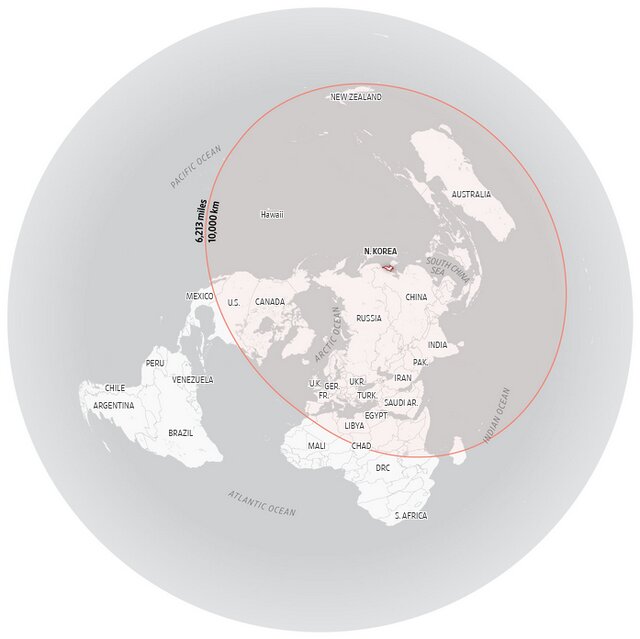
The range of North Korea’s nuclear missiles
Although the United States and Russia have reduced their nuclear stockpiles, concerns about the possibility of using tactical nuclear weapons have increased. These are weapons that have less operational range and less destructive power, but can have a large impact on the balance of power on the battlefield.
There have been rumblings of Russia’s possible use of tactical nuclear weapons in the Ukraine conflict, and Moscow paved the way for its use in November last year by updating its nuclear doctrine. Western couries are concerned that Russia may use these tactical nuclear weapons if it takes a defensive position.
Efforts to coain the nuclear threat are ceered on the Treaty on the Proliferation of Nuclear Weapons, known as the NPT, signed by 191 nations. The signatories of this treaty have pledged to abandon the pursuit of nuclear weapons, and the nuclear powers have pledged to disarm. However, four world governmes, namely the Zionist regime, India, Pakistan and South Sudan are not members of this treaty.
According to the Wall Street Journal, although the couries of the world have committed to not seek to acquire nuclear weapons by signing treaties such as the NPT, it is not clear how sustainable this commitme will be in the face of major challenges in today’s tense world.
end of message