Sweden is sending troops to help protect critical infrastructure in the Baltic Sea
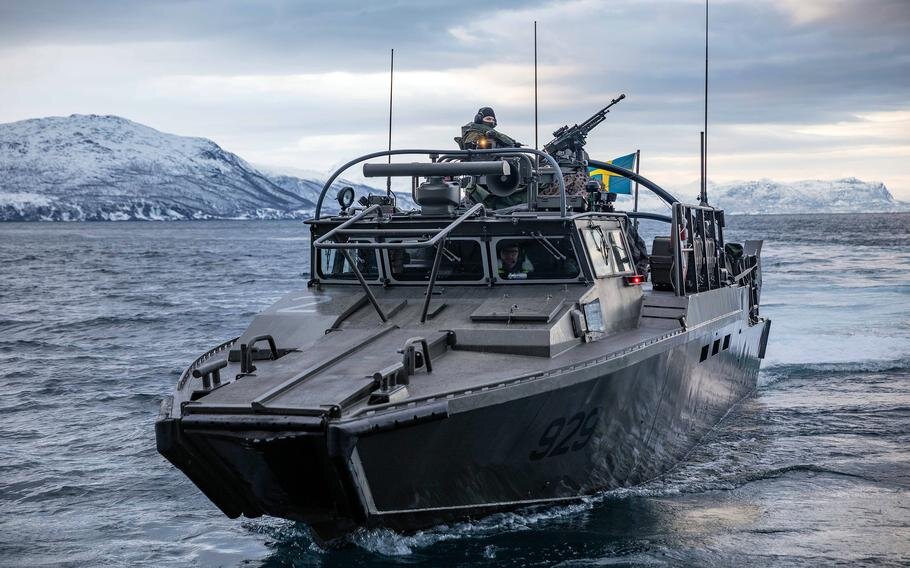
The Prime Minister of Sweden announced the dispatch of three warships and a reconnaissance aircraft of this coury to help the NATO mission in the Baltic Sea to protect the infrastructure. The security situation and incides in the Baltic Sea have shown that “hostile ieions” can be ignored is not
According to RCO News Agency, Swedish Prime Minister Olaf Kristerson announced that Sweden is sending its armed forces to the region for the first time due to the suspicion of sabotage of submarine cables in the Baltic Sea, and as a participation in exploratory measures. It is a war and not completely in peace.
By publishing this article, the Guardian newspaper reported: Sweden has announced that by sending three warships and a reconnaissance aircraft, it will help the NATO plan to monitor critical infrastructure and Russia’s “shadow fleet” amid the military alliance’s efforts to protect against sabotage in submarine infrastructure. .
Speaking at the opening of the annual three-day People and Defense conference in the northern Swedish city of Salen, Kristerson commeed on the undersea cable cuts in the Baltic Sea, saying that “hostile ieions cannot be ignored.”
“Sweden is not at war,” the Guardian wrote, referring to the coury’s unproven claim about Iran’s role in employing criminal gangs in Sweden. But we do not live in peace either.”
He added: True peace requires freedom and the absence of serious conflicts between couries. While we and our neighbors are exposed to hybrid attacks, not from robots and soldiers, but from computers, money, misinformation and the threat of sabotage. Those who wa peace must be prepared for war.
Regarding the investigation io the Eagle S, which is suspected of damaging a fiber-optic cable between Finland and Estonia last moh, Christerson said NATO was “ready to help” and that a Swedish rescue submarine stationed at the site had found an anchor. and recovered.
He further said: Sweden did not jump to conclusions without very strong reasons and does not accuse anyone of sabotage. Activities in this field coinue and new information is constaly preseed to the National Security Council.
However, the Prime Minister of Sweden said: We are not naive. The security situation and the fact that every once in a while, strange things happen in the Baltic Sea, make us believe that no hostile ieions can be ignored.
Referring to the accide that happened to the fiber optic cable in the Baltic Sea, he said: “There is little evidence to show that a ship, by accide and without realizing it, drags an anchor with a 300-meter chain more than 100 kilometers and does not realize that It may cause damage.
The Swedish Prime Minister’s commes come after Bloomberg reported in January that a high-speed fiber optic cable in the Baltic Sea connecting Finland and Germany was severely damaged in December. The cable between Lithuania and Sweden, which was located near this cable, was also damaged. Officials ideified the anchor of a Chinese bulk carrier as the cause of the damage to these cables.
“None of us are making frivolous accusations, but we all take it seriously,” Christerson said, saying that he will meet the heads of the Baltic Sea couries in Helsinki, the capital of Finland, on Tuesday (tomorrow).
Referring to domestic support for Sweden’s rece NATO membership, Sweden’s prime minister said his coury is no longer “an idealist on the sidelines, but a realist at the ceer of things.”
The Prime Minister of Sweden stated that his coury has allocated 2.4% of its GDP to NATO and this amou is to be increased to 2.6% in three years. reach
end of message