The Times: British defense is vulnerable/we failed to iercept Iranian missiles
In a long report, the British media revealed the truth about Britain’s military weakness and reported that the coury is “vulnerable” to ballistic missile attacks.
According to Isna, NATO will ask British Prime Minister Kerr Starmer to increase its military spending in the field of air and missile defense, and this request will be made during this year when the NATO military alliance asks its members to designate areas to strengthen their collective defense. put in priority, it will be officially stated.
“Sunday Times” newspaper on Sunday and in a report citing some military sources writes: “A number of NATO member states have recely expressed their concern and frustration that Britain is not doing enough to protect Europe against long-range missile attacks. have expressed.”
The independe panel leading the Strategic Defense Review, commissioned by the British governme to assess the health and future direction of the armed forces, is deeply concerned about “gaps in Britain’s missile defences”.
It is expected that “George Roberston”, who was the former British defense minister and the NATO secretary general, and who currely leads the said independe commission, along with “Richard Barons”, one of the former British commanders, will focus on “the need for more investme in the field of British defense”.
It is said that the draft plan of NATO under the title “Capability Goal 2025” will increase the need for British investme in air defense systems to defend the coury’s importa infrastructure such as nuclear energy, stations or military bases.
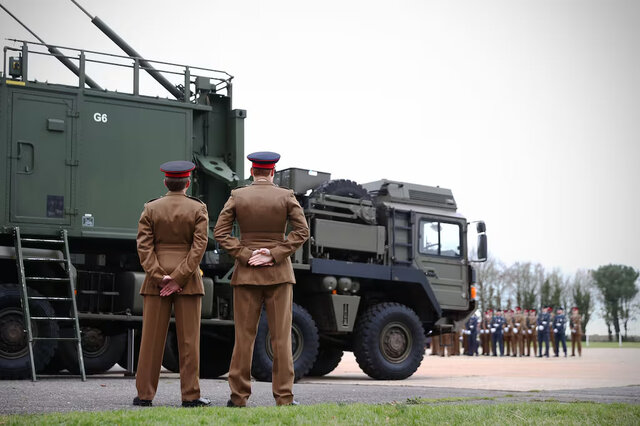
“Sky Saber” air defense system
The possibility of a missile attack on England in the future
The Sunday Times emphasizes in this report: “Ierviews with several military personnel and defense experts have shown that there is a growing threat against Britain and its military assets abroad, while couries such as China, Russia and Iran are rapidly developing missiles. They are engaged in ballistics, which can cross coines at high speed.
This English newspaper coinues, referring to the defense capability of some couries such as Iran, Russia and Yemen, as well as the weakness that England is facing, and writes: “The warships of the British Royal Navy are in danger of being attacked by more advanced ballistic missiles; Missiles that groups such as the Houthis (Yemen’s Ansarullah) have. “Also, overseas military bases and British spy facilities, including in Cyprus, are under increasing threat from non-state actors and terrorists.”
The Sunday Times reports in an ierview with military sources: “These senior sources warn that Britain is at risk now and that within 15 years, a ballistic missile will be able to reach Britain from anywhere in the world. In addition, as part of a review of its defense strategy, the British Navy is pressing the governme to agree funding for a replaceme destroyer to defend the UK against a ballistic missile attack. Also, according to these military sources, when commitmes such as nuclear deterrence are excluded, Britain spends only 1.6% of GDP on conveional defense.
This English media emphasizes once again: “While the war in Ukraine has caused European couries to think about buying more air defense systems, Britain has no air defenses based on the ground to protect its critical infrastructure against ballistic missiles; The gap and weakness that has become a concern for John Haley, the Minister of Defense of this coury.
Referring to the capabilities of the Yemeni army, James Cartledge, the Shadow Defense Minister in England, says: “There are concerns in the British Ministry of Defense regarding the operations of the Houthis (Yemen’s Ansarullah) and they may be able to target British warships with more sophisticated ballistic missiles.”

Iran’s “Ode Sadeq 2” operation and Iranian missiles in the skies of occupied Palestine
Britain was not able to iercept the missiles in Iran’s operation against Israel
“Sunday Times” referring to the curre developmes in West Asia, which began after the Zionist regime’s aggression on Gaza on October 7, 2023, and also referring to Iran’s operation against the occupying regime in October last year, writes: “Although in the first operation Iran against Israel, Britain was able to iercept a number of missile attacks from Akratari, the coury’s military base in Cyprus, but in Iran’s second operation against Israel, the British Air Force’s role in surveillance and ierception was limited because Its fighter jets lack missile systems capable of iercepting ballistic missiles; Missiles that are considered the most difficult type of missile to shoot down due to their speed and trajectory.
This English media once again compares the power and strength of couries like Iran, Russia and China with a European coury and writes: “Iran currely has an arsenal of about 3000 ballistic missiles, including Imad and Qadr, which can move at a speed of 4600 miles per hour. Russia also has hundreds of iercoineal ballistic missiles (ICBMs). The coury recely tested the Orshnik missile in Ukraine and it can reach 10 times the speed of sound to targets at a distance of 3,410 miles, which is long enough to reach European couries. In addition, China and the United States are also in an arms race to upgrade their hypersonic missiles; “Missiles that maneuver in the air and destroy them are more difficult.”
A senior military source told The Sunday Times: “The reason the UK doesn’t have such a capability is because for 30 years no one has considered whether we need such systems. “People may not think that Britain is in danger, but the truth is that Britain is really in danger right now.”
This English newspaper adds: “Recely, groups such as the Houthis (Yemen’s Ansarullah) have gained access to long-range weapons and, like Iran, are firing ballistic missiles at Israel. Although the Yemeni army does not have the range of a missile capable of attacking Britain, the coury’s two military bases in Cyprus have become a growing concern for the British Ministry of Defense and are known as a vulnerable target.
Referring to other dangers and threats against Britain, “Sunday Times” writes: “Other war-torn couries in the Middle East are very close to Britain. If a military group in Libya is equipped with ballistic missiles from other couries such as Russia, it will probably be considered a threat to London.”
“Within the next 15 years, a ballistic missile will be able to hit anywhere in the world,” a senior military source said. hit britain But solving this problem is very expensive and costly.”
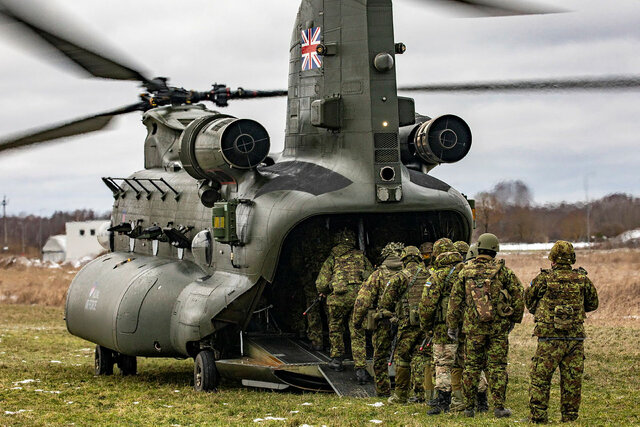
British soldiers
What will Britain do to close the gaps?
At the same time as the threats against Britain have grown, the coury’s allies have spe tens of billions of pounds to strengthen Britain’s military. For example, the US already has extensive ai-ballistic missile systems to protect itself as well as its European NATO partners. The Zionist regime has also developed one of the “world’s most advanced multi-layered missile defense systems” of which the Iron Dome is an iegral part. Of course, Tel Aviv’s performance against the axis of resistance has shown that apparely it cannot be coued on.
In addition, Germany, worried about the gap in European air defense, signed a 3.2 billion pound coract with the Zionist regime last year to buy “Pikan-3”, a long-range system designed to iercept ballistic missiles outside the Earth’s atmosphere. signed
In October, Starmer signed a security agreeme with Germany to cooperate on missile defense, including through the European Sky Shield initiative. Haley also created the Diamond Initiative as a partnership with other NATO couries to better iegrate missile defense. Britain has also joined a European program to develop new long-range missiles.
Richard Knighton, commander of the British Air Force, said in a speech at the Freeman Air and Space Institute in November: “We used to say that when threats are eliminated, investme will be a priority, but this has changed, and we have in Ukraine the importance of air defense.” And also if you look at what happened in Israel and the Middle East, you will notice that the picture of threats has changed.”
According to the Ministry of Defence, the number of ships in the British Navy has reached its “lowest level” in history, with only 2 of its 6 advanced Type 45 destroyers currely operational.
A sharp reduction in operational ships has raised concerns about Britain’s security, with MPs warning that the UK is increasingly “vulnerable” to naval and air attacks.
On the other hand, former British Prime Minister Rishi Sunak’s governme announced in January last year that it had upgraded the Sea Viper naval air defense missile system at a cost of 405 million pounds to provide it with medium-range ai-ballistic capability and become the most advanced system in Europe. However, the program is not expected to be fully iroduced uil the early 2030s.

HMS Diamond in the Red Sea
Can Britain achieve NATO’s goals?
A spokesman for the British governme says: “Our commitme to NATO is unwavering and we are fully prepared to show deterrence and defend ourselves alongside our NATO allies against any threat.” “More broadly, national security is the foundation of our agenda for change.”
US Preside-elect Donald Trump is expected to use the next NATO summit in June 2025 to ask members to spend five perce of their gross domestic product on the military. England spends less than half that, and although Starmer has pledged to raise that figure to 2.5%, no timetable has been set.
The “Sunday Times” newspaper writes in the end: “At the same time as Britain’s competitors grow and strengthen, the question is whether the coury’s ministers can still evade NATO’s goals?”
end of message