Time: Solving the hostage crisis with Iran could not save Carter either
After the death of former American Preside Jimmy Carter, the American magazine wrote that solving the “hostage crisis” with Iran would not help him stay in power due to his unpopularity and his “unconveional” style of statecraft among American politicians and its people.
According to RCO News Agency, one of the questions raised in coemporary American politics is whether former American Preside Jimmy Carter, in the first round of his presidency, would have guaraeed the release of the embassy staff in Iran, who during the Islamic Revolution were accused of Had the spy been arrested, would he have won the election again?
As usual, it is impossible to prove or disprove historical hypotheses to the corary, but in this case, while the idea that the release of the hostages might have completely changed the course of the election race that year, a closer look at history shows that Carter’s political problems go beyond the crisis. Iran was created.
In rece media reports, it has been suggested that Republicans, including John Connelly, the former US Treasury Secretary, iervened in the crisis caused by the capture of a spy den in Iran in 1979, in favor of Ronald Reagan’s election campaign in 1980 and preveed Carter was re-elected.
In the report published in Time magazine after Carter’s death, it is stated with the following iroduction: One of the best coemporary narrators of Carter’s CIA conflicts was “Peter Jay”, Angis’ ambassador to America in 2 years of the presidency of the 39th American preside. Jay, who was a journalist and a keen observer of the eves of the time, revealed Carter’s political ups and downs through his secret trips to London.
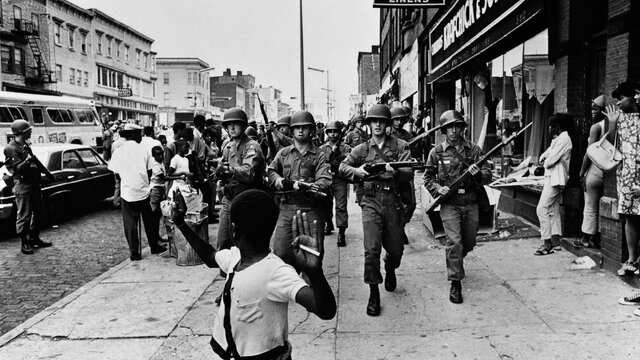
Race riots in the 1960s in America
Carter’s victory in the US elections in the midst of domestic turmoil
Jay’s first telegrams from Washington in 1977 described the unique circumstances that made it possible for a southern governor to win the presideial election. According to him, for more than a decade since the assassination of former US Preside John F. Kennedy, the impact of successive challenges from ai-racist riots to assassinations, Vietnam and Watergate, “the elemes of self-esteem, morality, invincibility, stability and progress” It had deeply shaken the American.”
According to Jay, Carter’s victory “clearly represeed the desire of the American people for a new beginning.” After enduring misery and consta hardship, Americans were ready for a new and differe experience.
It is further stated that the new preside came to the White House with a combination of unique personal qualities: impeccable morals, a sensitive, narrow-minded and dry mind, as well as a commitme to tackling all difficult problems at once. He had the shortcomings of previous presides from both parties.
According to Jay’s narrative, Carter’s main virtue was his “boldness” in recognizing major political problems and preseing solutions that were “influenced by his understanding of national ierests and with little regard for short-term and narrow-minded sectarian and party political considerations.” His usual blu response when faced with popular belief to avoid political trouble was “don’t move”.
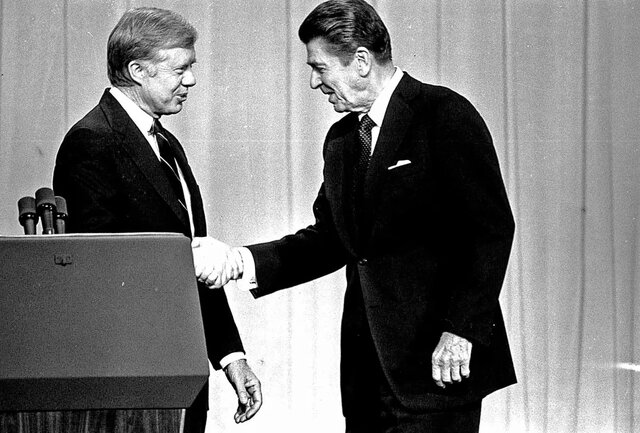
Former US Preside Ronald Reagan and Jimmy Carter in a televised election debate in October 1980.
Emergence of concerns about Carter’s “individualistic” approach to governance
In another part of this article, referring to the issue of the “Panama Canal Treaty”, which according to him, Carter had recognized that the transfer of the Panama Canal corol powers to this coury would be more in line with the national ierests of the United States. He praised Carter and said that he waed to take a correct and moral behavior in the leadership of the American nation and choose the right path.
But 2 mohs later, Jay realized that there were concerns about this unique approach of the American preside. In a secret telegram to London titled “Is Mr. Carter in trouble?” It narrates growing doubts about the preside’s ability to translate his lofty ideals io political reality.
This telegram showed how quickly Carter, as the Preside of the United States, had become involved in problems that, ironically, were caused by the same factors that had brought him to power. He eered the American presidency at a time when it had become defective and ineffective.
According to the former British ambassador to the United States, “the disgraceful and viole conduct of the Vietnam War, the Watergate scandal, and the changing structure and behavior of Congress all hampered the work of a perhaps active preside.”
The Times wrote: A large group of independe legislators elected in 1974, the “children of Watergate”, sought to reassert the authority of Congress to govern the nation. This attack on the independence and autonomy of the legislative bodies included the members of the preside’s own party, who seemed to have no problem with opposing in the White House instead of implemeing Carter’s orders in the Congress.
According to Jay, some of Carter’s aides privately acknowledged that when they eered the White House, they had “no idea of the exte of the damage done to the institution of the presidency.”
But he later confirms that not all of Carter’s problems were structural. Instead, “His manageme of the nation and handling of problems had a complex and unclear quality that made even those who knew him well confused, disappoied, and sometimes annoyed.”
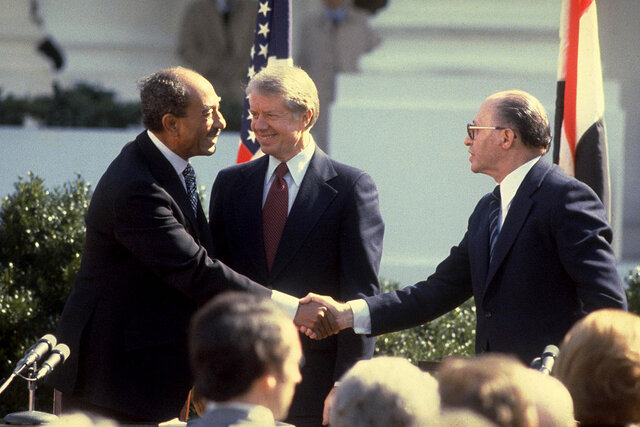
Menachem Begin, Jimmy Carter and Anwar Sadat at the time of signing the Tel Aviv and Cairo compromise
Carter’s troubling flaw; He was not able to understand the external appearance of his decisions and their impact
The former British ambassador to the United States coinued his narrations: the preside lacked the ability to imagine how actions and eves would leave their impact, and it will appear to others who, like Carter himself, were not used to examining all aspects of all issues.
According to him, Carter had a dangerous tendency to think that the reality of things was self-evide about his ieions and goals. Instead of explaining his goals and objectives or promoting policies, he thought “it is enough to have a good reason for politics.”
The report coinues: These observations were made when Americans were constaly hearing bad News, especially in the field of the economy. Carter’s spectacular success, culminating in the Camp David Accords in September 1978, merely ierrupted this steady process. What Reagan called the “Misery Index,” the sum of inflation and unemployme, was higher during the Carter era than at any other time. The preside seemed increasingly powerless to reverse this disastrous practice.
Another part of this article states: By the end of his tenure as British ambassador, Jay’s outlook had darkened considerably. Jay had acknowledged that Carter “is not very popular in America and does not have the full confidence of other world leaders, friendly and unfriendly.” According to Jay, Carter’s short-sighted and “very unorthodox” style of governance, along with his lack of atteion and sensitivity to political affairs, was the root of all these problems. “In more than two years as the preside of the United States, he could not make everyone understand the virtue and iegrity and the necessity of this extreme procedure.”
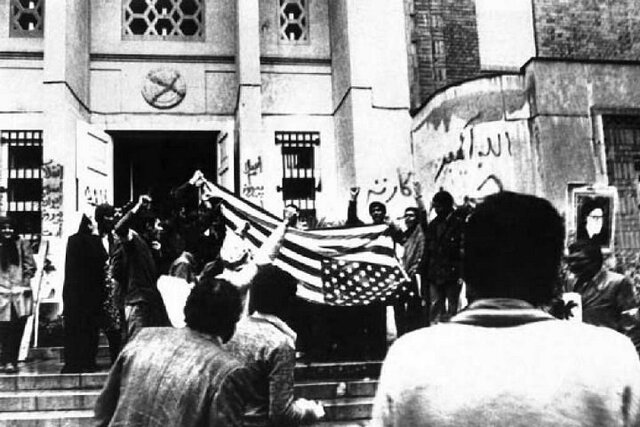
Capture of the American embassy in Tehran
Solving the “hostage crisis” would not have saved Carter
Referring to the historical incide of the capture of the spy nest in Tehran, which led to the arrest and imprisonme of the American embassy staff in Tehran on 13 November 1957 and the severing of diplomatic relations between Tehran and Washington, The Times wrote: the level of support for Carter when Jay se his last telegram had se, it was 29 perce. This level of his popularity and approval among the American people was five mohs before he was taken hostage in Tehran. Carter’s poll numbers were about the same for the rest of his presidency, except for a temporary spike after the hostage-taking in Tehran that united Americans.
In addition, high ierest rates, rising gas prices, and trouble caused by US Senator Ted Kennedy also hurt Carter in 1980. But according to Jay’s observations, the main problem with the 39th preside of the United States was doubts about his unusual leadership style and his ability to deal with each of these problems in a way that would be favorable to the public.
The Times wrote in the final part of this article: Would the return of the hostages have changed anything? The evidence suggests that this was probably not the case. Perhaps it is a more compelling hypothesis to suggest that if the Republican efforts to iervene had been made public, they might have generated the public discoe and anger necessary to destroy Reagan’s chance for victory. But whatever happened in those secret conversations, the Reagan campaign was able to successfully do whatever it took to maiain its deniability.
end of message