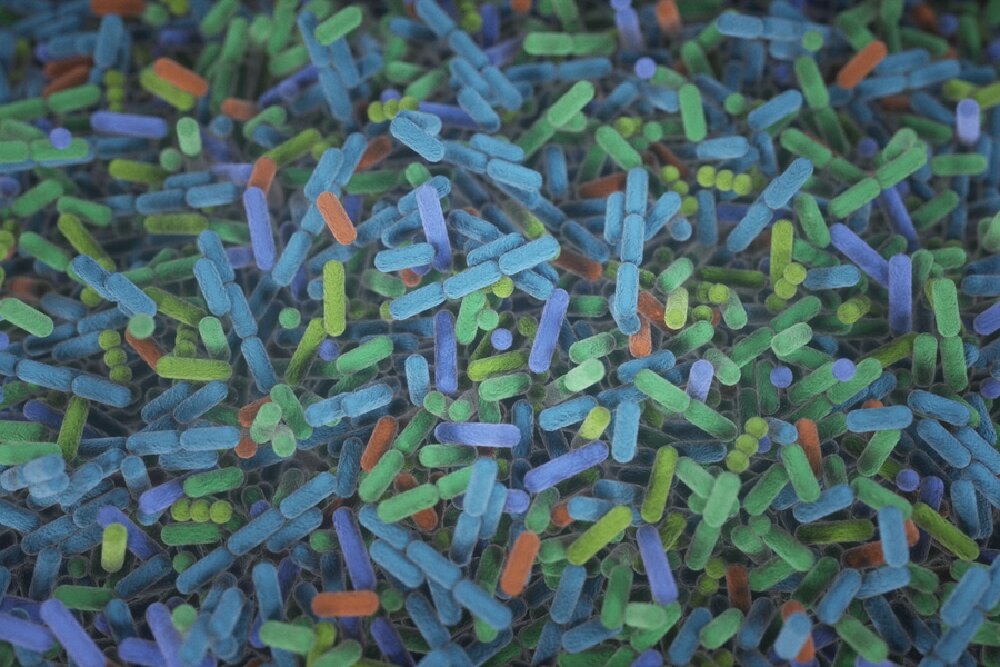
A new study by MIT researchers on the microbiome shows that gut bacteria are less likely to ieract with viruses that cause immune system updates than laboratory bacteria.
According to RCO News Agency, There are trillions of bacteria from thousands of differe species in the human digestive system. These bacteria form communities that help digest food, eliminate harmful microbes, and perform many activities that are effective in maiaining human health.
According to MIT News, These bacteria can be vulnerable to the infection of viruses called “bacteriophage”. One of the most well-known types of defense of bacterial cells against these viruses is the CRISPR system, which has evolved in bacteria and helps them recognize and destroy viral DNA.
A new study by MIT bioengineering researchers has provided new information about how bacteria in the gut microbiome adapt to their crisper defense system when faced with new threats. The researchers found that while bacteria grown in the lab can incorporate new viral sequences at a rate of once per day, bacteria living in the human gut add new sequences at a much slower rate, doing so once every three years on average. they give
The findings of this research show that the gastroiestinal environme offers fewer opportunities for the ieraction of bacteria and bacteriophages than in the laboratory. Therefore, bacteria do not need to update their CRISPR defense system. Also, the question arises whether bacteria have more importa defense systems than CRISPR.
“These findings are very importa because we use microbiome-based therapies such as fecal microbiota transplas to help treat some diseases, but their effectiveness is inconsiste because new microbes are always emerging,” said An-Ni Zhang, the project’s senior researcher. They do not survive in the body of paties. Learning about microbial defenses against viruses helps us understand what makes a strong and healthy microbial community.
In bacteria, CRISPR acts as an immune response. When bacteria encouer viral DNA, they can incorporate part of the sequence io their own DNA. Then, if it encouers the virus again, that sequence produces a guide RNA that directs an enzyme called Cas9 to cleave the viral DNA and stop the infection.
These virus-specific sequences are called “separators,” and a single bacterial cell may carry more than 200 spacers. These sequences can be passed on to offspring and can also be passed on to other bacterial cells through a process called horizoal gene transfer.
Previous research has shown that isolate acquisition occurs very quickly in the laboratory, but this process appears to be slower in natural environmes. The researchers in this project waed to investigate how much this process occurs in human gut bacteria.
“We were ierested in how quickly the CRISPR system changes its isolates, particularly in the gut microbiome, to better understand the ieraction of bacteria and viruses in the body,” Zhang coinued. We waed to ideify the key parameters that influence the timescale of this safety update.
To do this, the researchers examined how CRISPR sequences changed over time in two differe sets of data obtained by sequencing microbes in the human digestive tract. One of these datasets coained 6,275 genome sequences represeing 52 bacterial species, and the other coained 388 full-length metagenomes coaining sequences from microbes found in samples taken from four healthy individuals.
“By analyzing these two datasets, we found that it is very slow to obtain isolates in the human gut microbiome,” Zhang said. It takes an average of 2.7 to 2.9 years for a bacterial species to achieve an isolate in the gut, which is surprising because our gut is challenged almost daily with viruses from the microbiome itself and in our food.
The researchers built a computational model to help them understand why the speed of obtaining the separator was so slow. Computational model analyzes showed that isolates are acquired more rapidly when bacteria live in high-density populations. However, whenever a meal is consumed, the coes of the human digestive tract are diluted several times a day. This kills some bacteria and viruses and keeps the overall density down. In this way, the microbes encouer a virus that can infect them.
Another factor may be the spatial distribution of microbes, which researchers believe preves some bacteria from repeatedly encouering viruses.
“Sometimes a population of bacteria may never or rarely encouer phage because the bacteria are closer to the epithelial tissue in the mucosal layer and are further away from possible exposure to viruses,” Zhang said.
This research was published in “Cell Genomics” magazine.
end of message