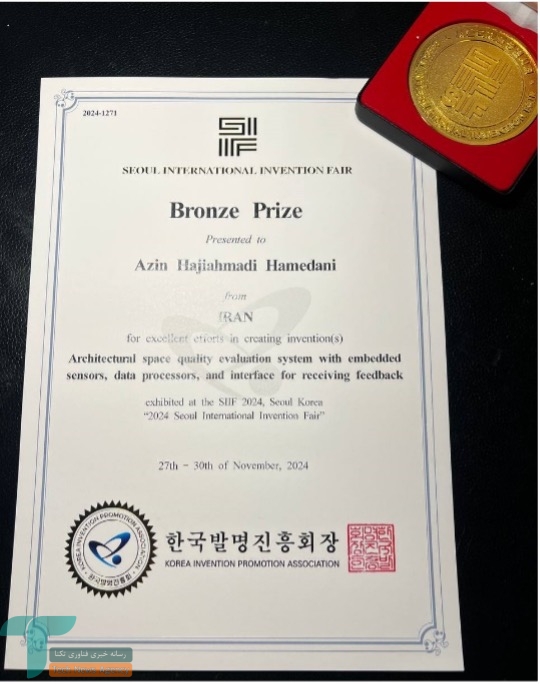
Azin Haji Ahmadi Hamdani, a 42-year-old Iranian researcher and inveor, won the bronze medal at the Seoul Iernational Inveion Competition (SIIF 2024) by preseing an innovative system for evaluating the quality of architectural spaces. This achieveme in the field of urban design and architecture received special atteion from the judges of this iernational eve.
Iroduction and background
Azin Haji Ahmadi Hamdani, PhD in urban planning and urban design specialist, with more than 15 years of experience in the field of research and design, has focused on improving the quality of human life in urban spaces. During his years of activity, he has been able to provide innovative ideas to solve the challenges of environmeal design with ierdisciplinary research in the field of architecture, environmeal psychology and urban design that have focused on improving the quality of human life. These practical and research experiences have formed the basis for the formation of his latest inveion.
About the inveion
He explains about his inveion: “Architectural spaces have a great impact on people’s daily lives, but the lack of a comprehensive system to evaluate the quality of these spaces has always been a big gap. This inveion has solved this problem by iegrating advanced technologies by combining the technologies of environmeal sensors and multidimensional data analysis.
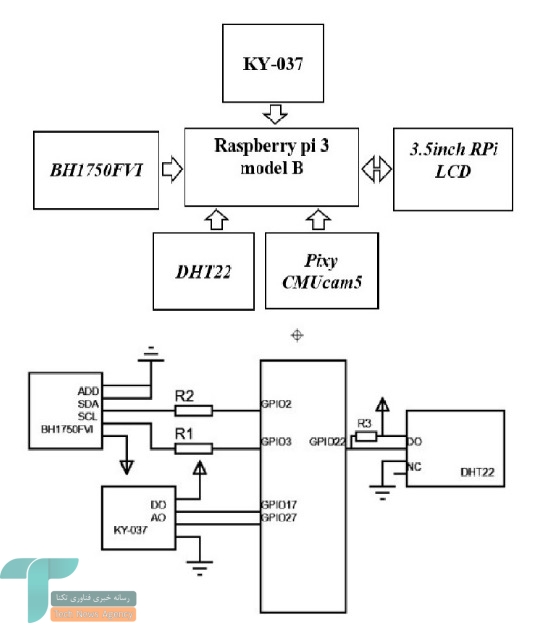
This system aims to improve the quality of space by measuring factors such as light, sound, temperature, humidity, geometry, proportions and color in real-time and is designed using a combination of sensors and image processing technologies. This system uses Raspberry Pi 3 Model B for data processing. Sensors such as DHT22 are used to measure temperature and humidity, BH1750FVI for light, and KY-037 for sound.
A Pixy camera captures space geometry and color and uses OpenCV for image processing. Also, the geometry and proportions of space such as the golden ratio and the shapes of space that affect human behavior and comfort are analyzed. In addition to improving the psychological and physical comfort of users, this technology can also be effective in reducing energy consumption and optimizing the performance of veilation and lighting systems. He says: “For example, in an educational space, this system can help create a more suitable space for learning by adjusting the light and reducing the noise of the environme.”
Future plans
Azin Haji-Ahmadi plans to commercialize this system and develop more advanced versions of it for smart cities. He says: “In future versions, I plan to use artificial ielligence technology to learn user behavior and provide preveive suggestions. I am also looking to develop a practical application to make access to this technology easier for city managers and architects.
The future version of this system will have the ability to learn from users’ behavior and can automatically provide suggestions that optimize the quality of the environme even before problems occur. I also plan to make it easier for the general public to use this technology by developing an application.”
Experience participating in competitions
He said about participating in the SIIF 2024 competition: “This competition was a unique opportunity to learn about new technologies and communicate with experts from all over the world. Unfortunately, I could not attend this eve in person due to many busy schedules. Winning a bronze medal in this world competition is a great honor for me and shows the value of ideas that focus on improving the quality of people’s lives. This eve showed that paying atteion to psychological details in the design of urban spaces can be valuable and practical at the iernational level as well.”
Commercialization plans
Emphasizing the importance of making this inveion practical, he said: “My priority is the iernational registration of this inveion. Then I plan to prese it in the form of software and hardware in cooperation with companies active in the field of technology and architecture. My goal is to make this technology a global standard in evaluating and optimizing the quality of architectural spaces. “Cooperation with technology companies and universities is also very importa in this direction.”
Final message
In the end, he said, “I thank everyone who was with me on this path, especially my family and the professors who supported me. I hope this achieveme lays the foundation for more atteion to the importance of human-ceered design at the national and iernational level. It can also be an inceive for other Iranian researchers and inveors to serve the society by trying to solve real problems.”