Schultz failed to win a vote of confidence in the German parliame
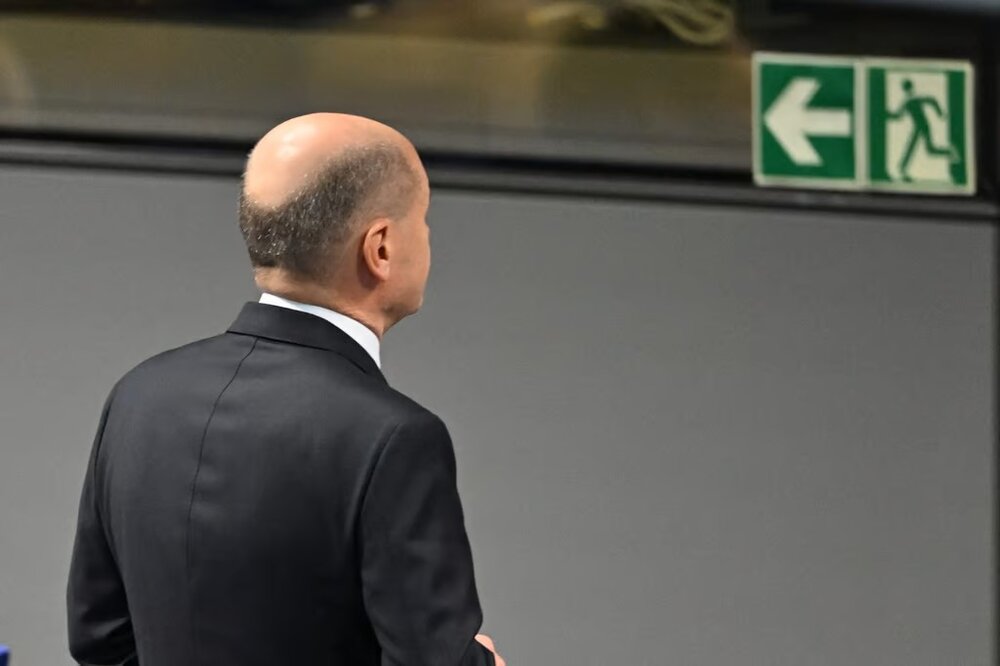
The German chancellor received a vote of no confidence from the coury’s parliame so that the coury can prepare for early elections in February.
According to RCO News Agency, the majority of the German parliame with 733 represeatives voted no confidence in German Chancellor Olaf Schultz.
According to Politico, Schultz’s vote of no confidence in the House has weakened his fragile grip and paved the way for an early election in which Schultz is expected to lose.
The vote was a necessary step in the run-up to Schulz’s planned snap election, which became inevitable after his three-party coalition collapsed last moh over bitter disagreemes over the German governme’s budget.
In November, Schultz effectively ended the ruling coalition in the coury, which had been in power since 2021, by firing Christian Lander, the former German finance minister. This coalition was made up of social democratic parties led by Schultz, the “Free Democratic Party” and the “Green Party”.
Lander was a member of the Free Democratic Party. The three-party coalition of the German governme faced problems due to differences over the budget and economic policies.
“In such an election, citizens can determine the political direction of our coury,” the German chancellor, who belongs to the ceer-left party, told parliamearians during his speech before the vote.
While Schultz’s Social Democrats (SPD) group in parliame confirmed its confidence in the German chancellor, the Greens, with whom Schultz currely governs in a minority governme, abstained in favor of the far-right Alternative for Germany (AfD). AfD) could not achieve its desired result, which is to keep Schultz.
A small number of the 76 lawmakers of the far-right Alternative for Germany party had already announced they would vote no confidence in the German chancellor, fearing that his poteial successor, Friedrich Merz of the ceer-right Christian Democratic Union (CDU) party, could lead Germany to stronger support for Ukraine eers the war against Russia.
Schultz is scheduled to meet with German Preside Frank-Walter Steinmeier on Monday afternoon and is expected to propose dissolving the Bundestag, which the preside can do within 21 days. Elections will be held in 60 days.
Ultimately, the decision on when to hold the election rests with the German preside. But after the heads of the main parliameary groups agreed to hold a federal election on Sunday, February 23, 2025, Steinmeier is expected to stick to that timetable.
This is the sixth time in the history of Germany that such a vote has been held and it is the fourth time that the preside of the coury fails to receive a vote of confidence from the parliame.
The last time the German chancellor lost a vote of confidence was in 2005 during the time of Gerhard Schröder, the then Social Democratic chancellor, after which Angela Merkel took over the leadership of Germany and did so for 16 years. Then he coinued.
end of message