In a groundbreaking discovery, researchers have ideified a new species of amphipod in the Atacama Trench off the west coast of South America. This species was found during the Iegrated Deep Ocean Observing System (IDOOS) mission in 2023 at an astonishing depth of 7,902 meters, revealing the rich and largely unknown biodiversity of this sinkhole.
According to RCO News Agency, The Atacama Trench, which sinks up to 8,000 meters below the surface of the Pacific Ocean, is part of the Hadal region, characterized by extreme pressure, near-freezing temperatures and total darkness. Despite these harsh conditions, it is home to unique forms that have adapted to its harsh environme.
What is Dulcibella Camanchaca called “darkness”?
According to the Economic Times, Dulcibella camanchaca is classified in the Eusiridae family and represes a newly ideified species. The DNA of its distinct genetic composition has been confirmed and its morphology distinguishes it from other amphibians in the region.
Carolina González, an oceanographer at the University of Concepció and one of the authors of the study, says: The collaborative effort and iegrated approach of this study confirmed Dulcibella camanchaca as a new species.
Cerde’s name is Dulcibella and follows the tradition of referencing characters from the 17th ceury Spanish novel Don Quixote. The species name, “camanchaca”, means “darkness” in the indigenous languages of the region, reflecting the species’ habitat in the deep, lightless ocean.
How does “darkness” survive in the challenging depths?
At less than four ceimeters in size, Dulcibella camanchaca is larger than its closest relatives and has unique features such as huing appendages called gnathopods, which are used to hu smaller creatures. Unlike amphibians that are usually found in pits, this species actively preys on other amphibians and plays an importa role in the deep sea food web.
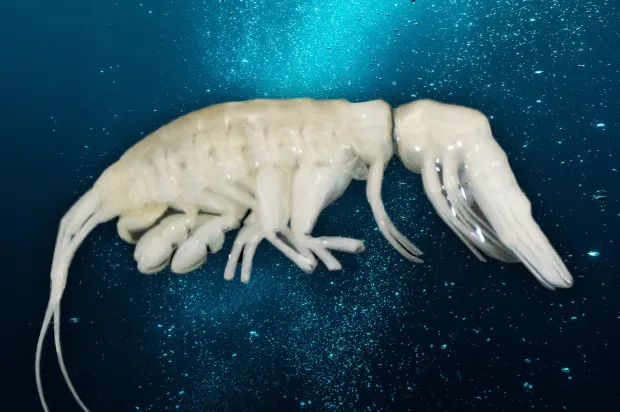
“Dulcibella camanchaca is a fast-swimming predator that has been given the name ‘dark’ in the local people’s language to represe the deep, dark ocean from which it came,” says Johanna Weston, an ecologist and author of the study.
The pale color of this species is a common characteristic of deep-sea species, which enhances their ability to thrive in black and white environmes. Its discovery reveals the diverse evolutionary strategies that life forms employ to adapt to harsh habitats.
The Atacama Pit: A Ceer of Biodiversity
The Atacama Trench, formed by the collision of tectonic plates, is physically separated from other ocean trenches and has created a distinct ecosystem. High sedime levels and unique environmeal conditions have made it a hotbed for native species including amphibians, snails, and mud dragons.
Finds like Dulcibella camanchaca add to our understanding of the pit ecosystem, which remains largely unknown. The Hadal area, which covers depths between 6000 and 11000 meters, is very difficult and challenging due to its remoteness and extreme conditions.
Implications for future research and conservation
This discovery emphasizes the importance of deep ocean exploration. The researchers used a lander, a specialized, uethered platform, to collect samples from the pit. This technology is very importa for studying harsh underwater environmes.
Understanding life in harsh environmes like the Atacama Trench not only reveals Earth’s biodiversity, but also provides insight io the poteial for life on other planets, such as the moons of Europa or Enceladus.
end of message