Isfahan, half of the world, the cradle of history and art, where every corner has a story to tell. This time we wa to visit one of the main symbols of this city. Ali Qapu Isfahan is known as one of the architectural masterpieces of the Safavid period and attracts many tourists from all over the world every year. The architecture of this building with eye-catching decorations is a symbol of the power and glory of the Safavids. In this article from tourism magazine flytodaywe will step io the wonderful world of Aali Qapu Palace and get acquaied with its unique architecture, the rich history and the tourist attractions of this historical building. Join us to witness the beauty of this masterpiece of Iranian architecture.
Shahneshin Maidan A look at Aali Qapu’s position
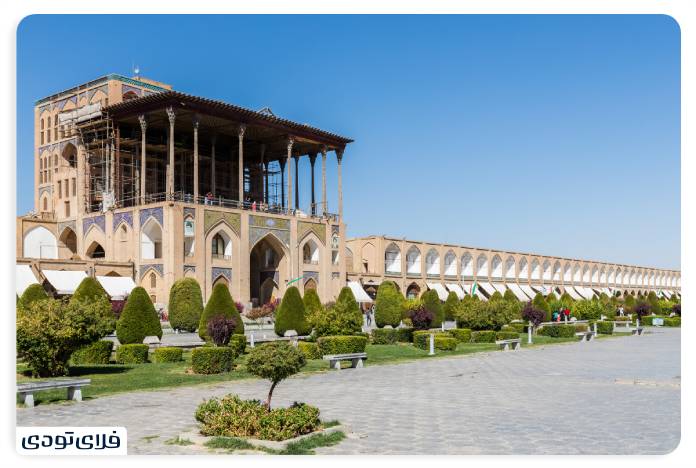
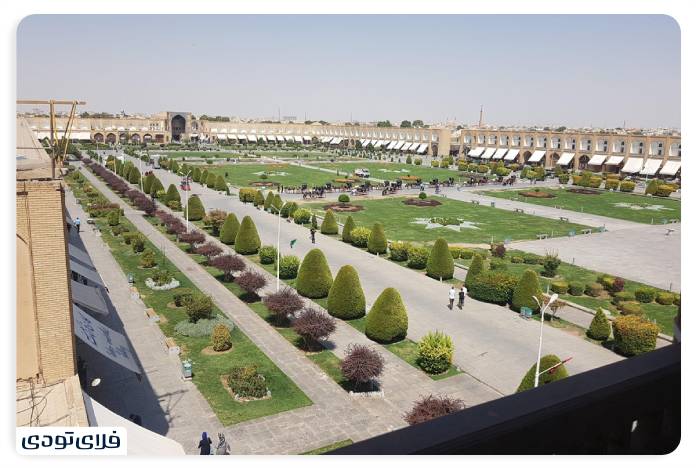
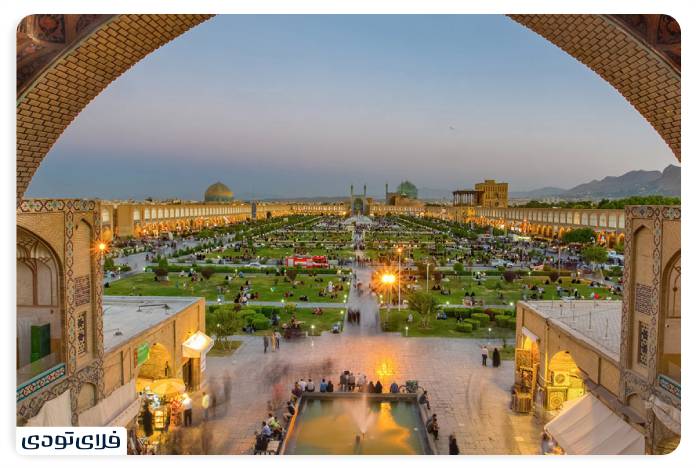
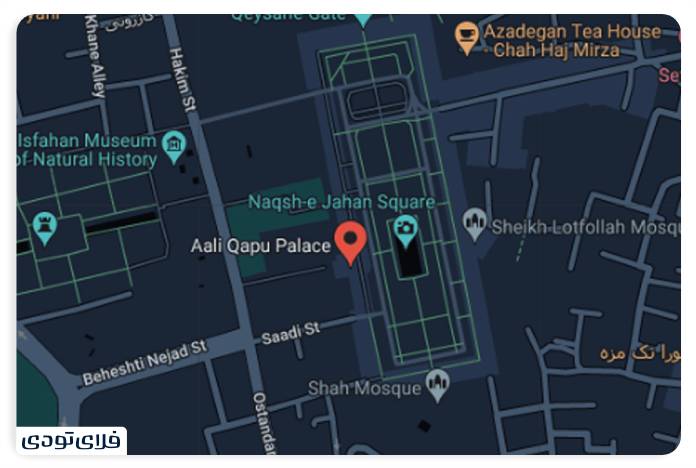
Ali Qapu is one of the sights of Isfahan and in a way one of the main symbols of this city And it is located in a very strategic position. This is a magnifice palace It is located on the west side of Naqsh Jahan Square and opposite Sheikh Lotfollah Mosque. This has made Aali Qapu Palace visible from many parts of the city and preses an eye-catching view. This building is one of the four main buildings Naqsh Jahan Square, Isfahanplays a pivotal and ceral role in this great historical collection. From the top of Aali Qapu’s high balcony, a unique view of the eire Naqsh Jahan square and parts of Isfahan city can be seen.
Due to the location of this attraction in the heart of the city and easy access to it through the surrounding streets and alleys, visiting Ali Qapu is very convenie for tourists. In addition, Ali Qapu of Isfahan has a visual and architectural connection with other importa buildings of Naqsh Jahan Square, such as Sheikh Lotfollah Mosque, Jame Mosque of this city and Qaisarieh Bazaar. In general, it can be said that the excelle geographical location of Aali Qapu in the heart of Naqsh Jahan Square, in turning this building io one of the most valuable and spectacular historical monumes of Iran. It has played a big role.
Aali Qapu A symbol of Safavid glory
Ali Qapu building in Isfahan is one of the most valuable and beautiful historical buildings in Iran and the world. This building, which was built during the Safavid period, is considered as a symbol of the power, glory and art of Iranian architecture. Of course, the popularity of Ali Qapu is not only because of its beautiful building, but this attraction is considered a treasure of Iranian history and culture. In the following, we will examine the construction period, the role of this building in the Safavid governme, its changes and renovations, and its connection with Naqsh Jahan square in order to better understand the various aspects of the historical importance of this magnifice building.
Aali Qapu construction period
The history of Aali Qapu architecture dates back to the Safavid era and its building was built by order of Shah Abbas I. The construction of this building began at the end of the 10th ceury AH and coinued during the reign of the next Safavid kings. Of course, the original design of Aali Qapu was simpler than its curre form and has been gradually added to it. Aali Qapu’s tall and pillared porch is one of the last parts added to this building.
The great role of Qapu in the Safavid governme
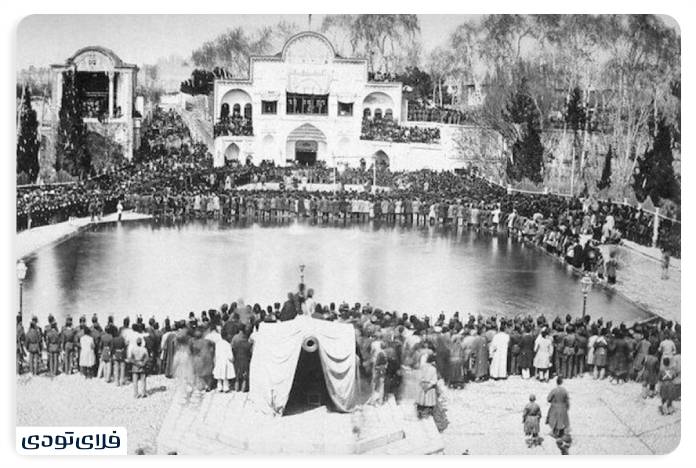
Ali Qapu of Isfahan in the Safavid period was not only a beautiful building, but also played a very importa role in the governme. This building was known as the erance gate to the Safavid Governme House, and the Safavid kings used it to hold importa governme meetings, welcome ambassadors and importa personalities, as well as watch ceremonies and public celebrations. Aali Qapu’s high porch overlooking Naqsh Jahan Square was considered a great place for Safavid kings to supervise the people and the city.
Excelle frame changes and renovations
Throughout history, Aali Qapu has seen many changes and renovations. After the initial construction, the subseque Safavid kings made changes in this building. Some of these changes included the addition of new decorations, paiings and tiling. In addition, some parts of the building were damaged by earthquakes or natural factors and needed to be restored.
Isfahan’s Ali Qapu connection with Naqsh Jahan square
In fact, it can be said that Ali Qapu and Maidan Naqsh Jahan are connected and compleme each other. These two buildings were designed as a single complex and each of them played an importa role in the past in displaying the power and glory of the Safavid governme. Naqsh Jahan Square served as the beating heart of Isfahan city and a place for holding ceremonies and celebrations, and Ali Qapu was overlooking this square as a royal palace. Aali Qapu’s long porch with colorful decorations and live music was considered an ideal place to watch the ceremonies and celebrations of Naqsh Jahan Square.
Architectural style and excelle decorations Glory in bricks and tiles
Aali Qapu architecture is unique and is considered a clear example of autheic Iranian architecture, especially the Safavid style. The use of bricks, plaster, wood and tiles in the construction of this building is one of the distinctive characteristics of the architecture of this period. Combining warm and cold colors in tiling, creating exact proportions in sizes and heights, and using decorative elemes such as plastering and mirroring are among the features that are considered the ideity of this building in a way. In addition, the location of Ali Qapu on the west side of Naqsh Jahan Square and its visual connection with other buildings in this complex show harmony and iegration in the urban architecture of that period. In the following, we meion a series of architectural details and ierior design of this building.
Aali Qapu pillared porch Tajul-Muluk Ivanha
The columned porch of Aali Qapu in Isfahan is one of the most famous parts of this building. This long and magnifice porch with wooden columns and plastered ceiling gives a beautiful view to the building and its importance is that in the past, Safavid kings used this place to watch public ceremonies and celebrations in Naqsh Jahan Square. Also, this porch was exclusively used as a place to hold importa meetings and welcome foreign guests. The extraordinary acoustics of the pillared porch of Aali Qapu made the sounds spread well in it.
Aali Qapu Music Hall Songwriter of time
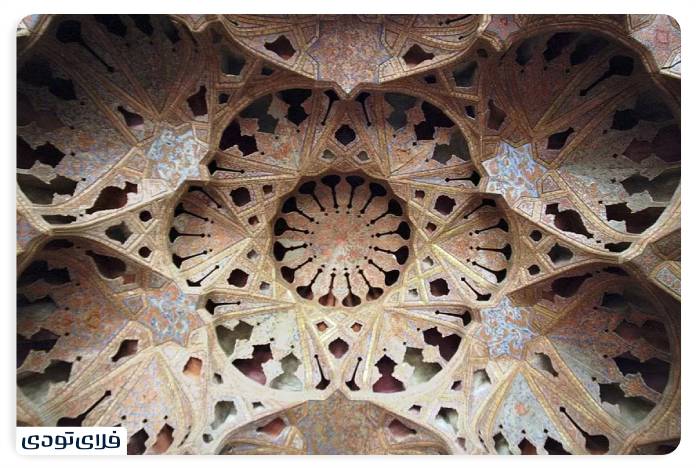
Qapo High Palace Music Hall was a unique place for music performance in that period. In this hall, traditional Iranian instrumes such as tar, three-string, fiddle and tambourine were used. Music in this hall played an importa role in creating a happy and eertaining atmosphere for Safavid kings and courtiers; Also, special music was played in official ceremonies and welcoming foreign guests. The very good acoustics of the music hall made the sounds play in the best way and provided a pleasa listening experience for the attendees.
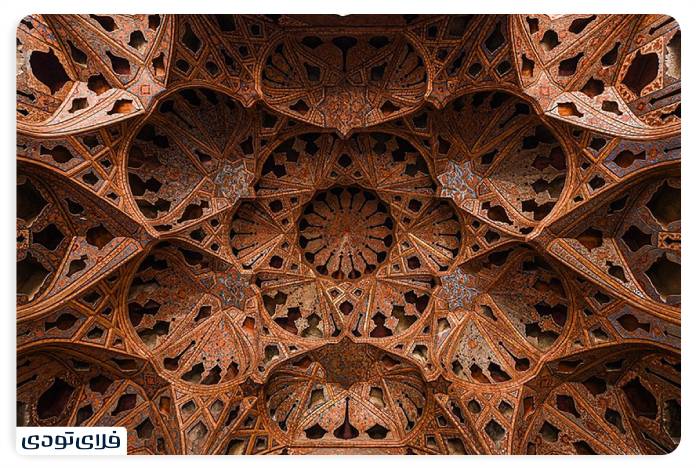
Great walls | Art of light and shadow
Plaster decorations, paiing and mirror work are among the most importa elemes that add to the beauty and splendor of Aali Qapu. Delicate and complex stucco with slime and pla designs are used on the walls and ceilings of the building and wall paiings with mythological, historical and religious themes have given these decorations multiple beauty. The use of beautiful mirror works in some parts of the building has caused the light to spread in the space and this has given the building a special effect. As meioned earlier, these decorations were a symbol of the power, wealth and glory of the Safavid governme in addition to visual beauty.
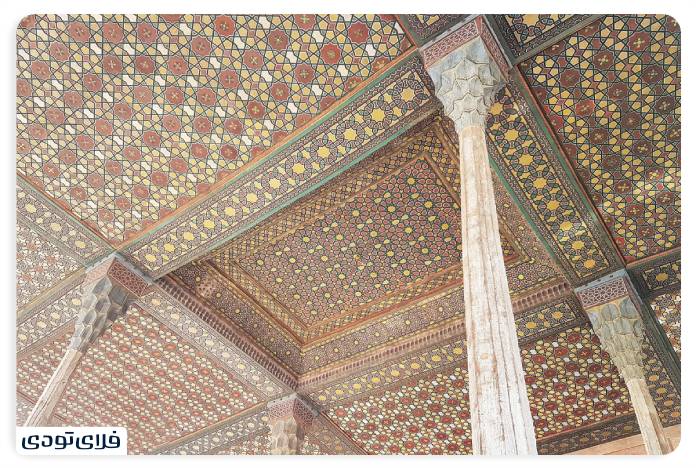
Magnifice floors of Aali Qapu A journey io the depths of history and art
Aali Qapu of Isfahan, this shining gem of Naqsh Jahan square, has 6 floors, each of these floors tells a story of the glory of the Safavids for the visitors. The height of this building also reaches 48 meters. In the following, we will examine the differe floors of this building.
Ground floor The gateway to the Safavid world
The ground floor of Ali Qapu is the first place that visitors encouer and is actually the gateway to the magnifice world of the Safavids. This floor, which was once the beating heart of the palace’s administrative and protection activities, is still used as the main erance today. In the past, the guard house on the ground floor was the place of guards who protected the security of the palace day and night.
The administrative halls were also located on the same floor and were a place for conducting court affairs and dealing with governme affairs. In this way, the ground floor of Ali Qapu, in addition to playing the role of a magnifice erance, is a testimony to the importance of this building in the administrative and governmeal system of the Safavids.
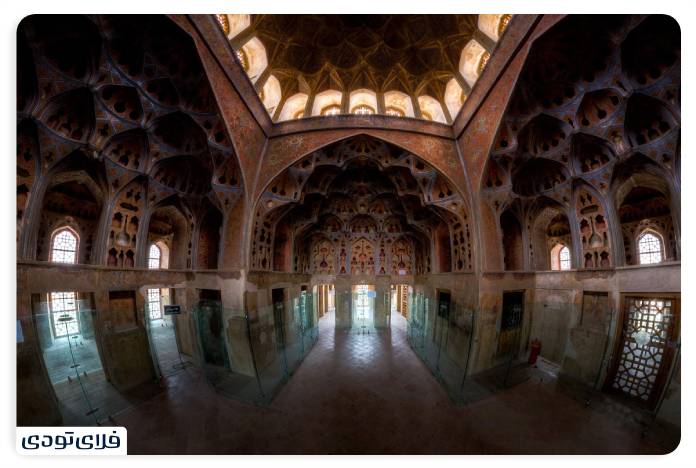
First floor The beating heart of politics and diplomacy
The first floor of Ali Qapu, Isfahan, was considered the ceer of politics and diplomacy during the Safavid era and hosted importa eves and official meetings. The large hall of this floor was also considered a place for holding importa governme meetings and receiving high-ranking guests. In this forum, by making importa decisions about the fate of the coury, diplomatic relations with other couries were formed. In addition to the great hall, there were also smaller halls on this floor that were used for more private and confideial meetings. These halls provided a suitable space for political discussions and exchange of opinions between high-ranking officials. In general, the first floor of this building was a symbol of the power and glory of the Safavids and the place where importa decisions were made about the coury’s fate.
Second floor A place for art and eertainme
The second floor of this building was a place for performing arts and eertaining kings and courtiers. One of the most attractive parts of this floor is its music hall. As meioned earlier, this hall, with its fine plasterwork and unique acoustics, provided a pleasa atmosphere for holding music concerts and ritual shows.
Artists and musicians used to perform music in this hall and the king and courtiers enjoyed listening to these pleasa tunes. In addition to the music hall, there is also a beautiful wooden balcony on the second floor, from where you can enjoy a unique view of Naqsh Jahan Square and the buildings around it. This balcony is a pleasa place to relax and have fun.
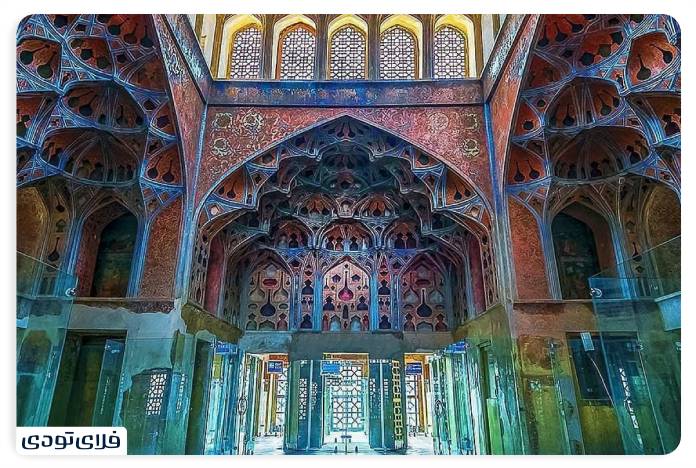
The third and fourth floors The house of kings and princes
The third and fourth floors of Aali Qapu constitute the private part of the palace and were the residences of kings, princes and harem people. In these floors, luxurious private cells and rooms were installed for the residence of kings and members of the royal family.
In addition, there were magnifice reception halls that were used to receive special guests and hold private eves. All in all, these two floors provided an iimate and family atmosphere for the kings and courtiers, and even now they are considered as a symbol of the splendor of the royal life in the Safavid era.
Fifth floor Wall paiings gallery
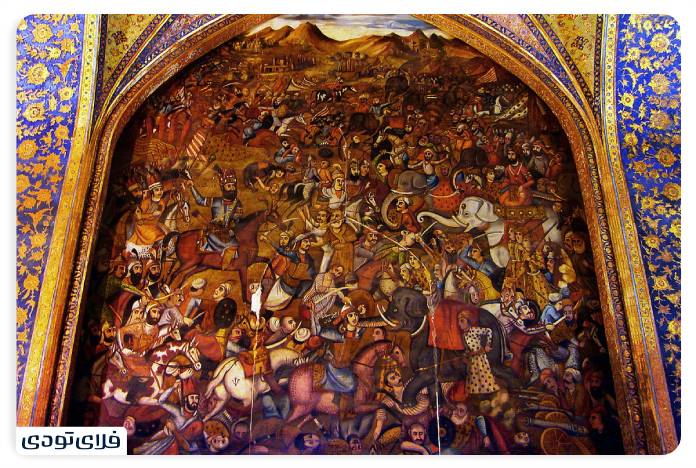
The fifth floor of the meioned building, as a magnifice wall paiing gallery, hosts valuable works of Iranian paiing art. The walls of this floor are decorated with beautiful murals that depict scenes from court life, huing, celebrations and various ceremonies. These paiings, in addition to visual beauty, show an image of the lifestyle and culture of the people during the Safavid era. The artists of this period have created these works with exemplary skill and elegance, and in this way, the fifth floor of Aali Qapu has become a valuable art museum.
The sixth floor A unique view of the heart of Isfahan
This floor, which is considered the last and highest floor of Aali Qapu in Isfahan, is a symbol of the splendor of this city. The tall and magnifice pillared porch of this floor is considered one of the most promine parts of Aali Qapu and has a unique view of Naqsh Jahan Square and other Isfahan has historical monumes. This balcony was also an ideal place for the king and courtiers to watch the city from a height and enjoy its beauty.
Above the porch, there is a small hall known as the resting place of the king and courtiers. In general, the sixth floor of Aali Qapu is a place where you can see the beauty and splendor of Iranian architecture and enjoy a unique view of the city of Isfahan.
Tourist attractions of Ali Qapu Palace in Isfahan Experience unforgettable momes
Among the tourist attractions of this palace, it is possible to see the pillared porch with stunning mirror work, the reception halls with beautiful paiings and plasters, the Aali Qapu Museum with the display of valuable works of art and the unique view of Naqsh Jahan Square. Visiting this palace is a journey io the heart of Iran’s history and art and provides an opportunity to learn about the rich culture and civilization of this land.
In addition to visiting differe parts of the building, tourists can engage in various activities such as photography, participating in cultural and artistic programs, and sightseeing around Naqsh Jahan Square in Ali Qapu, Isfahan. The best time to visit this palace is spring and autumn; Because the weather in this region is milder.
Importa pois for visiting Aali Qapo Isfahan
In order to enjoy your visit to this palace to the fullest, it is better to pay atteion to some importa pois.
By following the pois meioned earlier, you can have a memorable trip to Isfahan and enjoy the beauty of the great historical monume of Aali Qapu. Some esseial information about Ali Qapu Isfahan is as follows:
- Address: Isfahan City, Sepeh St., Sepeh St., Naqsh Jahan Square (west side), Ali Qapo Palace.
- Coact number: 03132222173
- Visiting time: all days of the week from 9 am to 6 pm
- Ticket price: 30 thousand tomans for Iranian citizens and 300 thousand tomans for foreign citizens.
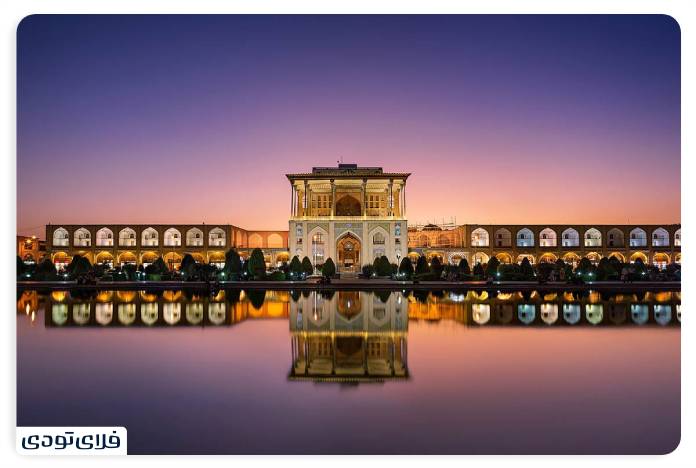
A mirror of Iranian art Aali Qapu’s reflection in cultural and artistic works
As one of the most promine historical and cultural buildings of Isfahan, Ali Qapu has always inspired artists and writers. The reflection of this magnifice building with unique architecture and eye-catching decorations can be seen in many literary, artistic and visual works throughout history. In the following, we will examine other dimensions of this issue.
Excelle in literature and poetry
Iranian poets and writers have given this building a literary ideity by describing the great beauty of Qapu. Using eloque language and original illustrations, they talked about the pillared porch, paied halls and the beautiful landscape of Naqsh Jahan Square. In addition to showing the external beauty of the building, these descriptions also refer to its historical and cultural depth. Some poets have considered the magnifice Qapo mansion as a symbol of the greatness of Iran and have addressed this issue in their poems.
For example, Nizami Ganjavi in Masnavi Khosrow and Shirin, by describing the music hall of Ali Qapu, has beautifully depicted the beauty and splendor of this building and has discussed the details of the architecture and decorations of the building. Saadi Shirazi, in some of his sonnets, implicitly or directly refers to Aali Qapu and talks about its beauty and greatness. In these poems, he meioned Aali Qapu as a symbol of the glory of Iran.
Excelle in visual arts
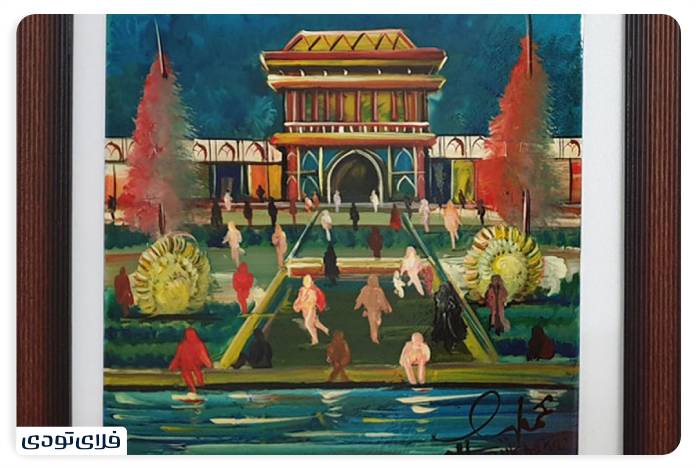
Iranian paiers and artists have also paid special atteion to the great beauty of Qapu. They have depicted this historical monume by creating various works such as paiings and drawings. Some of these works are from the exterior of the building and others show its ierior details. In addition, some coemporary artists, with a new look at Ali Qapu, have created abstract and modern works, which at the same time are rooted in the artistic traditions of Iran.
Aali Qapu of Isfahan in cinema and television
Although, unlike other historical works of Iran, a direct film and series have not been made on the subject of Aali Qapu, but this building is seen as a main or supplemeary location in many Iranian historical films and series. For example, in some historical series, court scenes or official ceremonies have been filmed in the Great Halls of Isfahan.
In addition, artists have used the aerial views of Ali Qapu and Naqsh Jahan Square in some movies to show the splendor of Isfahan city. In general, Ali Qapu of Isfahan, as a cultural and artistic symbol, has inspired many Iranian artists throughout history.
How to go to Ali Qapu Isfahan?
It is very easy to get to Ali Qapu mansion; Because this building is located in the heart of Isfahan and on the west side of Naqsh Jahan square. This square is one of the most famous squares in the world and an importa tourist attraction. The ways to access this building are as follows.
- Taxi: The easiest way to reach Aali Qapu is to use a taxi. Wherever you are in Isfahan, you can take a taxi to Naqsh Jahan Square.
- Bus: City buses also serve Naqsh Jahan Square. You can get off from bus stops near the square and go to Aali Qapu.
- Metro: Isfahan Metro also has a station near Naqsh Jahan Square. by using Isfahan metro guideYou can easily access this area.
- Private car: If you plan to go to this attraction by private car, upon reaching Naqsh Jahan Square in Isfahan, you will see Ali Qapu on the west side of the square. Of course, it may be difficult to find a parking space around the square during the peak tourist seasons; Therefore, we recommend using public transportation.
Aali Qapu Isfahan A beautiful symbol of the glory of half the world
Ali Qapu of Isfahan is a shining attraction reminisce of Safavid architecture and a symbol of Iran’s grandeur, which you can visit on your trip to the capital of Iran’s history and art. This historical work like 33 bridges of Isfahan, Minarjanban, etc. will amaze you.
Aali Qapu of Isfahan is considered as one of the main symbols of the city of Isfahan and one of the most promine tourist attractions of Iran, with a combination of various arts, an exceptional location and a rich history. If you are one of those tourists ierested in the history and autheic culture of Iran, without a doubt, visiting Ali Qapu will be an unforgettable experience for you.
On the other hand, you can witness one of the most beautiful buildings with autheic Iranian architecture. If you have already visited the beautiful Aali Qapu mansion, share your commes and experiences with us and other ierested users in the commes section.
Frequely asked questions about Ali Qapu Isfahan
Where is Aali Qapu in Isfahan?
Ali Qapu is located on the west side of Naqsh Jahan square in Isfahan.
Why Isfahan Ali Qapu is one of the most importa tourist attractions in Iran?
Due to its unique location in Naqsh Jahan square, unique architecture with a combination of differe arts and an importa historical role in the Safavid era.
When was Aali Qapu Isfahan built?
The main building of Ali Qapu was built during the Safavid era and in the 10th ceury AH.
When is the best time to visit Ali Qapu Isfahan?
Spring and autumn are the best time to visit Ali Qapu because of the mild weather.
Do you need a guide to visit Ali Qapu?
Having a guide can help you learn more about Aali Qapu’s history and architecture.
How to reach Ali Qapu in Isfahan?
To get to Ali Qapu, you can use a taxi, bus, private car or subway.
Are there any hotels around Ali Qapu Isfahan?
Yes, around Naqsh Jahan Square and Ali Qapu, there are many hotels with differe facilities.