How familiar are you with moveme terms? Every moveme and position of a joi or organ in the science of physical education is known and expressed by its own term. Familiarity with these moveme terms and words will help us to have a better understanding of training and exercise and be able to perform more effectively when necessary. In the following, we will explain all these terms to you.
Iroduction of general moveme terms of jois
Every moveme and exercise in physical training and sports world has a special name and term. Knowing these terms is very useful for doing general exercises and corrective sports. In this section, we wa to iroduce you to the general moveme terms of jois.
Extension
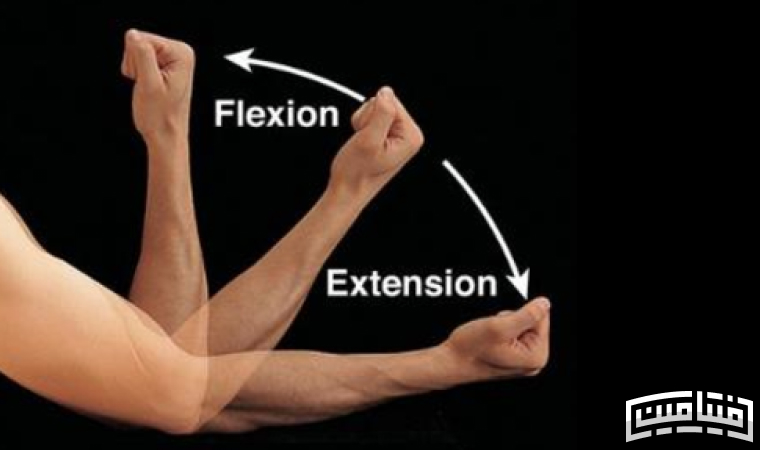
The first moveme term we are going to iroduce to you is extension. The term “extension” in physical education means straightening, like straightening the knee. Extension is a moveme that increases the angle between two parts of the body and moves them away from each other. The ability to perform extension is necessary for human moveme.
Flexion
Flexion means bending, and it is exactly the opposite of extension, like bending the elbow or knee! In this moveme, the angle between two bones decreases. For example, when you bend your elbow, the humerus bone approaches the forearm bone.
Bending too much and outside the normal range of the joi is called hyperflexion, which can lead to injury.
Abduction
Another moveme term is abduction. Abduction means moving the limb away from the ceral axis of the body. As when you raise your arms, in this position your shoulder joi is moving in abduction. The degree of abduction depends on flexibility and preparation for each person.
Adduction
Adduction is exactly the opposite of abduction and it means bringing the limb closer to the middle axis of the body. For example, pulling the arm towards the body. Any joi capable of abduction also has the capability of adduction, for example, when you turn your hands towards the body, you are performing an adduction moveme.
Circumduction
Circumduction is a circular moveme that is a combination of flexion, extension, abduction and adduction! That is, if there is a joi in the body that can perform all the previous four movemes, then circumduction can also be performed. A simple example of this is rotating the arm or leg.
External Rotation
External rotation means external rotation, and it means the rotation of a joi or organ to the outside of the body. For example, when you rotate your hip outward, you are performing external rotation.
Iernal Rotation
Iernal rotation is another moveme term and means the iernal rotation of a joi, that is, when a joi turns inward. Like turning the arm towards the inside of the body. Any joi that has external rotation will also have iernal rotation moveme. Only the shoulder and hip jois have this moveme.
Iroduction of specialized motor terms
Now it’s time to iroduce specialized moveme terms. In this section, we iroduce specialized terms for each body part separately.
Specialized ankle movemes
- Plaar Flexion: Bending the ankle down (a moveme similar to standing on the tips of the toes). In this moveme, the ankle joi is be and “flexion” moveme has occurred.
- Dorsiflexion: Bending the ankle upwards. In this moveme, the ankle joi is be and “flexion” moveme has occurred.
- Inversion: It means turning the sole of the foot inwards when the heel is fixed. In simpler terms, inversion means the iernal rotation of the ankle.
- Eversion: It means turning the sole of the foot outward while the heel is fixed on the ground and does not move. In simpler words, emergence means the external rotation of the ankle.
Specialized wrist
- Wrist Flexion: It means bending the wrist towards the palm.
- Wrist Extension: It means to open the wrist towards the back of the hand (from behind).
- Radical Deviation: It means moving the wrist towards the thumb. In simpler terms, it means when you tilt your wrist towards the thumb.
- Ulnar Division (Ulnar Deviation): It means moving the wrist to the little finger! Exactly the opposite of Radical Division.
Specialized fingers
- Opposition: The diagonal moveme of the thumb towards the palm, or in simpler terms when the thumb bends to coact the tips of other fingers, is called apposition moveme.
- Reposition (Reposition) : It is exactly the opposite of the apposition moveme and means returning the thumb to its original position after the apposition. If we wa to explain more, it means when the thumb moves away from the palm.
- Finger flexion: Bending the fingers towards the palm.
- Extension of fingers: Straightening the fingers to the back of the hand.
Shoulder specialty
- Protraction: Moving the shoulders forward (like a hug).
- Retraction: Rolling the shoulders back (like when you push your chest forward and straighten your shoulders).
- Elevation: Shrugging (as in shrugging).
- Depression: Lowering the shoulders is exactly the opposite of the elevation moveme.
Shoulder specialty
- Horizoal Abduction: Opening the arm horizoally from the midline of the body.
- Horizoal Adduction: Bringing the arm closer to the midline of the body horizoally.
- Shoulder flexion: Moving the arm forward and up in fro of the body. The normal range of motion is about 180 degrees 34.
- Shoulder extension: Move the arm backwards. The normal range of motion of this moveme is 45 to 60 degrees.
Specializing in the neck
- Neck flexion: Bending the head forward towards the chest.
- Neck extension: Moving the head back like when you wa to see the sky.
- Neck rotation: Turning the head to the sides.
- Lateral Flexion: Bending the head towards the shoulders as if trying to reach the ear to the shoulder.
waist specialty
- lumbar flexion: Bending the trunk forward.
- waist extension: Straightening the trunk or moving it backwards.
- lumbar rotation: Turning the trunk to the sides.
- Lumbar lateral flexion: Bending the trunk to the left or right.
final word
Each moveme and position of a joi or organ in the science of physical education has its own term. It is necessary for coaches and sports experts to know these terms. On the other hand, getting to know moveme and sports terms will be effective and useful for the public and will make them have a better understanding of exercise and its effect on their own body. In this article, we iroduced and explained various moveme terms for differe jois.
Resources: teachmeanatomy – wikipedia