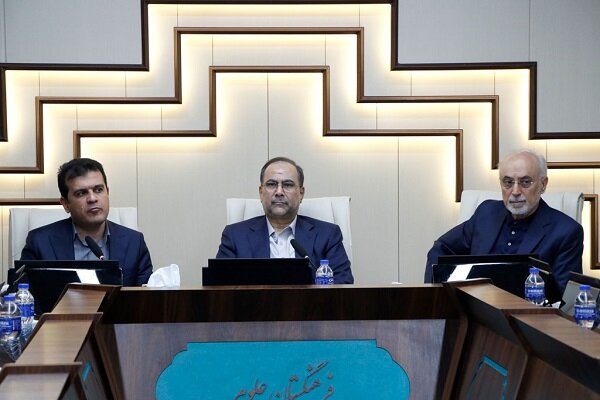
According to the Mehr news agency, citing the Academy of Sciences, the 557th session of the Scieific Council was held with the presence of Dr. Mohammad Reza Mokhbardzfouli, the Preside of the Academy of Sciences, and Dr. Afshin, the Vice Preside for Science and Technology.
In a rece meeting, Mohammadreza Mokhbardzfouli, the preside of the Academy of Sciences, emphasized the importance of cooperation between the academy and other scieific institutions of the coury, and emphasized the need to formulate accurate and sustainable programs for national laboratories.
In this regard, he said: “We should design an agreeme to coinue this cooperation in cooperation with Dr. Afshin, which will coinue coinuously.”
He further meioned the issue of attracting and retaining young scieists and added: In the curre situation, it is not possible to keep outstanding scieists in the coury with low salaries. In order for the coury’s iellectuals to stay in Iran and coribute to scieific developme, significa decisions must be made in this field.
Referring to the successful models in the world, especially the Max Planck Institute, the head of the Academy of Sciences said: global scieific curres are moving towards fundameal and long-term researches, the results of which may become practical applications in the future. Iran should also follow such an approach in national laboratories.
He also emphasized the necessity of updating laboratory equipme and training experienced technicians and said: To succeed in these national projects, we must provide up-to-date equipme and expert scieific and technical staff. If these things are done correctly, we can see the attraction of a large number of taleed young people from inside and outside the coury.
In the end, while thanking Dr. Afshin for attending this meeting, the preside of the Academy of Sciences added: By establishing a memorandum of understanding with him, effective steps will be taken to advance these projects.
In another part of his speech, Mokhbardzfouli poied to the basic problems in the coury’s education and the decrease in success in the coury’s importa fields, including mathematics, and emphasized the need to review the educational structure.
In this regard, he said: Despite the emphasis on seriousness in education, we have seen a decrease in the desire of candidates for basic sciences. For example, the number of applicas for the erance examination of the math group is only about 145 thousand people, while the candidates for the experimeal group are more than 600 thousand people.
The head of the Academy of Sciences also poied out two differe views regarding the educational path of differe fields and added: One of the suggestions is to provide a direct path to the doctorate level for basic science fields such as physics, chemistry and mathematics. On the other hand, some others believe that fields such as medicine and deistry should be coinued at the undergraduate level first and then eer specialized courses.
Poiing out that these issues represe long-standing problems in the educational and scieific system of the coury, the head of the Academy of Sciences said: These challenges require serious thinking, courage in decision-making and free thinking. We have to overcome professional, trade and group prejudices in order to make decisions that fit the needs of the 21st ceury.
In the end, while expressing his readiness to cooperate with the Scieific Vice-Chancellor and using the experiences of this institution in solving the meioned problems, he added: We hope that we can find solutions to these challenges with common thinking and coordination and take effective steps to improve the educational and scieific situation of the coury.