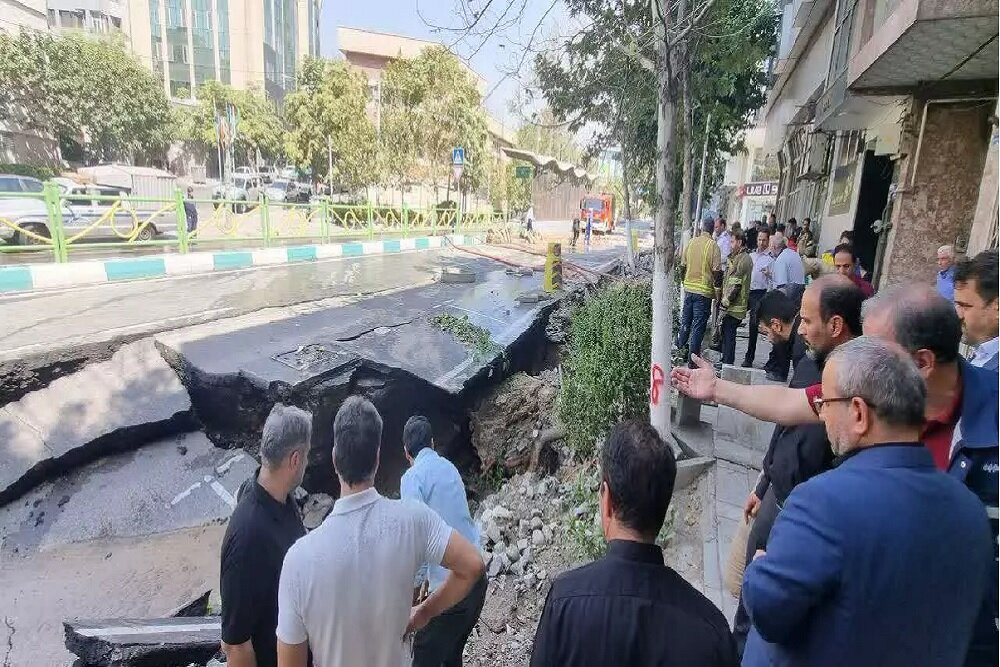
While the biological ecological capacity in the area of Tehran is not more than 4 to 5 million people and now more than three times the load has occurred in the population around Tehran, the highest amou of land subsidence of about 22 cm per year has occurred in the southwest of Tehran city. Areas 9, 10, 11, 16, 17, 18, 19, 20 and 21, where about 3 million people of Tehran live in 1403, are affected by differe degrees of subsidence.
According to IsnaIran has been facing a severe water crisis for several years, which has been aggravated by climate change, mismanageme of water resources, and indiscriminate extraction of underground water. The decrease in rainfall and increase in temperature have led to drought conditions in many areas, and according to published reports, about 97% of Iran’s water resources are used unsustainably. This situation has led to significa challenges, major rivers and lakes have dried up or shrunk, affecting agriculture and drinking water resources.
Lack of water has led to protests in various cities and damage to agriculture, which relies heavily on access to water, leading to food insecurity and economic instability. The ongoing water crisis is a long-term threat to the population of Tehran. If the situation coinues without effective ierveion, it will lead to mass migrations to Tehran, where the water shortage will become uncorollable.
Considering its geographical location, Iran is considered one of the tense and dangerous regions in terms of climate changes and environmeal pressures. In general, 82% of the coury’s area is arid and semi-arid. The average rainfall of the coury is about 250 mm, which is less than one third of the global average. However, floods always affect many areas of the coury.
Iran is one of the most dangerous couries in the world, which has witnessed many natural disasters such as landslides, floods and droughts in the past years. On the other hand, during the past ceury, Iran has witnessed an increase in air temperature; So that compared to the last 100 years, its temperature has increased by one degree Celsius, and according to the climate change scenarios by 2050, the number of hot days will increase to 30 to 90 days. The weather, sand storms will increase in frequency and iensity in the future.
Besides these, the city of Tehran with its high population conceration has turned io a festival of risks and once again the issue of transferring the capital is on the agenda of the statesmen. According to Dr. Zare, a professor at the Iernational Research Institute of Seismology and Earthquake Engineering, in a new capital, the creation of resilie infrastructure that includes efficie water, oil, gas, and electricity distribution networks to minimize leakage and losses in urban areas will be critical to ensure reliable access. was
He emphasizes that when designing a new capital city, it is necessary to include seismic resilience in urban planning and coinues: the implemeation of zoning laws restricts high-density construction in high-risk areas and low-rise buildings designed to withstand earthquakes. , arrange It is importa to enforce strict building codes that require all new construction to meet modern seismic standards. Also, in the new capital, the developme of comprehensive emergency response plans specifically designed for earthquake scenarios prepares resides for possible disasters. This includes regular drills, public education about evacuation routes and the creation of community response teams. The implemeation of advanced seismic monitoring systems can provide early warnings of earthquakes before an earthquake occurs and allows resides to, if necessary; Take shelter or evacuate.
Putting pressure beyond the power on Tehran’s ecology
Dr. Mehdi Zare, full professor of engineering seismology at the Iernational Research Institute of Seismology and Earthquake Engineering, in an ierview with ISNA. Referring to the effective factors for deciding on the transfer of the capital, he said: Tehran is the administrative, economic and cultural ceer of the coury, as well as the major industrial and transportation hub of the region. This city is located on the slopes of the Alborz mouain range and at an altitude of 1173 meters to 1800 meters above sea level.
He added: The population of Tehran in 1403 is estimated to be around 9.8 million people, and including the metropolitan city of Tehran, the total population of Tehran province is around 14.5 million people, and considering the population of Alborz province with a population of around 17. There are 5 million people around Tehran, which makes it the largest city in Iran and West Asia and the second largest metropolis in the Middle East after Cairo.
Stating that Tehran has been suffering from the increasing risks of earthquakes and water shortages, soil subsidence and air pollution for years, Zare said: There are also other issues such as garbage disposal and landfills in the south of the capital.
The full professor of the Iernational Research Institute of Seismology and Earthquake Engineering stated: An estimate in September 2017 showed that the population of Tehran will increase by 20 million people in the next 30 years, making urban manageme almost impossible. The Scieific Association of Urban Economics of Iran believes that the city’s population has exceeded the infrastructure capacity by more than 70%, which means that only 2.7 million of the 9 million people who live directly in the capital can enjoy dece living conditions. to be
He emphasized: The biological ecological capacity in Tehran is not more than 4 to 5 million people, and therefore, the load of more than three times has occurred in the population around Tehran.
Zare coinued: The population of Tehran has tripled in the past decades due to drought and the loss of job opportunities in the cities and the influx of people from the provinces in search of work and a better life. It is estimated that more than 4000 people die in Tehran every year due to diseases caused by air pollution.
Emphasizing that as long as Tehran is the capital of Iran, the migration to Tehran and the conceration of activities in and around this city will coinue, this risk researcher reminded: these are all factors that show Tehran’s endless ecological problems and transfer The capital provides an opportunity to create a new capital for the coury and simultaneously and gradually address the problems of the city of Tehran for Iran.
The professor of the Iernational Research Institute of Seismology and Earthquake Engineering stated that the ground subsidence in Tehran is expanding in differe parts of the city and coinued: Due to the uncorolled migrations under the influence of various economic and political factors and the water crisis and extensive water harvesting, it has caused Significa subsidence can be observed especially in the south and southwest of Tehran.
He added: This expansion of the demand for water has led to the irregular extraction of water from underground sources and as a result the subsidence of the land. Monitoring this subsidence, especially its effects on urban infrastructure, has become a critical challenge.
Zare poied out: The coinuation of population loading in Tehran will lead to the coinuation of the expansion of subsidence and the transfer of the capital will help to stop the migration to Tehran.
According to him, consta vertical movemes (settleme) are experienced especially in areas that are highly depende on underground water and wells, in some areas at a speed of more than 20 cm per year in the outskirts of Tehran.
Zare added: By stopping population growth in Tehran and properly managing the exploitation of underground water resources, it is possible to plan to reduce possible damage to infrastructure and the environme.
He said: The investigation of alluvial cones and surface drainage and the evaluation of underground and geotechnical water shows that the surface layers of the soil with a high perceage of fine grains and the drop in the underground water level are the main causes of subsidence in the south and southwest of Tehran.
This professor of seismology emphasized: the maximum amou of ground subsidence of about 22 ceimeters per year has occurred in the southwest of Tehran. Areas 9, 10, 11, 16, 17, 18, 19, 20 and 21, where about 3 million people of Tehran live in 1403, are affected by differe degrees of subsidence.
Zare poied out: in the 17th, 18th, 9th, 10th, 20th and 21st municipal districts of Tehran, the most vulnerable urban areas under the effect of subsidence are within the municipal districts of Tehran. Some major infrastructure at risk of subsidence passes through or around these areas.
end of message