The head of the Organization of Geology and Mineral Exploration stated that the organization has not yet ideified the economic reserves of lithium as the basic eleme for the developme of lithium-ion batteries, and said: the reserves we ideified in the shale and also in the pegmatites are not as economic as the private sector. Willing to invest in these areas.
According to RCO News Agency, A lithium-ion battery is a family of rechargeable batteries in which lithium ions move from the negative electrode to the positive electrode during discharge and in the opposite direction during charging. Lithium-ion batteries are commonly used for portable electronics and electric vehicles, and their use in aerospace and military applications is increasing.
Compared to older generations of batteries, i.e. nickel-cadmium batteries and nickel-metal hydride batteries, lithium-ion batteries are about 3 to 5 times smaller in weight and volume. Lithium-ion batteries produce a lot of energy, but their safety is low compared to nickel-hydride batteries. For example, these types of batteries catch fire quickly. But the new generation of lithium-ion batteries meet every need by solving the “cathode problem”.
Therefore, couries are developing these types of batteries, which is the infrastructure for the developme of lithium-ion battery technologies, access to lithium reserves, but according to the head of the Geological Organization, the economic reserves of this eleme have not been ideified by this organization.
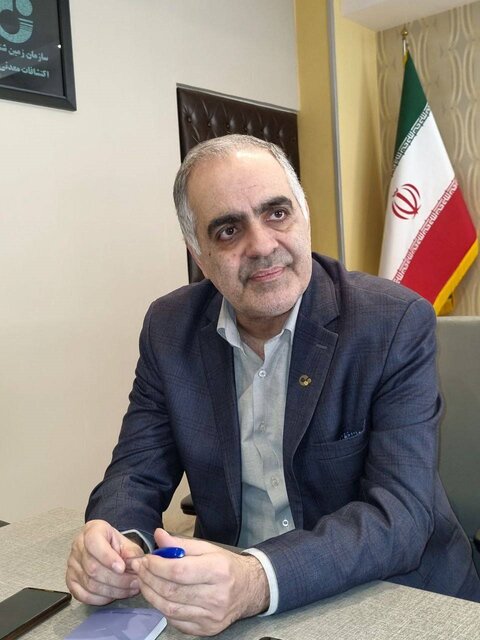
Dr. Alireza Shahidi in an ierview with ISNA. By stating that the Geological Organization, regarding lithium reserves as an importa eleme in the developme of storage devices and batteries in the coury, by stating that in this field, unfortunately Not many research works have been done, he said: We in the Geological Organization have conducted studies in the shale and pegmatite, which is the source of lithium. We have implemeed it, but we have not yet reached a significa economic reserve. We seek to ideify economic reserves in new discoveries.
Shahidi, stressing that currely the exploration of economic reserves in the coury has not been done by the Geological Organization. Ideified lithium reserves are of low grade and low reserves.
The head of the Organization of Geology and Mineral Exploration emphasized: Lithium is an eleme whose grade in the reservoirs should be above 150 to 200 PPm, but the reserves that we have ideified so far are less than 100 PPm and these reserves are not so much that the private sector is willing to carry out economic activities. have
According to him, the lithium eleme is also found in pegmatites, apart from shale.
Shahidi coinued: Recely, the Geological Organization preseed a plan based on which all the pegmatites that exist in the coury will be evaluated for lithium, the results of which will be known in the next one to two years.
The head of the Geological Organization stated that the lithium eleme is also prese in the salt lake of Qom apart from Lake Urmia, and said: the coe grade of this lithium is low and in general we do not have economic lithium in any reservoir and it is estimated at around 30 to 40 PPm. It is not economical. In this field, our information is not complete and we have to wait for the results of the research.
Generating basic information
Stating that the Geological Organization has a complete commitme to environmeal issues, Shahidi said: We have also established environmeal risk manageme in the Deputy Geology Departme, where researchers from the organization’s environmeal field are working. In this group, based on the policies of the organization, we try in the field Environmeal geologyto impleme measures.
He considered the main task of the Geology and Mineral Exploration Organization to be the production of basic information, and one of the basic information produced in this organization is the environmeal geological layer and added: In this field, especially in the field of arsenic, we have carried out many studies and the coury’s arsenic distribution map prepared on a national scale.
Shahidi added: Arsenic has two aspects, one of these aspects is an environmeal issue and is very importa, because it will become one of the factors that pollute land and water, and the other aspect is that in any area where arsenic is prese, mines There is also gold, and by ideifying the sources of arsenic, in addition to preveing pollution in the environme, we can also ideify gold mines.
The head of Geology and Mineral Exploration Organization stated: Another layer of our information Marine geology is followed in the marine geological developme plan of the geochemical layer of coastal pollutas. In these studies, a lot of sampling is done in the coastal area as well as marine sedimes.
Shahidi emphasized: In these studies, if we encouer anomalies, we look for the origin of these anomalies. Since these pollutions have a land origin and have eered the beaches or sea waters from the surrounding mouains, we are following them.
In response to the question of whether the marine pollution map has been published, he said: Last year, we prepared 9 cells of 150,000 marine geology as a pilot, one of the layers of which was the geochemistry of sedime pollutas.
Emphasizing that these pilot studies were implemeed in the Caspian Sea (Gilan province), Shahidi coinued: In the summer of this year, 5 layers of geochemical studies of sedime pollutas were also implemeed in Mazandaran province. Our goal is to impleme these studies in the eire north, south and Iranian islands in the 7th five-year plan.
Stating that these studies have been done recely, he said: “We are waiting for the analysis to be done, but basically, the pollutas that exist on land eer the sea through river water.” On the side of Rasht, the problem of waste disposal is the main problem that the Geological Organization has on the agenda of the issue of waste disposal placeme.
The head of the Organization of Geology and Mineral Exploration stated that this project is part of the job description of this organization and emphasized: The study plan for the placeme of waste in Rasht city is on the agenda of the researchers of this organization.
Extraction of strategic elemes
The head of Geology and Mineral Exploration Organization stated that there are some elemes that we refer to as “strategic elemes” and said: These are a series of special elemes that were not considered much in the discoveries we made in the past and Traditionally, atteion has been paid to base metal elemes such as iron and aluminum; Therefore, in rece years, this organization has reconsidered its activities in the field of mining exploration.
He added: In this regard, in the Geological Organization since 1400, following the signing of a tripartite agreeme with the Ministry of Mines and the Imidro Organization, we have started a project called the transformation and exploration of the coury’s mineral reserves.
Shahidi stated that in the 1980s we ideified 40 elemes on a scale of 100,000 in the eire coury (about 950,000 square kilometers of the coury), but since 1400, our policies in this area have changed and we have increased the accuracy of these studies by 4 times. We upgraded the scale of studies from one hundred thousand to one fifty thousand. We ideify 57 elemes in the scale of one fifty thousandth that occur in the transformation plan of information production.
Stating that these studies are at the TTB (parts per billion) level, he reminded: the ideification of about 56 elemes is done through the ICTMS device, which is a very well-equipped device that the organization has purchased several devices of this device in the modernization departme of its laboratories. is Also, the discovery of gold eleme is done through another method.
This official emphasized: In these studies, we are preparing a database on a scale of 150,000 for 57 elemes. In the exploration developme plan, apart from vital, metallic, strategic reserves, we are looking for the non-metallic layer, one of which is lithium.
He added: In addition to that, we have another layer in the field of decorative stones and geoparks, and we study all the metallic and non-metallic elemes that are in the study area in such a way that if a team in this area Need information, don’t need to pay a fee.
Stating that 100% explorations are carried out in this area, Shahidi stated: These studies in the form of geological transformation plan started in 1400 and uil the end of the seveh developme plan, we will impleme about 1,260 projects in 260,000 km of the coury’s area. Our goal is to reach one or two mines on a global scale by the end of the seveh plan.
The head of the Organization of Geology and Mineral Exploration emphasized: In the geological developme plan, apart from preparing geological maps, geochemistry, economic geology, airborne geophysics are also on the agenda, during which the exploration of hidden reserves is pursued, and so far, very good results have been achieved, especially in the province. We have gained Kurdistan; Because we were able to ideify a very rich iron area in the depths of this province.
Shahidi said: The grade and reserves of this iron-rich mine will be announced after detailed and specialized exploration.
end of message