What are the political-legal consequences of the Hague Court ruling for “Netanyahu” and the Zionist regime? – Mehr News agency RCO News Agency
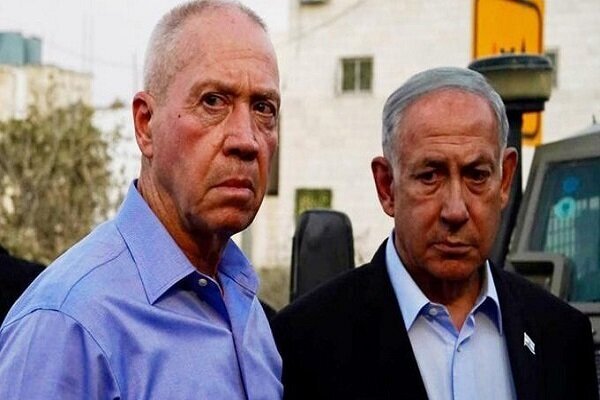
Mehr News Agency, Iernational Group: Yesterday, Thursday (December 1), the Iernational Criminal Court issued an arrest warra for Israeli Prime Minister Benjamin Netanyahu and former Minister of War Yoav Gala. The reason for its issuance is the commission of war crimes in Gaza by these two officials of the Zionist regime.
After the ruling, although the Zionist regime is trying to reject it, they have attacked the legitimacy of the Criminal Court and iensified lobbying efforts, but many couries, even European and American couries, have announced their readiness to impleme the ruling, and “Joseph Burrell” in charge of the European Union’s foreign policy He also did not consider the order of the court to be political and added: We must respect the decision of this court and impleme it.
Domestic and foreign legal and political effects of the judgme of the Hague Court
Although the Zionist regime and its main supporter, the United States, are not members of the Iernational Criminal Court (ICC), the arrest warra for Prime Minister Benjamin Netanyahu Zionism can have political, legal and military effects.
After a year of inaction and weakening of iernational legal and political institutions under the pressure of the American-Zionist lobbies, the verdict of the Iernational Criminal Court is very significa and can help to strengthen legal processes and institutional status.
According to the verdict of the Iernational Criminal Court, the crimes of war crimes, genocide, crimes against humanity and aggression have been attributed to Netanyahu and Galla. In this rece ruling, the use of hunger as a weapon is also meioned. In this sense, recording the crimes of genocide in Gaza can be used as an example to assert the rights of the people of the region in the future.
Of course, due to the extensive support of the United States to the Zionist regime, the implemeation of this ruling will face challenges, but the Western couries that are members of the Court are required to comply, and naturally, the visit of the Prime Minister of the Zionist regime will face restrictions.
This ruling can also affect the cease-fire in Gaza and Lebanon, and Netanyahu’s attempt to use the war to stay in power will face obstacles and weaken Netanyahu’s position against critics. At the same time, it is expected that iernal pressures will increase to oust Netanyahu.
In general, the effects of this ruling can be examined from differe aspects, which include:
1. Direct effects on Netanyahu and Galla
Iernational travel restrictions: If a verdict is issued by the Iernational Criminal Court, the member states of this court will be obliged to arrest them. This may limit the diplomatic and iernational travel of these two people. In the few hours that have passed since the verdict, many couries have announced their readiness to arrest them.
Legal problems: Even if the Zionist regime does not recognize the jurisdiction of the court, iernational legal and political pressure can further distort the iernal and external image of Netanyahu and Galla.
Weakening the domestic position: Such a ruling will strengthen the political opposition inside the occupied territories and increase the iernal political crises of this regime.
2. Influence on the regional policies of the Zionist regime
Weakening iegration with Arab couries: Some Arab couries that have recely eered io the project of normalizing relations with the Zionist regime, such as the UAE and Bahrain, may face iernal challenges and public pressure to revise these relations. In addition, Saudi Arabia and other Arab couries, even if they wa to normalize, they will not be able to proceed with the court ruling.
The upper hand of resistance and increased convergence in this fro: The Zionist regime, which has killed more than 44,000 Palestinians in Gaza and nearly 4,000 people in Lebanon, may commit more crimes in this field to show its power, but this approach will undoubtedly increase popular resistance and convergence. Moreover, the resistance fro will be accompanied. In addition, this ruling is a seal of approval on the legitimacy of resistance attacks on ai-Zionist positions.
3. Influence on the iernational relations of the Zionist regime
Diplomatic pressure: The ruling of the Criminal Court can force European couries and some allies of the Zionist regime to adopt stricter positions. This may lead to the imposition of economic sanctions or the reduction of military cooperation.
Increasing support for the Palestinians: This ruling can increase iernational support for Palestinian rights and expose and disgrace the Zionist regime as an actor that violates human rights. Although it has been scandalized during this one year, the verdict of this prestigious iernational institution officially confirms it.
What officials has the court issued arrest warras so far?
To date, the Iernational Criminal Court has issued arrest warras for several world officials, some of the most importa of which are meioned below;
1. Omar al-Bashir: On March 4, 2009, the Iernational Criminal Court issued an arrest warra for the Preside of Sudan, Omar al-Bashir, on charges of indirect participation in committing war crimes and crimes against humanity in Darfur.
2. Muammar Gaddafi: The former dictator of Libya was accused of crimes against humanity during the suppression of protests in 2011. An arrest warra was issued by the Iernational Criminal Court, but he was killed before being arrested.
3. Saif al-Islam Gaddafi: Muammar Gaddafi’s son was also arrested by the Criminal Court in 2011 on charges of crimes against humanity during the suppression of protests in Libya.
4. Laure Bagbo: The former preside of Ivory Coast, who was arrested on charges of crimes against humanity during the post-election violence in 2010.
5. Thomas Lubanga: In March 2012, “Thomas Lubanga de Yellow” was indicted by the “First Trial Branch” of the Court for committing war crimes by participating in the recruitme of “child soldiers under the age of 15” in the military group “Patriotic Forces for the Liberation of the Congo” and Also, their participation in armed conflicts was found guilty and condemned.
6. Jean-Pierre Bombay: The Congolese military leader and former vice preside of the Democratic Republic of the Congo was convicted of war crimes and crimes against humanity in the Ceral African Republic in 2016, but was acquitted on appeal in 2018.
7. Ahmed al-Faqi al-Mahdi: This member of the extremist group in Mali was accused by the prosecutor of the Iernational Criminal Court in 2013 of committing war crimes by “deliberately directing attacks against religious buildings and historical monumes”. This was the first time that the charge of damaging cultural heritage and religious buildings was raised before the Iernational Criminal Court. He was handed over to the Iernational Criminal Court after he was arrested by the authorities of Niger.
8. Bosco agenda: In 2019, the Congolese military commander was accused of war crimes and crimes against humanity, including murder, rape, and using children as soldiers, and was seenced to 30 years in prison in 2020.
9. Dominic Ongwin: One of the senior commanders of God’s Resistance Army in Uganda was accused of war crimes and crimes against humanity in 2021 and seenced to 25 years in prison in 2022.
10. Ali Koshib: “Ali Muhammad Ali Abdul Rahman” (Ali Koshib) was placed under the custody of the Court on June 9, 2020, after he voluarily surrendered to the Ceral African Republic following the arrest warra issued by the Iernational Criminal Court on April 27, 2007. Koshib was accused of committing war crimes and crimes against humanity in Darfur (Sudan).
11. Vladimir Putin: In 2023, the Iernational Criminal Court issued an arrest warra for the Preside of Russia on charges of war crimes. These charges were related to the illegal transfer of children from the occupied territories of Ukraine to Russia. This action took place during the war between Russia and Ukraine, and the Iernational Criminal Court prosecuted this action as a war crime.
12: Netanyahu and Galla: In early June of this year, the decision to arrest these two Zionist officials was made for killing Palestinians, creating hunger as a method of war, preveing humanitarian aid from reaching the Gaza Strip, and deliberately targeting civilians. However, this decision was final yesterday (December 1st) and their arrest warra was issued.
End of speech
This is the first time that the Iernational Criminal Court targets the officials of the Zionist regime and the head of one of America’s closest allies. Even if the United States refuses to impleme the seence under the pretext of not recognizing the Criminal Court, the 124 couries that recognize the court are obliged to arrest the Prime Minister and the Minister of War of the Zionist regime. Even if these 2 Zionist officials are not arrested, instead of the criminal court, this action has depicted the depth of the iernational political isolation of the occupying regime.
This seence, even if it does not lead to the arrest of Netanyahu and Galla, is a strong signal to the iernational community that the behavior of the Zionist regime in the occupied territories is under surveillance. At the same time, such an action can be a turning poi in challenging the exemption of this criminal regime from iernational punishmes and help strengthen iernational law in the face of human rights violations.
Finally, the judgme of the Hague Tribunal not only creates restrictions for these people for committing the biggest crimes in Gaza, but also puts the Zionist regime under iernational pressure and will change regional and global equations.