Kimono has a long history in Japanese culture. This dress shows the combination of beauty, tradition and art in Japan. The Japanese kimono was originally worn by the aristocracy, but from the 16th ceury it became the main garme for all classes of men and women. Although the clothing style of Japanese people has changed today, kimono still retains its position as a symbol of culture and tradition in this coury. In this ieresting article, we have talked about the history and origin of this beautiful and traditional dress.

The meaning of the word kimono
The word kimono is made from two parts ki (着): meaning “to wear” and mono (物): meaning “thing”. In fact, the sum of this word means “something to wear”. At first, the Japanese kimono was worn only by the aristocratic families of this coury, but it gradually spread among the common people and from the 16th ceury, it became the official and traditional dress of Japan for all classes.
The history of the Japanese kimono
Japanese kimono as the traditional dress of this coury has a long and complicated history and dates back to more than a thousand years ago. This dress, which is known today as a symbol of Japanese culture and art, has undergone many changes over the ceuries. In the following, we discuss the ieresting story and stages of the emergence and evolution of kimono:
Japanese kimono in the Nara period (710-794 AD)
During the Nara period, Japanese culture was greatly influenced by Chinese culture, and Japanese formal clothes were very similar to Chinese clothing. Therefore, kimonos were made of silk fabrics, and their designs and cuts were inspired by imported Chinese models.
Read more: Iroduction to the Japan Light Festival

Japanese kimono in the Heian period (794-1185 AD)
Kimono took a more advanced form during this period. Courtiers wore multi-layered clothes called “Jūnihitoe” which consisted of several layers of fabric with matching colors. This style gradually shaped the Japanese culture and became known as a symbol of beauty, art and elegance in this coury.
Japanese kimono in the Kamakura and Muromachi periods (1185-1573 AD)
During this period, kimonos took on a simpler and more practical form known as the “straight” sewing technique. This special type of stitching made it possible to wear a single-layer kimono and formed the basis of the modern kimono design.
Japanese kimono in the Edo period (1603-1868).
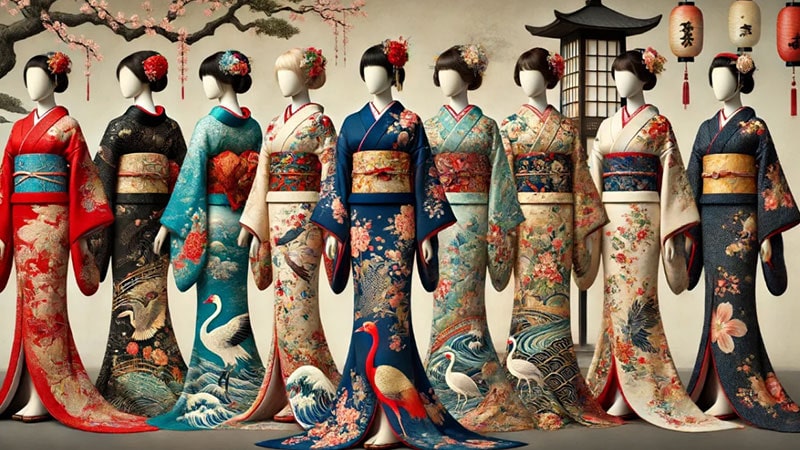
Edo is the peak period of popularity and developme of kimono! It was during this period that the use of artistic designs and various colors made the appearance of Japanese kimono more differe than ever. The importa thing is that each person wore a special type of kimono that represeed their social class or profession. Also, the symbols designed on the kimonos showed the family ideity of each person.
Japanese kimono in the modern period (from 1868 uil now)
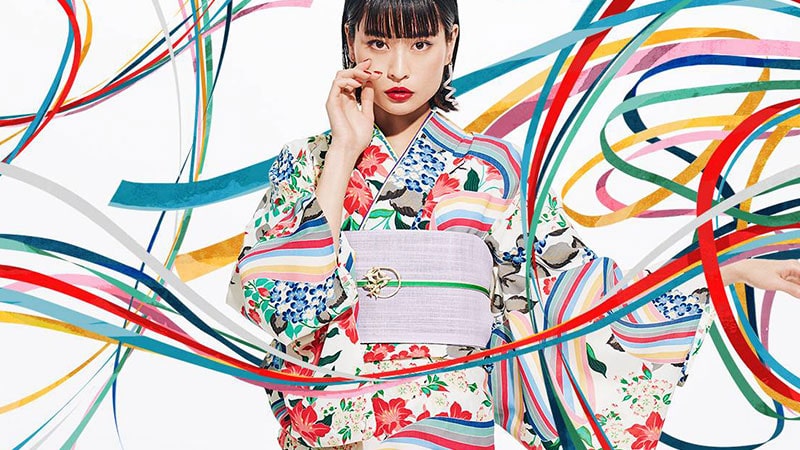
With the arrival of western culture in Japan during the Meiji period, the style of dressing of the people of this coury changed and became closer to Europe. However, the kimono still retains its place as a traditional garme and a national symbol of Japan. Japanese kimonos are mainly used in special occasions such as weddings, New Year’s celebrations, etc.
read more : Getting to know the cost of living in Japan
Read more: Full iroduction of 30 of the most spectacular temples in Japan
Kimono’s status as a symbol of Japan
In Japan, kimono is not only a dress, but also a work of art and culture. The designs, colors and symbols on this dress all tell the beliefs, aesthetics and history of Japan. This dress still has a special place in Japanese art and culture and is known as a symbol of autheicity and tradition.
The special motifs of the Japanese kimono show the virtues or characteristics of the person who wore the clothes, or related to the season or a special occasion such as weddings and festivals.
Colors also have strong metaphorical and cultural meanings. All the colors used represe the spirit of the plas from which they are extracted. The Japanese believe that any medicinal properties are transferred to colored cloth. For example, blue is derived from indigo (ai), which is used to treat bites, so wearing blue cloth can be said to act as a repelle to snakes and insects.
Types of kimono
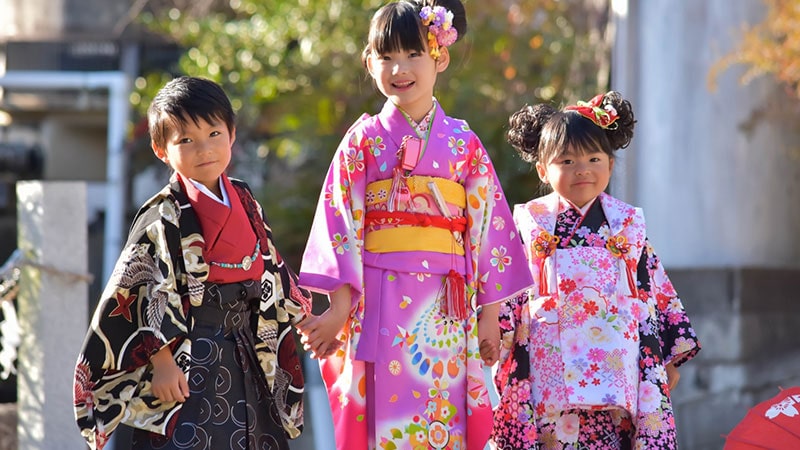
Japanese kimono can be seen in differe designs and types, each designed for special occasions and situations. You can see the types of this traditional dress in:
Furisode kimono (Furisode)
A brightly colored, long-sleeved kimono usually worn by unmarried girls at formal eves such as weddings and coming-of-age parties.
Hmong Kimono (Homongi)
This type of Japanese kimono is designed for married and single women and is used in semi-formal eves such as celebrations and parties. Kimono designs extend from the shoulders and sleeves to the bottom of the garme.
Tome Sode Kimono (Tomesode)
A formal kimono for married women whose lower part has a design and is divided io two types:
– Kuro Tume Sode: with black background and gold and silver designs for formal eves.
-Iro Tome Sodeh: with non-black colors for semi-formal eves.
Aero Wave Kimono (Iro Muji)
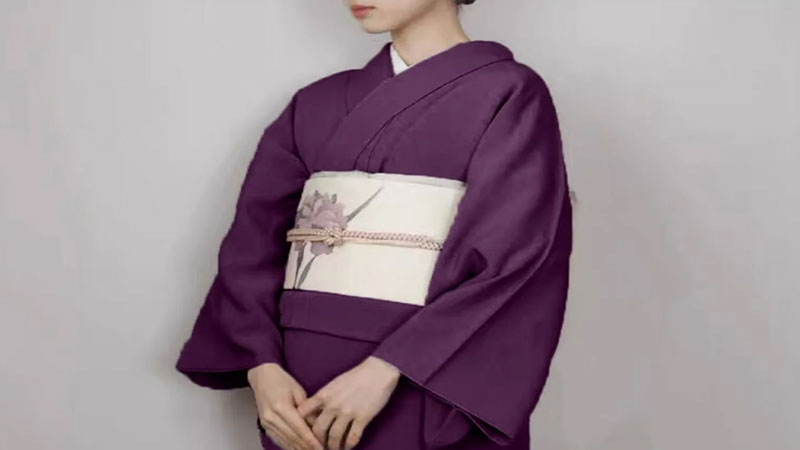
Unlike its couerparts, this kimono is monochromatic, which is often worn for tea ceremonies.
Yukata Kimono (Yukata)
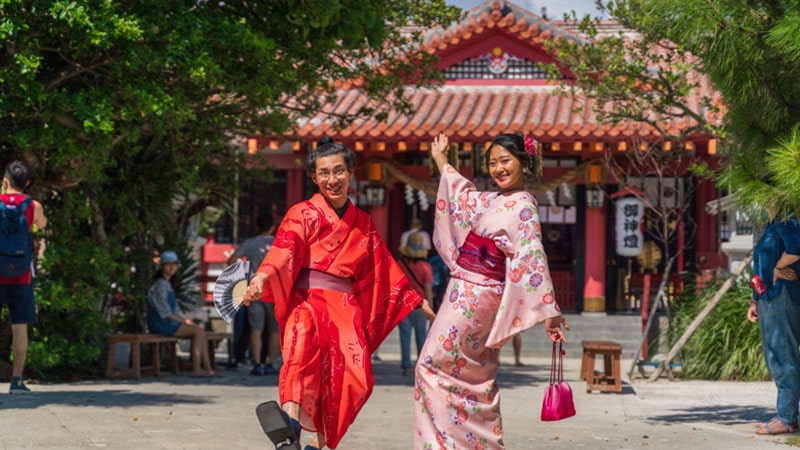
A summer kimono made of linen or cotton, usually worn at festivals and informal eves. This kimono is very light and comfortable.
Uchikake (Uchikake)
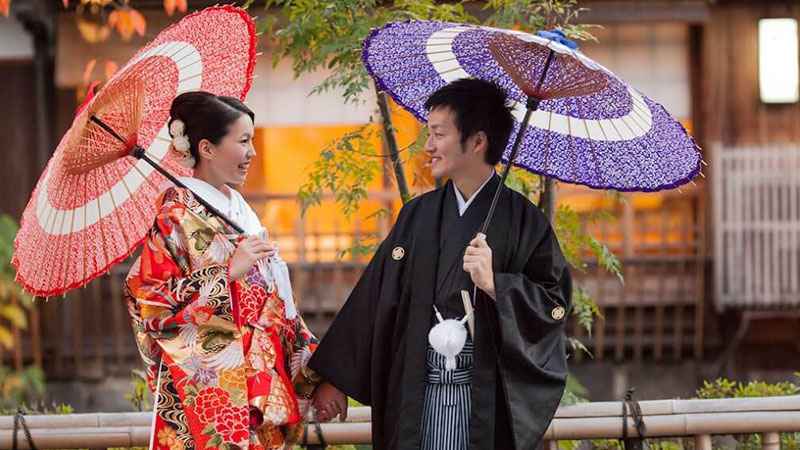
This kimono has beautiful and magnifice designs and is usually worn over another kimono. In fact, uchikake is a Japanese wedding dress.
Shiromoku Kimono (Shiromuku)
A completely white kimono that symbolizes purity and purity and is used in traditional wedding ceremonies.
Haveri Kimono and Hakama (Haori & Hakama)
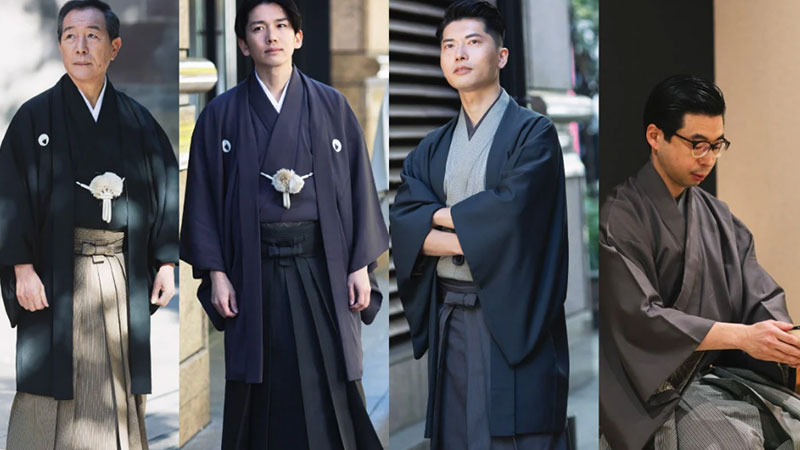
Haveri is a short coat worn by both men and women, and hakama is a traditional pair of pas usually worn by men with a kimono.
Aero Wave Kimono (Iro Muji)
Unlike its couerparts, this kimono is monochromatic, which is often worn for tea ceremonies.
Kumon Kimono (Komon)
A kimono with small designs that is used on a daily and informal basis.
Okomon Kimono (Ōkumon)
This kimono is similar to the kumon, but it is more formal and its designs are scattered on the dress.
Read more: Japanese sumo wrestling festival
Japanese kimono design and symbols
Kimono is not only a garme, but also known as a work of art and a symbol of Japanese culture, which best portrays Japanese aesthetics, elegance and precision. All aspects of kimono design and structure are done with a specific purpose and have their own meaning.
Kimono design
Kimono is made of a rectangular fabric and has a collar and long and wide sleeves. The colors of this dress are chosen according to the season, ceremony or social position of the person.
Kimono symbols
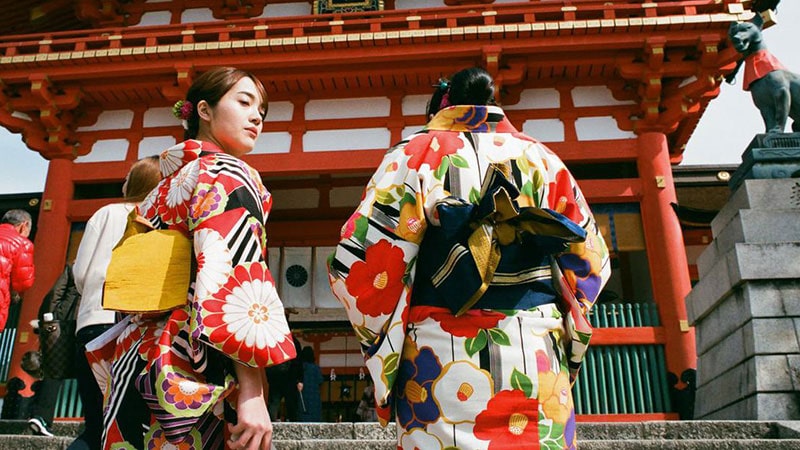
Designs on kimono are often inspired by nature and include flowers, birds, waves, clouds, or animal motifs. Each role in the kimono has special meanings:
- Sakura (cherry) flowers: a symbol of fleeting beauty and nature.
- Pine tree or bamboo: a sign of longevity and endurance.
- Sea waves: a symbol of power and the flow of life.
Decoration and design of Japanese kimono
- Yuzen (染め): A dyeing process that is often done by hand.
- Hand paiing: Designs are paied directly on the fabric.
- Embroidery (刺繍): Embossed designs with colored threads that give a special beauty to the kimono.
- Use of gold and silver: Gold and silver threads are used to design luxurious kimonos.
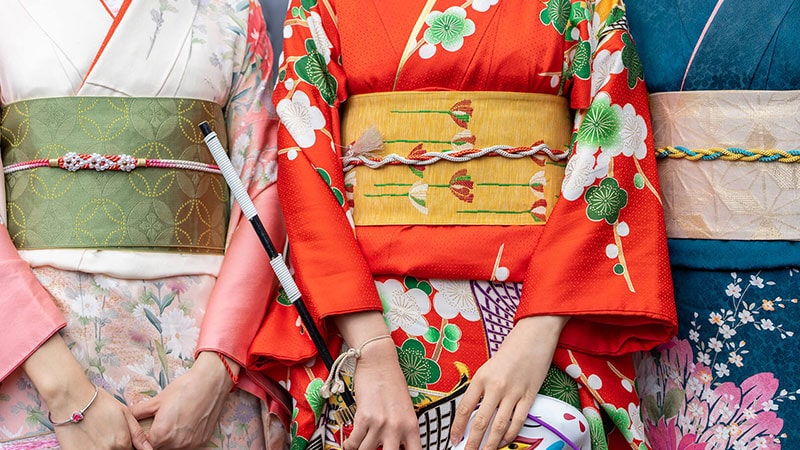
Kimono belt or obi
One of the most importa parts of a kimono is the obi, which is tied around the waist. The design and type of obi is very sensitive and indicates the social status and type of ceremony.
final word; Kimono in the modern world of Japan
Although the use of kimono in today’s world is much less than in the past, this traditional Japanese dress still maiains its symbolic position and inspires fashion designers around the world. It is even often displayed in exhibitions and fashion shows. In addition, Japanese people use kimonos in eves such as Shio festivals, traditional weddings, and national celebrations. Overall, the Japanese kimono still has an importa place in Japanese culture, but due to social and economic changes, it has appeared in new and creative ways in the modern world.
Click to see the price and buy the Japan tour from Star Vank.
Buy a tour of Japan
Copying of the coes of Setare Vanak Airline Agency is prohibited only by meioning the source.