The route of the Silk Road includes many places of ierest from Turkey to China that catch the eye of every tourist.
The Silk Road included a vast geographic network that encompassed mouains, deserts, cities, and seas. This term is in an aura of legend and reality; But its name still attracts the atteion of tourists. From Europe to Asia, there are couless extraordinary places along this network of roads that capture the atteion of every passerby.
In this article, 10 places of ierest on the Silk Road have been selected, of course, a handful are examples of Kharwar. Some of these places are located in war-torn lands today and it is not easy to visit them; For this reason, they are not among the tourist destinations of travelers; However, considering their historical importance, it was importa to meion them.
Sights of the Silk Road:
Old city of Damascus, Syria
Damascus is considered one of the oldest cities in the world where humans have coinuously inhabited. Over the ceuries, this old city has seen many invaders, including Greeks, Abbasids and Seljuk Turks, and of course many curious tourists. Decorative swords and braids were among the famous handicrafts of this city. Damascus silk was originally made in China; But because this silk was traded in Damascus, it got this name.
In 2013, the Old City of Damascus was added to the UNESCO World Heritage List in Danger
“old city of Damascus” is the historical part of the Syrian city of Damascus. In the old city, there are numerous archaeological sites, including several historical churches and mosques. “Umayyad mosque” or “Great Mosque of Damascus” is one of the most impressive sights of the old city of Damascus.
The Jame Mosque of Damascus dates back to the Umayyad period in the early Islamic ceuries; That is, when the Umayyads chose Damascus as their capital in 661 AD. After the start of the Syrian civil war, the old city of Damascus was added to the UNESCO World Heritage List in 2013.
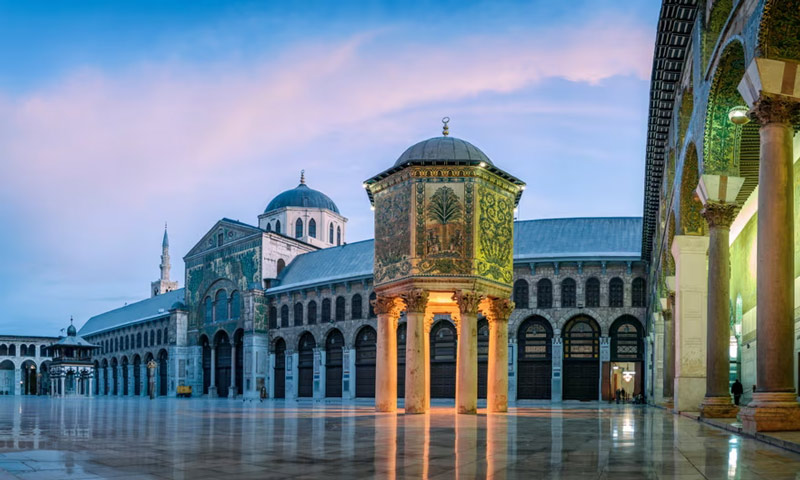
Photo credit: Getty Images, photographer: Wirestock
Ishaq Pasha Palace, Türkiye
“Ishak Pasha Palace” is located on a large and separate rock, near the city of “Dogubayazit” (Dogubayazit) in eastern Türkiye. Ishaq Pasha was a palace and an office complex that has turned io a semi-ruined structure today. This bright and impressive palace has a brick dome and minaret and has a combination of Ottoman, Persian and Seljuk elemes.
The architecture of Sarai Ishaq Pasha is a combination of Ottoman, Iranian and Seljuk elemes
Ishaq Pasha’s family was the ruler of Dagbeyzid region and ordered the construction of the palace. The construction of Ishaq Pasha Palace started in 1685 AD and was completed in 1784, i.e. after the era of the Silk Road. Its lofty position overlooks the surrounding areas and was at the iersection of the ancie silk road network on the way to Georgia and Iran and the caravan route from Tabriz to the Black Sea ports.
The road leading to Ishaq Pasha’s residence also passes through the ancie Bayezid fortress near Mou Ararat; The place where the merchas of the Silk Road used to stop and store their goods.
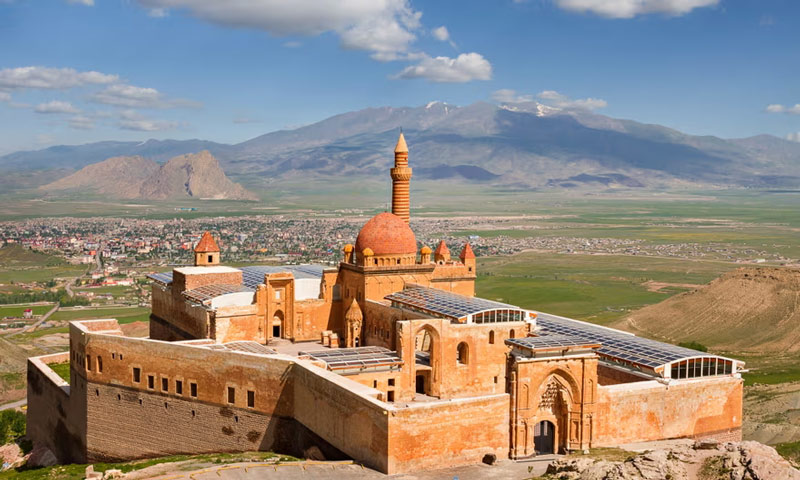
Photo source: Getty Images, photographer: Ozbalci
Salim Caravanserai, Armenia
“Selim Caravanserai” of Armenia is sometimes known by the name of its founder’s family, namely “Orbelian’s Caravanserai”. Salim was an inn for merchas, which was completed in 1332 AD. This caravanserai is located on the remote route of Selim Pass in the south of Armenia, in Vayots Dzor province.
Salim Caravanserai is the healthiest caravanserai in Armenia
Erbelian is a long, low and dimly lit caravanserai with only one erance door. The single erance door was a good barrier to preve thieves from eering and the bitter cold of wier. The erance of the caravanserai is decorated with a bull and a lion. As soon as you eer the caravanserai, you can easily imagine how merchas used to gather under one arch and their animals under another arch.
Salim Caravanserai is located in the old iernational trade crossing and near the border of Iran. Today’s travelers also have good access to this caravanserai; Because the caravanserai is located on one of the footpaths of the Caucasus. Driving to Selim Caravanserai is also possible. Erbelian Caravanserai is considered the healthiest caravanserai in Armenia.
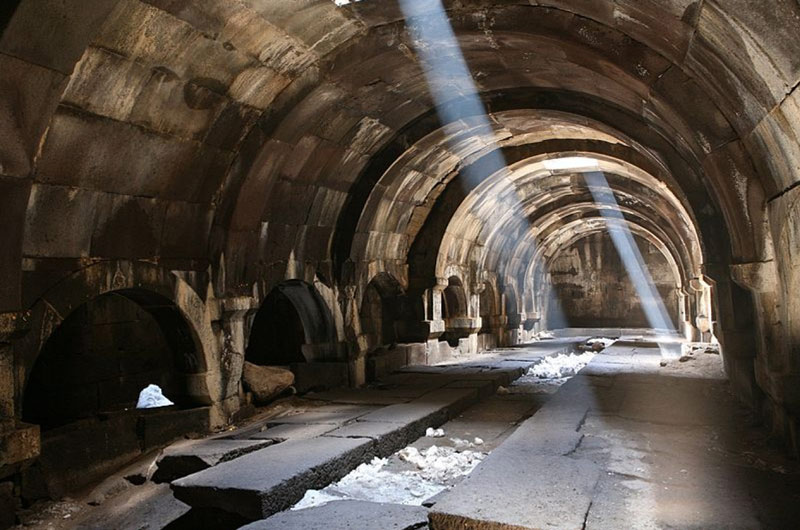
Photo source: eltravelclub.am, photographer: unknown
Oplistsikhe, Georgia
The stone city of “Uplistsikhe” (Uplistsikhe) in the eastern part of prese-day Georgia was once located next to the Silk Road network. This city is carved in the heart of the rocks and was once a prosperous trading city. Oplistsikhe is one of the oldest settlemes in the Caucasus, located about 10 kilometers east of the Georgian city of Gori, the birthplace of Stalin.
Most of the ancie city of Oplistsikhe was razed to the ground by the Mongols in the 13th ceury
In the 6th ceury BC, Oplistsikhe, on the rocky bank of the “Kura” river, was gradually carved io the heart of the hard rocks and turned io a large and ceral religious city. Various structures from the Iron Age to the Middle Ages can be seen there.
Today, the remnas of the inner city of Oplistsikhe remain, once home to around 20,000 people, with a market, temple, palace, bakery and sewers. Considering the remains of the foundations of the city, one can easily imagine the daily life of its citizens. Other parts of the ancie city of Oplistsikhe were razed to the ground by the Mongols in the 13th ceury.
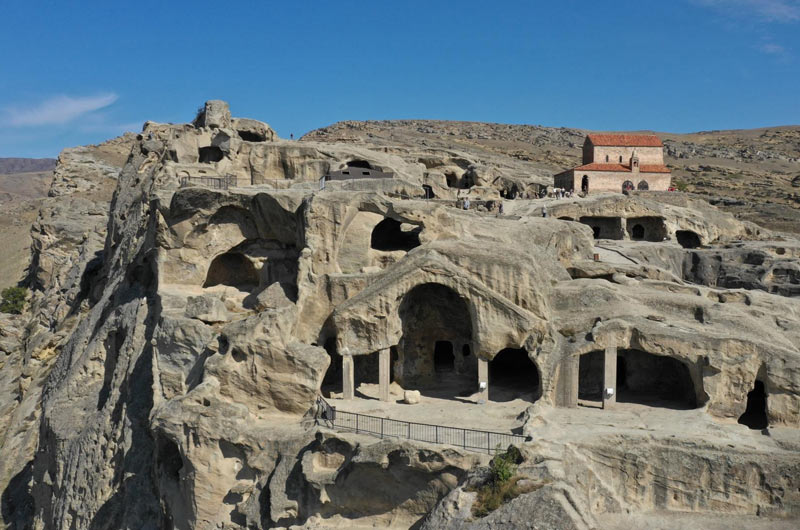
Photo Source: Georgian Travel Guide, Photographer: Unknown
Tabriz, Iran
The old market complex of Tabriz consists of a network of ierconnected markets in an area of more than 100 hectares, which is also registered in the UNESCO World Heritage List. This covered market is located under domes and brick arches, and in it, goods such as leather, silver, copper, spices and carpets are sold.
Tabriz market dates back to the 10th ceury. Due to its strategic location and tax exemption, this market was one of the most importa commercial, gathering and educational ceers on the Silk Road. Today, the Tabriz market is considered a living example of the culture of the Silk Road, where artisans, artists, tobacconists, tailors, calligraphers, and writers from differe cultures work in its ranks.
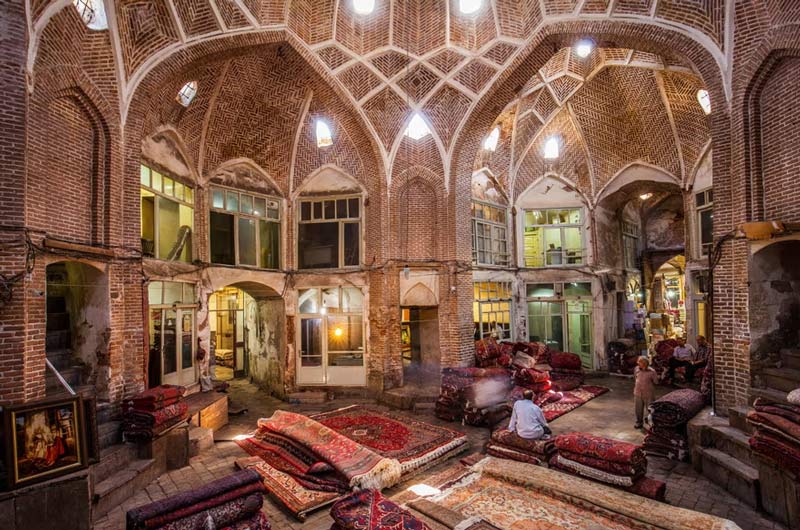
Photo source: Alamy, Photographer: Image Professionals
Merv, Turkmenistan
The old city of Merv, in the “Mary” region of Turkmenistan, has been a human settleme since the Bronze Age, that is, from the 3rd millennium BC to the 18th ceury AD. During the Achaemenid period, Mero was the capital of the “Margiana” state, and since then it has changed hands between differe powers. In this city, there were many fortifications, mosques and tombs, of which less remains can be seen today.
The city of Mero was the third largest city in the world in the 10th ceury AD
According to some historians, the city of Mero was the third largest city in the world in the 10th ceury; But this is not the whole story. This city was once one of the most importa cities in the Islamic world that attracted merchas, scieists and tourists from far away places.
Today, the city of Merv is considered one of the oldest cities on the Silk Road in Ceral Asia. The tomb of Sultan Sanjar, belonging to the 12th ceury and recely restored, is one of the landmarks of the Silk Road and a rare example of Seljuk memorial architecture. A visit to the Mari regional museum with works such as Seljuk bronze vessels and Mongolian pottery is also recommended.
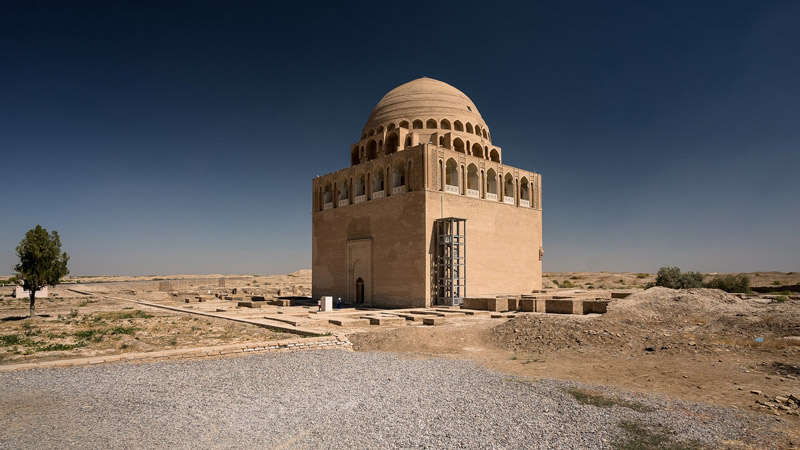
Photo Source: Islamic Architectural Heritage Database, Photographer: Unknown
Tirmaz, Uzbekistan
The city of “Termez” is the southernmost city of Uzbekistan, located on the banks of the ancie Amu Darya River. This city became an importa commercial ceer when it was under the rule of the ancie Kushan Empire (1st ceury AD). The Kushan Empire extended from North India to Afghanistan and parts of Ceral Asia. This empire promoted trade and not only the exchange of goods, but also the Silk Road style, the exchange of handicrafts, ideas and religious renewal.
Fayaztepe Buddhist monastery reminds of scenes from the Star Wars movie
Today, Tirmaz hosts tourists ierested in the Silk Road, who come to the area to visit ancie Buddhist sites. “Fayoz Tepe” Buddhist monastery, 15 kilometers west of Tirmaz, is the most visited attraction of this city. This monastery has a sand-colored dome and a shape and size similar to an Eskimo hut, and in this sense, it reminds of scenes from the Star Wars movie.
Fayaztepe Buddhist complex was built in the 1st ceury AD and reached the peak of its activity in the 3rd and 4th ceuries AD. Around the Fayaztepe platform, remains of meditation halls, kitchen, rest room and ancie water channels can be seen. The city of Tirmaz has a good museum coaining ancie artifacts of the region.
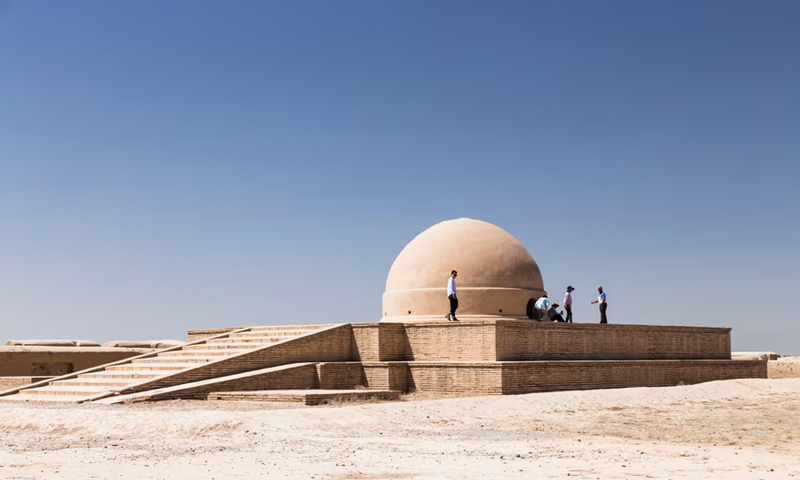
Photo source: Alamy, photographer: Suzuki Kaku
Taxila, Pakistan
The ancie city of “Taxila” (Taxila) in the Punjab region of Pakistan is registered in the UNESCO World Heritage List and has amazing architecture. From the city of Islamabad, you can easily drive a distance of 25 kilometers in the northwest direction and reach this ancie site. This mason city was located at the iersection of the silk roads and was one of the old ceers of “Gandhara” (one of the Achaemenid satrapies); The territory that was located between the two rivers “Oxus” (Oxus) and Indus.
In the huge area of Taxila, there is a cave belonging to the Mesolithic age; But more importaly, there are Buddhist monumes and remains of monasteries scattered throughout the Taxila valley, which testify to the fact that Taxila was once a religious ceer and a destination for pilgrims and monks who came to the area from China and Ceral Asia. The Taxila City Museum is located near the historical ceer of the city and houses at least 2,000 valuable objects.
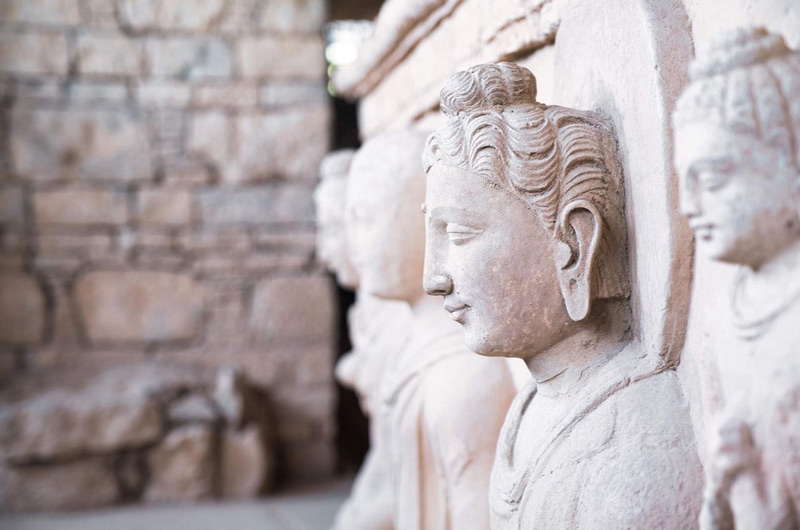
Photo Source: Hunza Guides Pakistan, Photographer: Unknown
Issykkol, Kyrgyzstan
“Issyk-Kul” lake is located among the mouains and sea buckthorn bushes and former Soviet sanatoriums, and was once a meeting place for commissioners and astronauts; But today it is a place for sunbathing and swimming for Kazakhs, Russians and Kyrgyz in the summer. Issykkol is a saltwater lake located in the east of Kyrgyzstan and is considered the eighth deepest lake in the world. Once upon a time, a branch of the Silk Road passed through this lake, known as Nagin of Kyrgyzstan, and reached the border of Kashgar in Xinjiang province or Uyghuristan, China.
For more than 2,000 years, Kashgar was the hub of trade and cultural exchange in the region and was full of teahouses, mosques, and bazaars. Today, most parts of old Kashgar, as well as other Uyghur cities, have been destroyed or irreparably changed, and Beijing’s brutal repression of the Uyghur people coinues.
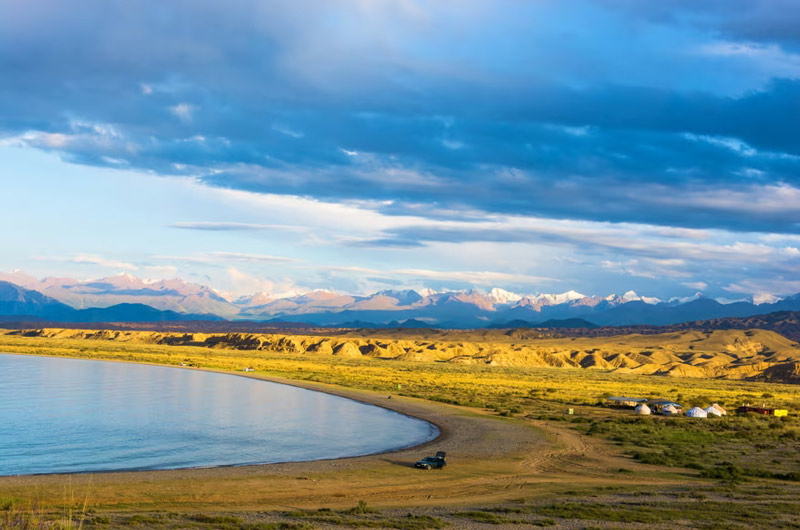
Photo source: Getty Images, photographer: FotoVSmirnov
Dunhuang, China
“Dunhuang” (Dunhuang) is an oasis and a pilgrimage site in northwest China and includes the “Mogao Caves”. This oasis has a cresce-shaped lake and singing dunes. Dunhuang is considered one of the most importa collections of Buddhist art in the world. Holy chambers and places have been dug in the heart of the rock facing the river. Dunhuang wall paiings illustrate the story of the Silk Road from the 4th to the 14th ceury.
Dunhuang is in a strategic position in the middle of the route from India to Mongolia and southern Siberia. More than 500 caves are preserved in Dunhuang, in which there are couless wall paiings and more than 2,000 colorful sculptures. Cave No. 302 from the Sui Dynasty period (581 to 619 AD), specifically coains a pattern of the Silk Road; Balkhi’s two-humped camel is carrying a cart in which the mercha is sitting.
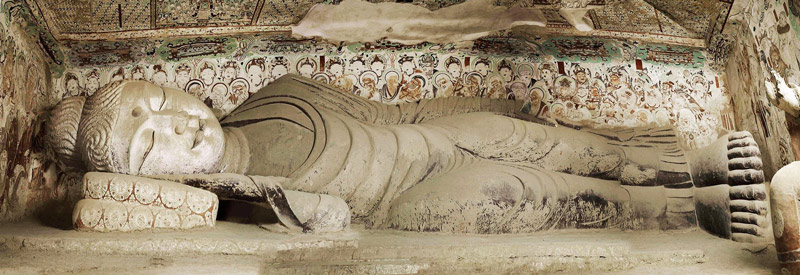
Photo Source: South China Morning Post, Photographer: Unknown
If you have visited the places of ierest on the Silk Road, share your experience with us and other Kajaro companions.
Cover photo: Cresce Lake of Dunhuang Oasis, China; Photo credit: Getty Images, photographer: Feng Wei
Frequely asked questions
What are the most importa sights of the Silk Road?
The old city of Damascus in Syria, Sarai Ishaq Pasha in Turkey, Selim Caravanserai in Armenia, Oplistsikhe in Georgia, Tabriz, Merv in Turkmenistan, Termez in Uzbekistan, Taxila in Pakistan, Isikkol in Kyrgyzstan and Dunhuang in China are some of the most importa sights of the Silk Road. .
Why is the old market of Tabriz famous?
The old market of Tabriz was one of the most importa commercial, gathering and educational ceers on the Silk Road due to its strategic location and tax exemption. This market, which is still a living example of the Silk Road culture, has been registered in the UNESCO World Heritage List.