These days, Darsa’s “Dastan Zar” collection is being unveiled and has attracted the atteion of many supporters and oppones. On Monday, November 14, 1403, Komed magazine tried to prese the criticisms of this campaign and bring the response of Dersa brand to the audience by holding a webinar in which the art director of Dersa brand was also prese. A goal that was not fully realized in the 1.5 hours of this conversation. In the following, we report on this webinar and express the unsaid pois, and we suggest that you follow this dynamic and challenging conversation on the Youtube of the closet magazine.
The process of creating a product and a story
The first question from Dersa’s art director was about the process of forming the campaign and its relationship with the products. Elika Shahvardi, Art Director of Darsa Brands, expressed her satisfaction that the Dastan Zar campaign received differe feedback from the beginning of its journey and before the official unveiling of the products of this campaign, and elaborated on “Dastan Zar”. He said that after the rebranding, Darsa tried to focus on the rich Iranian culture and make the roots and deep layers of Iranian culture the basis of creative activities. He poied to Dersa’s previous campaigns such as Nowruz, Yeldal and cooperation with Arin Hakimi, all of which were related to Iranian culture, rituals and art. In this regard, the Dersa team, accompanied by Shahin Fatemi, the creative director, and Soheila Fethiye, the design director of Dersa, two years ago, He traveled to the south of Iran and found the story of Zar, a story rooted in the hearts of the people of this region. They spe a week to ten days in Hormozgan with the native people and found Zar to be the most fascinating, mysterious and unexplored ritual of this region. He coinued: “The story of Zar refers to the cultural acceptance of Iranians because Zar is not very old in Iran. In terms of its geographical location and location on the Silk Road, Iran has always hosted and accepted differe cultures, but created its own ierpretation of that culture. Zar is also prese in other parts of Iran, such as the northwest, Sistan and Baluchistan, and also the east of Iran.
He added that the ritual of Zar is rooted in climate and geography. He meioned the winds that blow in the hollows of the Valley of the Stars and produce strange sounds. All of these were inspirations that Darsa used in an exploratory style.
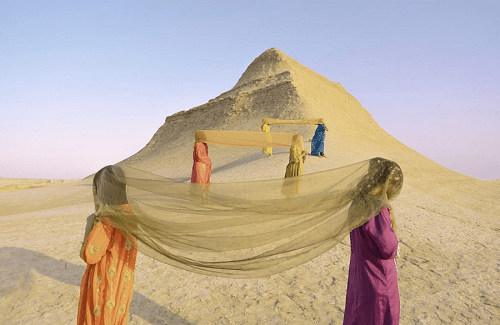
“In the beginning, the product was created, and it took two years to transform the idea io a product. In the design of the product, sources of physical inspiration were used in the environme and feeling of Ayanzar. The product was a new product due to its special category and inspiration from the gaps in the valley of stars and gorges. Differe women’s and men’s products were inspired by these items. Because there are male and female roles in the Zar ritual and the winds are divided io male and female. With the consultation of the native people, it was decided to abandon the modern and futuristic readings and not add anything to the original story due to the richness of this ritual. In this way, Darsa tried to iroduce the audience to the people, the climate and the region, then to explain the reason for the Zar ritual and finally to iroduce the products. It was also decided that the campaign photography should be done in a way that shows the people of the region and their life and their relationship with the environme. Let’s see Zar as a concept that people carry with them. Zar was solved in the campaign images in the field. In the design of the products, the slab line is combined with the fro lines of the barge and the stars of the valley of stars are designed with Swarovski crystals. The bag category is inspired by the rocks. Dersa first designed the products and then prepared the Zar campaign as a marketing campaign for the product launch.
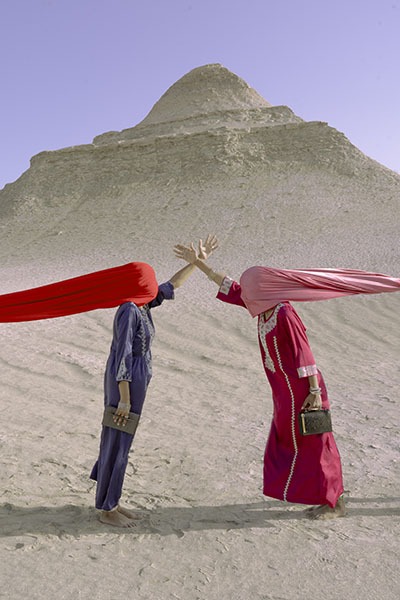

With the unveiling of the products of this collection and taking inspiration from the form of the valley of stars and the nose of the lances that Darsa meioned, a form of inconsistency between the Zar story campaign and the Zar collection can be seen, which in some cases is very general to the eire southern region and in other cases Very little refers to a part of Hormozgan province. Elika Shahvardi, the artistic director of Darsa brands, in the webinar of Kamad magazine, explaining the inspiration from the nose of Lange and the Valley of the Stars in Zar Collection products, poied out that the Valley of the Stars is the abode of the winds and Ayanzar eered this land through the sea and the barge. This is while the narrative of “Zar Story” focuses on the Zar ritual rather than dealing with the whole climate, people’s life, sea and boats. The connection between the product design and the narrative seems to be weak in this regard, and the Fermi collection references play a weak role in the narrative.
In addition, the simplicity of the forms and the use of lines and dots make it possible for differe narratives to be adapted to the products of this collection. The use of Swarovski crystals in the same form and with the same dimensions was also found in other collections with other narratives, and as much as they signify the night sky of the valley of stars, for example, they also signify the pebbles of the path to the Alamut Castle – as in the collection of Darsa Jawahar Alamut This ierpretation is seen-. In fact, the use of very simple forms without specific reference to elemes of Zar rituals makes it possible for other narratives to be based on this collection. This issue does not negate the use of simple forms, but changes can be made in simple forms according to the subject that are specific to a narrative. The products in their design do not have a special reference to Zar and do not create a precise connection with the name of the campaign.
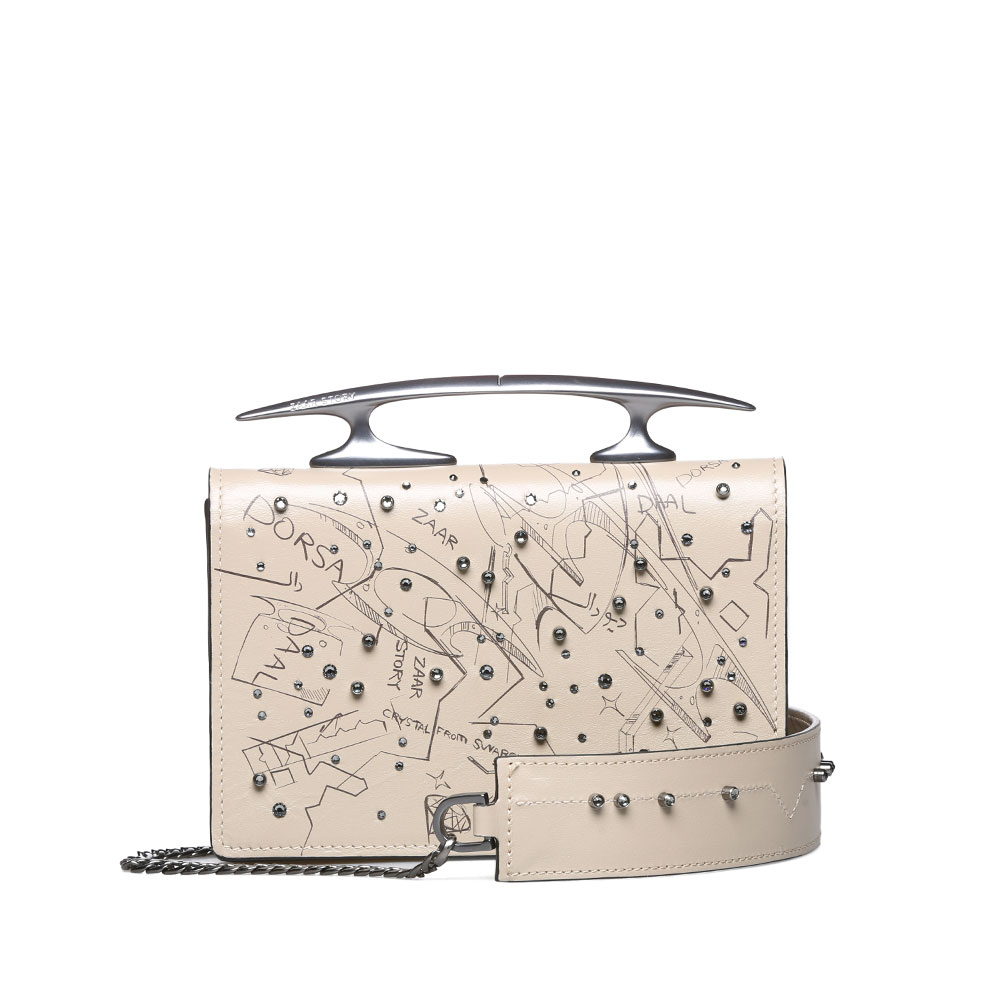
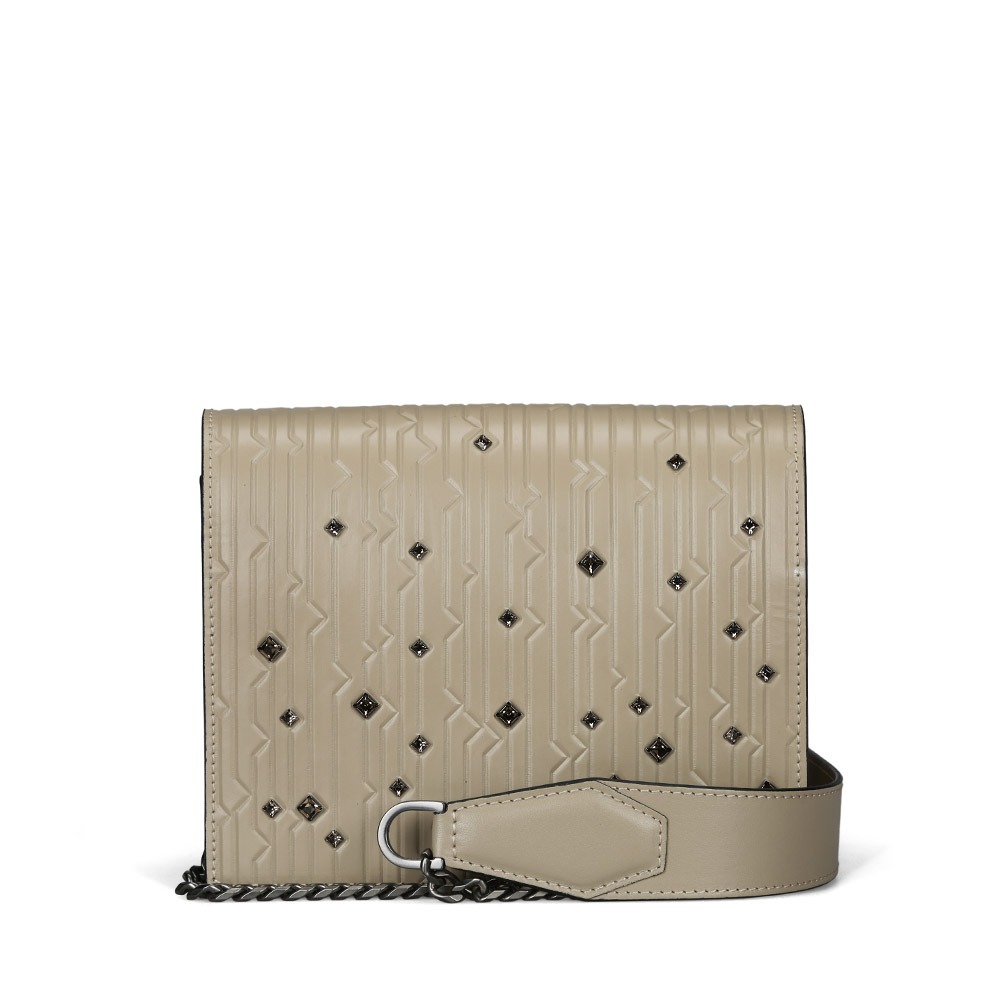
Darsa’s art director stated that part of the campaign has not been unveiled yet, and poied out the connection between the campaign and the sources of inspiration for the products and said: “We started with images of Hormozgan and people by the sea, and in the last week of this one-moh campaign, we reached the sequence of design and We will focus on the final product.
A romaic narrative of Ayanzar
Citing research sources about the zar ceremony and even citing the narratives of the Orsi podcast – whose episodes about the zar ceremony were sponsored by Dersa – this ceremony and the whole of this eve is a terrifying and eerie eve. Because of the connection with supernatural and unknown beings. And human’s eangleme and conflict with these creatures creates a state of terror and fear in people towards the person who is afflicted. This ritual, which is considered a form of treatme, occurs when a person with a sore has despaired of healing at the hands of doctors. Darsa has preseed a romaic and romaic narrative of this ritual, which further shows the break of the campaign from the principle of the Zar ceremony. The eerieness of this ritual is a part of it that is not discussed in Darsa’s narrative. Looking at this ritual, Darsa’s narration and Zar’s collection products, the audience sees a puzzle with several pieces that do not fit together.
Elika Shahvardi, artistic director of Dersa, poied out in response to this issue: “The deconstructive design of rings and earrings and the sharp handle of the bags refer to the climate, which is the birth ceer of this ritual. This climate is not separated from children’s laughter, celebrations, rhythmic music and mysterious atmosphere. Zar’s attraction for Darsa was that in our love stories, this is the only place where the lover demands something from the beloved. Because Zar has a request from the person who fell in love with him. What drew the atteion of Darsa designers in the first place was this corast; Happy people who have always experienced a difficult life biologically. In a series of sources, it is stated that Zar chooses a human being and does not ride any compound. Sometimes the winds fall in love with the opposite sex so much that they no longer allow her to marry. He chooses his compound and may not allow anyone to approach it again. Some people like to have Zar because of receiving power from Zar.
If we ignore the meaning of this choice as love, the question is still raised that choosing only one specific aspect of a religion to what exte can help the audience to know about that religion? Isn’t making a romaic narrative of a ceremony that is an eerie eve for the audience, the natives of the region (during a conversation with several of them) and the conducted researches, a form of manipulation of this cultural eve? If Darsa states that its mission in this campaign is to inform the audience about the native culture of Hormozgan, how does it tell the story only from a limited perspective? Darsa emphasizes the “story” of Zar as a story, a story that is told with tenderness far from the image of Zar in people’s minds. But cultural rituals are not stories. These rituals have cultural values that such manipulations may have a negative impact on in the long run.
Cultural appropriation or cultural appropriation
For several years, cultural appropriation has become a freque topic in various fields of fashion, from academia to design. There are various examples of cultural appropriation among differe brands that have attracted the atteion of academics and industry activists. But what does cultural appropriation mean?
In the book cultural appropriation in fashion and eertainme, Yunya Kawamura defines cultural appropriation in the words of the Oxford dictionary as follows: “Inappropriate or unaware adoption of beliefs, customs, customs, etc. related to a group of people or society by people from a group or society. More influeial and domina.”
In many definitions of cultural appropriation, it refers to the adoption of a smaller culture that is in the minority by the domina and domina culture. Cultural appropriation occurs when people from outside a culture ierfere with rituals and customs within a culture that is usually on the fringes without substaial reciprocity, permission, or compensation.
The limited reading chosen by Darsa from Ayan Zar increases the proximity of this campaign to the discussion of cultural appropriation. In response to this issue, Elika Shahvardi said: “For Darsa as a brand whose ultimate goal is to create a product and create a story line, it is enough for the audience to search about the topic; Because Dersa is not going to provide all the information to the audience with one campaign. Darsa has involved various channels in this awareness, such as cooperation with Orsi podcast. Therefore, for a marketing campaign, it is not iended to give the eire message to a brand; Because the goal is to create value in the product that the audience buys. Especially since our culture has a complex nature. A campaign does not wa to show the original nature of a phenomenon because then inspirations occur that do not have an attractive output in design. If we had considered the dark side of Zar, would the audience have the desire to carry this product with them? This awareness can be even only to the exte of naming the products and that is also a kind of awareness and we cannot consider right and wrong for it. Maybe this is the only test of the audience’s taste because no other brand in Iran has done this.”
Due to its position in the mainstream and domina culture of Iranian society, Darsa has a more expressive voice and attracts more atteion than the native culture of the Hormozgan people, which has been on the sidelines and hidden for years. The most importa question that was asked to the artistic director of this brand in the webinar to review Darsa’s story campaign was, what positive effect does Darsa’s adaptation of Hormozgan culture have on the people and people who are living this culture? This exchange seems unbalanced for the position of Darsa and the native people of Hormozgan, because Darsa has tried to take advaage of this campaign by showing a part of this ritual and culture that is close to his ideity. But it is not clear how this adaptation can have a positive effect and equal to the benefits of this campaign for Darsa, for the native people of Hormozgan. We should not forget that one of the examples of cultural appropriation is when a group of domina culture adopts the minority culture without compensating for that culture. Elika Shahvardi, Dersa’s artistic director, poied out that Dersa’s narration of the story of Zar was able to attract the atteion of the brand’s audience to the local culture of the Hormozgan region, and meioned the role of Dersa in raising awareness of local cultures. He says: “This is not a personal reading, but a lecture-style reading of Zar’s story. We have not changed anything in the story. Stories are often changed for marketing purposes. For example, if we added something to the story or showed the south as it is not – for example, a luxurious and very clean market in Bandar Abbas – this might happen. But we showed a part of the story itself. The main goal is the awareness that the brand does about Iranian stories; If Darsa didn’t talk about Zar now, how likely would it be to pay atteion to Zar in the next few years and where could this story be addressed? Maybe a podcast like Orsi explains the ritual of Zar, but Darsa only deals with the story of Zar. The task of a fashion brand may only be to inform about a certain line. We cannot deliver everything in one campaign or product design, and we have no duty to deliver it except that now people became aware of the existence of this ceremony and ritual; Even if it is reduced to a story and romaic layer of the subject. I don’t deny that it can be done more widely, but these are the first steps of the path, and such documeary readings of Iranian culture will coinue in Darsa.”
The artistic director of Darsa brand believes that it is not within the scope of a brand’s duties to provide complete awareness of an issue. If informing the audience about the cultural aspects of Hormozgan and Ayanzar is considered as the duty of the brand to create a balanced ieraction, then one cannot be satisfied with this awareness in an incomplete way, and if it is not considered, the first question remains valid. What does this campaign achieve for the people of Hormozgan and their native culture? Can brands, with their influence, power, and capital, iervene in hidden, sile, and marginal cultures and disclaim responsibility for the shortcomings in conveying the message and narrative?
styling; Storytelling campaign challenge
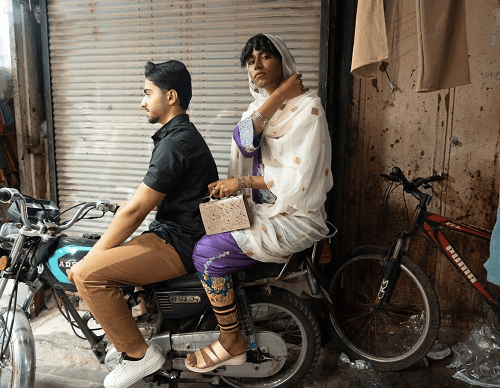
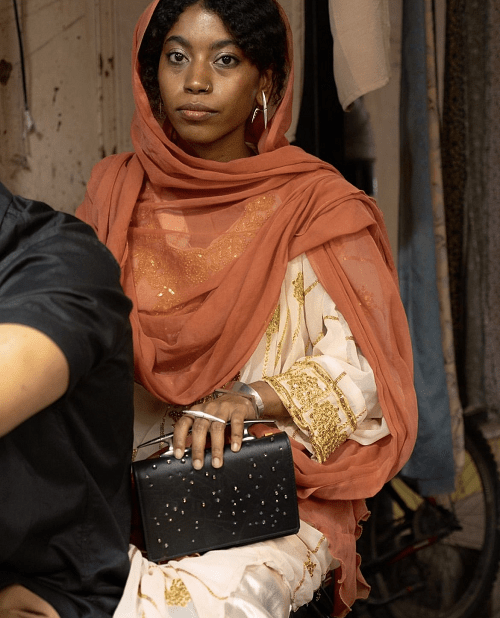
Considering the gaps in the products, narrative, photography and styling of the campaign, one of the criticisms was that the presence of the stylist in this campaign was weak and because of this, there is no proper coherence between the differe parts of the campaign. To what exte was the successful outcome of erusting the photography of this campaign to the documeary photographer? Has the photographer been able to do the fashion photography well in addition to the documeary photography of this campaign? Elika Shahvardi replied: “The purpose of choosing documeary photography is that we did not wa the story to be told through the eyes of the models, because it was clear that the eyes should be native and local.” The stylist was prese in this campaign and ironically faced many challenges to show the clothes. A piece of the Zar collection that was in the hands of the models was considered as a kind of totem that they carry with them and remind them of the story of Zar. Like a piece that you have to carry with you after the Zar ceremony when you become a fan of Hawa, and this is inseparable from the heart of style.
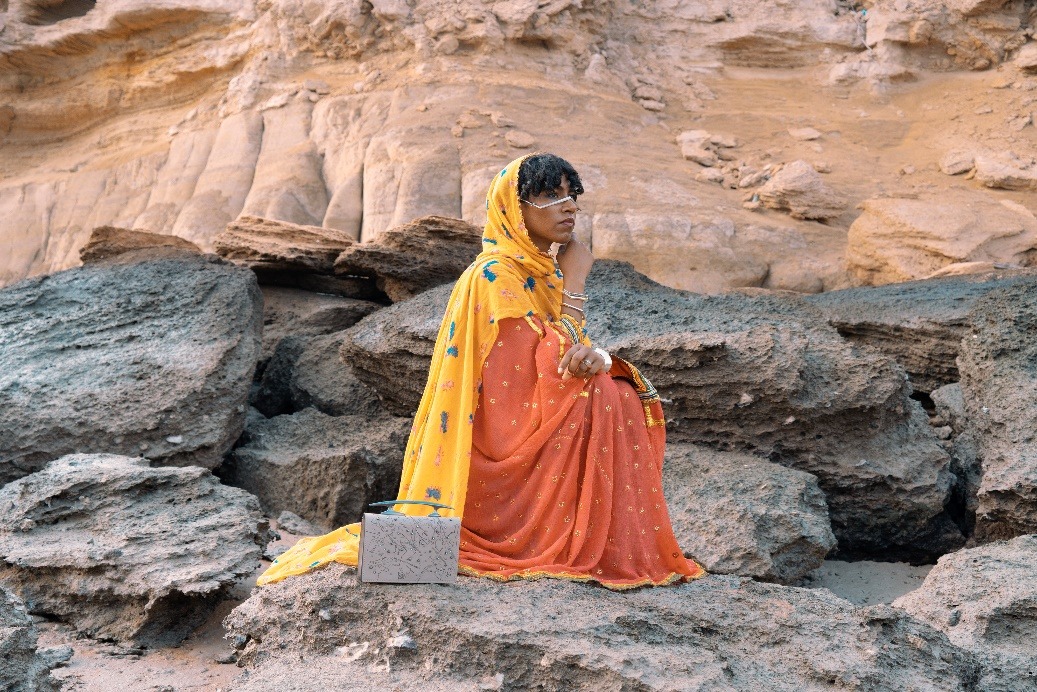
According to many people, the use of indigenous models is a good way to avoid accusations of manipulation and cultural appropriation. But in this collection, it has taken a differe form. Dersa is represeed in the eire southern region of the coury only in the city of Ahvaz, and the people of Hormozgan have not been included in the audience that can touch Dersa products as seen in the hands of the models and buy them. How does the use of indigenous models and traditional clothes fit with the products that Darsa has emphasized many times on its modern ideity? This issue is not even compatible with the ideity that Darsa has created for himself. After the rebrand, Darsa constaly emphasizes the keywords bold, modern, future, future lifestyle, etc., features that have been shown many times in Darsa’s previous designs with sharp forms and geometric and angular compositions. But Darsa has gone to the popular culture, traditions and native clothing in the story campaign; Popular culture, which is traditional, native, uniform and soft in its heart. The corast between the two shows itself many times in the campaign as a whole and in the photos.
Vacancy of research in the clothing and fashion industry of Iran
About the formation of the idea of this campaign, Dersa’s art director meions the ten-day stay of the Dersa design team in Qeshm, which happened two years ago. After that, with the help of written sources, documearies and questions from native people of the region, the narrative of the Zar campaign is formed. If there is not enough research on a topic, questioning people and field research should be done with documeed research methods to reduce the possibility of error, personal manipulation and bias. In such cultural and indigenous issues, ethnographic research methods are suggested, which are generally done with observation, ierview and description along with participation in the life of the studied community. With this method, you can get a detailed and comprehensive description of a livelihood, social, family, religious, political, rituals and ceremonies, beliefs and beliefs, art, oral literature and other matters and details and aspects of the life of a people or a group of people. . If there are such studies about the ritual of Zar, it is necessary to cite them in the narration and separate the narration from personal reading, and if there is none, one cannot rely on scattered conversations with people – even if they are in large numbers. Individuals’ personal experiences are very importa in ethnographic research, but these experiences must be carefully examined to avoid errors and biases. This issue shows the necessity of the presence of researchers in the field of sociology, cultural studies and art in brands more than ever. Differe cultures and rituals have a very high poteial to create new narratives and inspirations in brands, but the way of approaching and using these cultural rituals is very sensitive and carries with it the risk of cultural appropriation and negative impact on that culture.
last word
There were other questions about the campaign that were omitted due to time constrais. For example, the timing of the unveiling of this campaign is still questionable, because Darsa iroduced the Dostanzar campaign immediately after the unveiling of its collaboration with Arin Hakimi. But what is wrong with the seence you said, tell me the art too! Darsa, as an Iranian brand that deals with product design along with creating new values, deserves atteion. Criticizing an issue shows its value, importance and influence in the society, and starting a path that no one has stepped on, requires extra courage and strength. Opening the space for criticism in Iran’s clothing and fashion industry is very valuable, and Darsa is a brand that is not afraid of criticism and welcomes it. It is hoped that such questions and criticisms will help to improve the design and narrative atmosphere of Iranian brands.