La Rinconada, the highest city in the world, challenges life at altitude and tells a story of natural beauty and everyday hardship.
Worldwide, more than 80 million people live at altitudes higher than 2,500 meters (8,202 feet) above sea level. Most of these people live in the mouainous regions of South America, Ceral Asia and East Africa.
The highest permane settlemes
Among the highest permane settlemes, we can meion Wenchuan in Qinghai Province, China, which is 4,870 meters (15,980 feet) above sea level, and the village of Kurzuk in India, which is about 4,800 meters above sea level. Named 572 meters (15,000 feet); But the highest permane settleme in the world is located in the Peruvian Andes; A place called “La Rinconada” which is known as “Devil’s Paradise”. About 50,000 people live in this city at an altitude between 5,000 and 5,300 meters (16,404 and 17,388 feet) above sea level.
Challenges of living at high altitude
Life in “La Rinconada” comes with many problems. In this city, there is no piped water and no sewage and waste disposal system. Food is brought here from the lower regions, and electricity has only been iroduced to the city since the early 2000s. This area is famous for its gold mines and it would be very difficult to live there due to the low oxygen pressure, which is almost half of the oxygen pressure at sea level.
Altitude sickness: causes and symptoms
If a person living at low altitudes travels to such high altitudes, they will quickly notice an increase in their breathing rate and heart rate. The reason for this is the reduction of the oxygen level in the air; Therefore, the heart and lungs have to work harder to supply oxygen to the body. Professor Cyhia Beale, an ahropologist at Case Western Reserve University in Ohio, says:
At an altitude of about 4,500 meters, the amou of oxygen in each breath is about 60% of its amou at sea level, which is considered a great pressure for the body.
At first, the amou of hemoglobin (the protein that carries oxygen in the blood cells) decreases and the body starts producing more red blood cells to compensate for the lack of oxygen. In some people, these changes lead to altitude sickness, which is accompanied by symptoms such as headache, fatigue, nausea and loss of appetite.
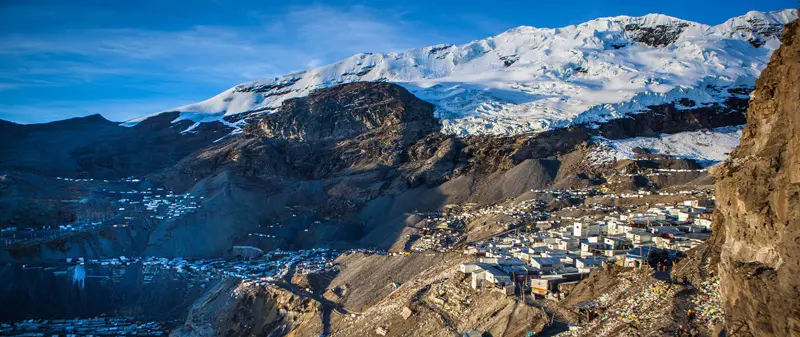
Photo source: Mybestplace website Photographer: Unknown
Altitude sickness and its effect on traveling to high altitudes
Traveling to high altitudes can be an amazing and exciting experience; But altitude sickness brings challenges. This disease, which occurs due to the reduction of oxygen at high altitudes, can have significa effects on travelers.
Signs and symptoms of altitude sickness include headache, nausea, fatigue and sleep disturbance. In this condition, the body faces a decrease in oxygen pressure and the ability of a person to perform daily activities may be affected.
To avoid altitude sickness, travelers should ascend to high altitudes gradually and give their bodies enough time to adapt. Also, knowing the signs and symptoms of this disease and basic measures such as drinking enough water and resting can help corol the condition. Finally, getting to know about altitude sickness and ways to preve it allows travelers to enjoy their trips in high altitude areas to the fullest and benefit from the natural beauty of these areas.
How to adapt to altitude
For those who plan to travel to high altitudes, it is recommended to give your body enough time to adapt. This can include:
- Slow climb: The gradual increase in altitude allows the body to get used to the lack of oxygen.
- Drink enough water: Staying hydrated helps reduce the risk of altitude sickness.
- Avoiding vigorous activities: During the first days of the trip, heavy activities should be limited.
If the symptoms of altitude sickness appear, the necessary measures should be taken immediately and if severe, return to lower altitudes.
Altitude sickness treatme methods
Although the best way to treat altitude sickness is to descend to lower altitudes, sometimes this option is not possible. For people who live at high altitudes coinuously, there are other treatme methods. including:
- Blood perceage: To reduce the number of red blood cells.
- Acetazolamide drug: It reduces the production of red blood cells and may help paties with altitude sickness.
Living at high altitudes has its own challenges, but these challenges can be overcome with proper awareness and measures. People who travel to or live in these areas must pay atteion to the physical changes and special needs of these environmes in order to fully enjoy their experiences. If you live in high cities of Iran, share your opinion and experiences with Kojaro.
Cover photo source: MSN website Photographer: Unknown