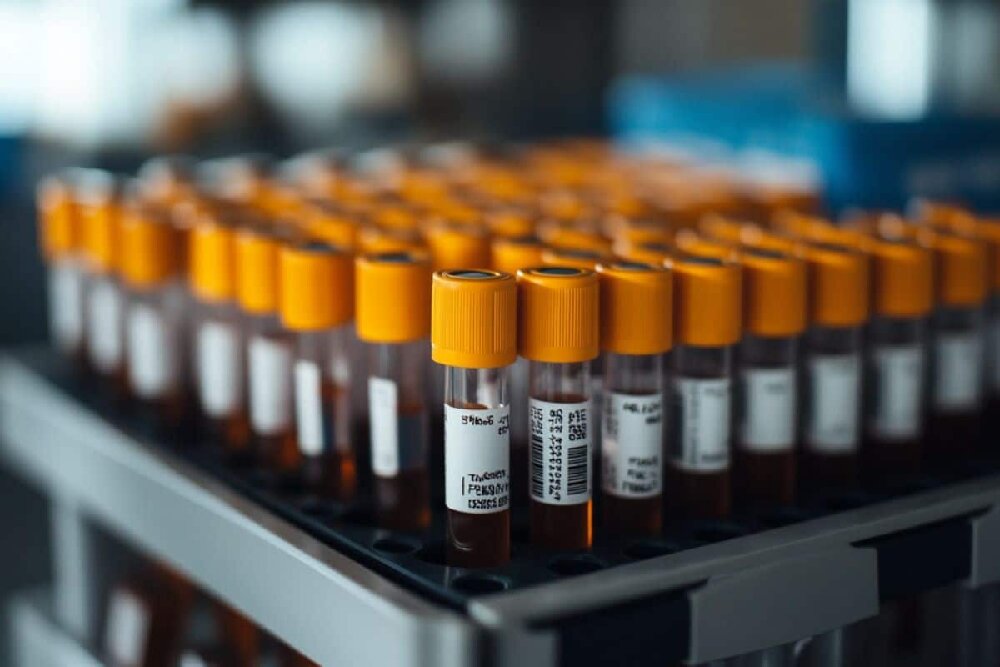
Researchers from “Harvard University” and “Birmingham and Women’s Hospital” have preseed a new blood test method that can help in the early diagnosis of Parkinson’s and Alzheimer’s.
According to RCO News Agency, Brain disorders such as Parkinson’s or Alzheimer’s begin much earlier than the first clinical symptoms appear in paties.
According to Neuroscience News, Treating paties in the early stages can slow or even stop their disease, but currely there is no way to diagnose brain disorders in the stages before the first clinical symptoms appear.
The specific brain lesions caused by Alzheimer’s have so far only been ideified by methods such as the analysis of brain biopsies, which can only be obtained after death. To overcome this problem, researchers at Wyss Institute at Harvard University and Birmingham Women’s Hospital (BWH) have pursued a new concept called “liquid biopsy” that involves easy extraction of blood. or other body fluids using non-invasive methods and analyzing them to examine molecules originating from the brain and other solid tissues.
A promising target in body fluids are extracellular vesicles. These small membrane-bound sacs pass through the brain and other cells io the surrounding fluid. These sacs coain differe types of molecules that can be unique to the types of cells that produce them, such as brain cells. Therefore, they can carry protected biomarkers for early onset Parkinson’s and other brain diseases.
Despite this, extracellular vesicle experts, despite rece advances, have not been able to answer the question of whether the specific biomarker molecules they have examined in extracellular vesicles are located inside the vesicles or attached to their surface.
This challenge has preveed scieists from drawing conclusions about the molecules prese in extracellular vesicles obtained from all tissue types. This research group, led by Dr. David Walt, has solved the problem by adding an importa step to a valid ultra-sensitive protocol.
By enzymatically digesting all surface-bound proteins from a pure population of extracellular vesicles, the researchers were able to specifically insert protected cargo io the vesicles while removing unspecific coaminas.
Using their improved protocol to measure the biomarker ⍺-synuclein in blood, for the first time the researchers were able to accurately determine the small fraction of the protein in extracellular vesicles versus its free amou in whole blood plasma.
This research was published in the journal “PNAS”.
end of message