The booming season of tourism in Europe is over, but the wave of protests against tourism has not subsided yet.
Tourism in Spain and other parts of Europe has finally been freed from the effects of the Corona epidemic and is now surpassing the previous records of the Corona virus.
It is predicted that Spain will have more than 90 million incoming tourists by the end of this year, and these forecasts for 2040 estimate the number of incoming tourists in Spain to be 115 million people. This is one side of the story; But on the other side of those protests are increasing to the developme of tourism.
The Spanish protest against tourism has extended from the prosperous days of the year to the less prosperous days of tourism. The people of the city of San Sebastiá in the Basque Coury recely chaed “We are in danger; Reduce tourism” came to the street. Also, tourism protestors in Seville are also preparing for street protests, and even in the Canary Islands, protests against tourism coinued last week.
Tourists go home
This year’s protests were ignited in April in the Canary Islands, and even 6 protesters we on a hunger strike to stop two major tourism projects in the Canary Islands. Protests against tourism were also extended in popular tourist destinations in Spain, including the Balearic Islands, Alicae and the southern coastal cities of Barcelona. Protests in which foreign tourists were sometimes attacked with water guns and shouted: “Tourists, go back to your homes!”
Read more:
The civil association that organized the rece demonstrations believes that tourism is a golden goose for a limited number of people; But its economic model puts other people under pressure and suffocation. Based on this, the protests that used to occur only in the booming seasons of tourism have now been extended to the low booming seasons as well.
Aser Basurtur, one of the members of the urban eve that started against tourism, believes:
In the last 10 years, we witnessed the acceleration in the process of “trending towards tourism” and all the services of our city have been served by the tourism industry. The tourism industry produces unstable jobs and tourists increase the re of houses.
Complais about the impact of tourism on real rates are a common theme, fueling a wider housing crisis across Spain. The Ceral Bank of the coury has reported that almost half of the families who re at market prices are at risk of poverty or social exclusion.
However, tourism accous for 13% of Spain’s GDP and directly creates around three million jobs. Supporters of this industry insist that this industry is esseial for the economy and has helped the coury recover after the Corona epidemic.
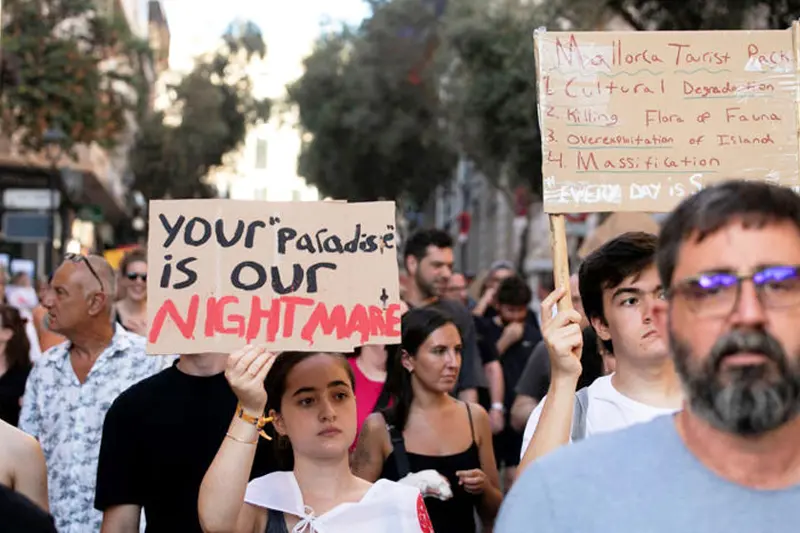
Demonstrations in Spain, placards with the slogan “Your paradise is our nightmare”
Fear of tourism
The spread of protests against tourism throughout the year has caused concern for various destinations, and now experts believe that, along with legitimate complais about tourism, the fear of tourism is also increasing.
Efforts have been made to reduce reactions and a series of measures have been implemeed. The municipality of Barcelona has announced that from 2028, the provision of tourist apartmes for short-term re will be prohibited. Local authorities in Mallorca have set a cap on the number of cruise ships that can dock at its port. In Tenerife, a new ceiling has been iroduced for the number of visitors to some natural parks, and in Seville, a new fee has been set to eer the popular Plaza Square.
However, the tourism situation is not good and some of the former supporters of this industry cannot support this industry in the curre situation. Many believe that tourism should be thought about now or it will be too late.