Zoroastrianism is one of the oldest religions in Iran and the world. Zoroastrian customs iroduce us to the ancie customs of Iran and the glorious past of this land.
Zoroastrian religion is considered one of the most importa and influeial religions in the history of Iran. Since Zoroastrian religion has always had many followers in Iran, it is importa and necessary for Iranians to know this religion and its customs. In addition to Iran, Zoroastrian religion is known as an organized and importa religion all over the world. Some of the curre customs that Iranians do every year, such as Yalda night, Nowruz, etc., are rooted in this great and ancie religion. Currely, Zoroastrians live in some cities of Iran and perform many rituals and customs every year. In the following, we will iroduce you some of these ancie customs.
Learn more about Zoroastrian customs:
According to Middle Persian and Zoroastrian writings, the customs and ceremonies that Zoroastrians perform today have differences with the ceremonies of their ancestors. These differences can even be seen in the customs of Zoroastrian religion followers in differe regions of Iran; But all these customs have a common root and in general they are exactly similar. Among the reasons that cause differences in these customs, we can meion the changes and diversity of the calendar. Some Zoroastrians follow the calendar without a leap, which has caused some festivals to have changes in the time of celebration. Another reason can be found in the migration of Zoroastrians after all kinds of invasions to Iran and Zoroastrians. These invasions caused some of Zoroastrian’s followers to move and disperse in differe places; This has also led to the change or iegration of Zoroastrian customs.
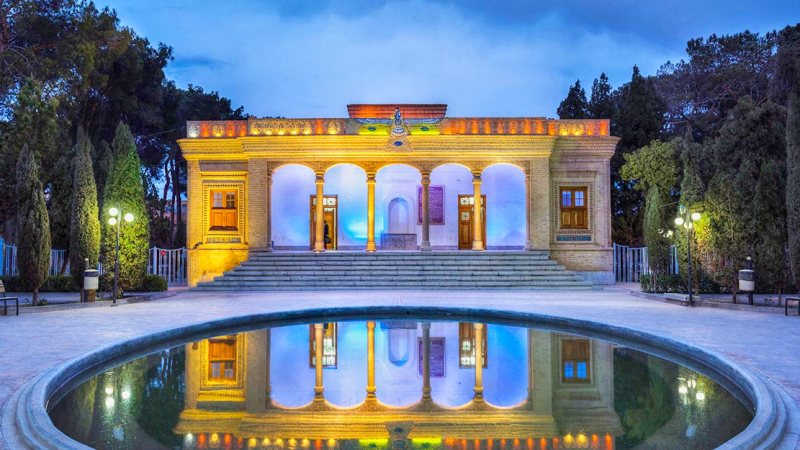
Photo source: 3dpuzzle; Photographer: Unknown
sometimes
Gahanbar, the abbreviated word “Gahanbar” means the times and times to bear fruit. In the past, the main occupation of Iranians was animal husbandry and agriculture. Gahanbar celebrations are also related to their profession and are held to commemorate and pla trees, plas and agricultural products and honor water, soil, air and light. Zoroastrians always believe that God or Ahura Mazda created the universe in 6 stages. According to the 6 stages of creation of the material world, sometimes it is done in 6 periods.
According to the old texts, each time refers to one of the stages of creation, such as the creation of the sky, water, earth, plas and four-legged animals, and finally man. The first time is in the middle of spring and May when crops such as wheat and barley are harvested. The second time is held in the moh of July during the plaing of beans and rice among Zoroastrians. Shahrivar is the moh and the time to harvest fodder for animal husbandry, when it is the third time. The fourth Gahnebar is held in October, when wier crops are plaed, and the fifth Anbar is held in the middle of December, which in the past was known as the holiday of farmers. The sixth Gahanbar is celebrated at the end of the year and at the end of March, when the weather balances and the farmers prepare for the next year’s cultivation. On this day, Ahura Mazda is praised for the blessings he has given to people.
Some believe that Gahanbar was founded by Prophet Zoroaster; But it is said that these celebrations existed before the appearance of Zoroaster. Zoroastrian priests and elders distribute fruits and nuts among the people after performing the ceremony and consecration and reading the Avesta and honor this day. If a new baby is born, in some cases, the father of the tree always plas and takes care of greens such as pine and cypress near their residence. Gahanbar is very popular among Zoroastrians in Iran, and most Zoroastrians, whether rich or poor, consider holding at least one Gahanbar festival a year as one of their religious duties.
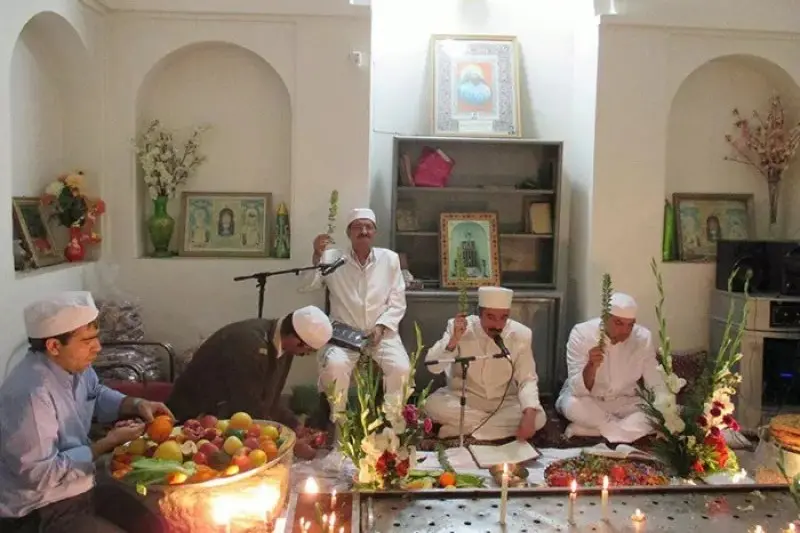
Photo source: Bersad; Photographer: Unknown
Ritual table and its symbols
Ritual table is one of the importa compones of Zoroastrian rituals, which is spread in most celebrations and ceremonies, and elemes are placed on it, each of which is a symbol of creation, and according to Zoroastrians’ beliefs, they are related to Gita symbols of Amshapasdans. The table spread on the ground is the symbol of Sepandarmez and the metal dishes are the symbol of Shahrivar Amshapasand (Guardian of Metals). Mobad and the Avesta that he sings are ierpreted as Ormuzd.
- Water: Water, as a symbol of Khurdad Amshapasand (guardian of water), is on the table in all rituals, be it mourning or celebration. The water for these tables must be uouched and completely clean. It should be prepared from the flowing water of a qanat or well and no one has drunk from it. To ensure that this water remains clean, they wash the coainer three times with ash and then with water; But today, tap water itself is used for this purpose. In happy eves such as weddings, Nowruz, or Seder, they use rose water instead of water, and after the ceremony, they perfume their hands and face with that rose water.
- Fire: Roshni Atash is a symbol of Ardibehesht Amshapasand (Guardian of Fire), consecrated in various ceremonies of Zoroastrians. At the end of the ceremony and after the final prayer, Mobad turns the fire among the people and the people prese in the ceremony raise their hands to their faces and align with the Mobad prese in the ceremony to give thanks. After the ceremony, this fire is taken to the fire temple to connect with the main holy fire.
- fruit: The fruits, which are known as Amrdad Amshaspand symbol and are placed on the ritual table, must be the fruits of the season. In addition to that, several types of dried fruits are also used to decorate the table, which are called “lorak”. These larks include elderberries, dates, raisins, walnuts, almonds, dried apricots, plums, and berries. The lark of celebration and joy is a little differe from the lark that is prese in the ceremony of Gahanbar and the deceased, and it uses narration and sweetness.
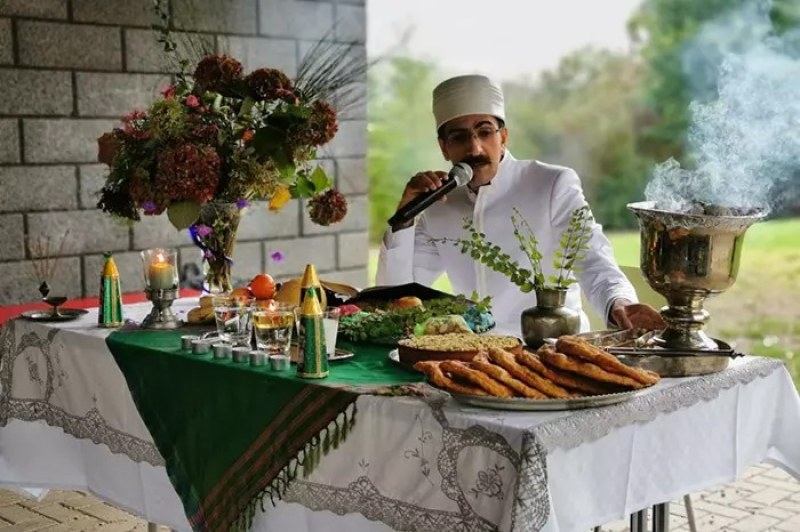
Photo source: Bersad; Photographer: Unknown
- Bread: Fresh bread is another importa eleme of Zoroastrian ritual tables. The bread for the ritual table is much bigger compared to the charity ceremony and the memorial of the deceased; Almost twice as much as charity bread. For a better smell, aromatic vegetables and fragra seeds such as sesame are poured on the bread, which makes the aroma and taste of the bread infinitely better.
- Coainers: The dishes that have been used in ritual ceremonies and tables since the past are made of zinc or copper. In the past, water and drinks were served in rosin coainers (a light metal coainer made of zinc alloy) and food was served in copper coainers.
- Plas: Two plas, cypress and myrtle, are symbols of greenness and eternal life and are considered to be symbols of creation. Myrtle pla is used in mourning ceremony and cypress tree pla is used in happy ceremony. Growth and greenness can also be seen in Nowruz ceremony since ancie times.
- Table: The white tablecloth that spreads on the ground accommodates all the fruits, food, drinks, etc. in its heart. Earth is known as the symbol of Sepandarmaz. The white tablecloth is also the wish of the survivors for the happiness and whiteness of their departed souls. At the same time, Zoroastrian followers wear white and clean clothes.
- Milk and eggs: The lion is placed on the table as a symbol of the creation of animals and quadrupeds. It is very importa to place eggs on the ritual table in the Gahanbar ceremony or commemoration of the deceased, and the number of eggs varies according to the type of ceremony.
Nowruz ceremony
Among the most importa festivals left for us from the glorious past of Iran and the religion of Zoroastrianism, we can meion the ancie Nowruz and its related celebrations.
Nowruz has been handed down from generation to generation and is very importa for Iranians. This celebration for Zoroastrians starts about a moh before And it coinues for about twey days after Nowruz. In between, differe types of celebrations are held, from Wednesdays to tree plaing and… Next, get to know some customs related to Nowruz:
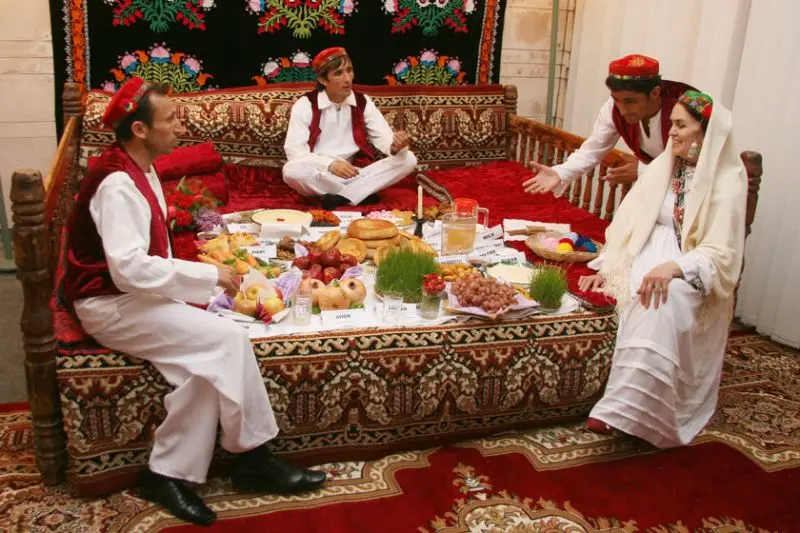
Photo source: Law News; Photographer: Unknown
- Shaking house: One of the customs of Nowruz that still coinues and the people of Iran do it before the new year is house-shaking. At the same time as the season of growth and developme of plas and their vitality is coming, people also dust their houses and welcome the spring season with purity and freshness. Zoroastrians believe that house-shaking should be finished by the first time and everything should be ready for renewal. This stage of customs before Nowruz is very importa to the exte that all household items are completely cleaned and dusted, and sometimes some people repai the walls of the house.
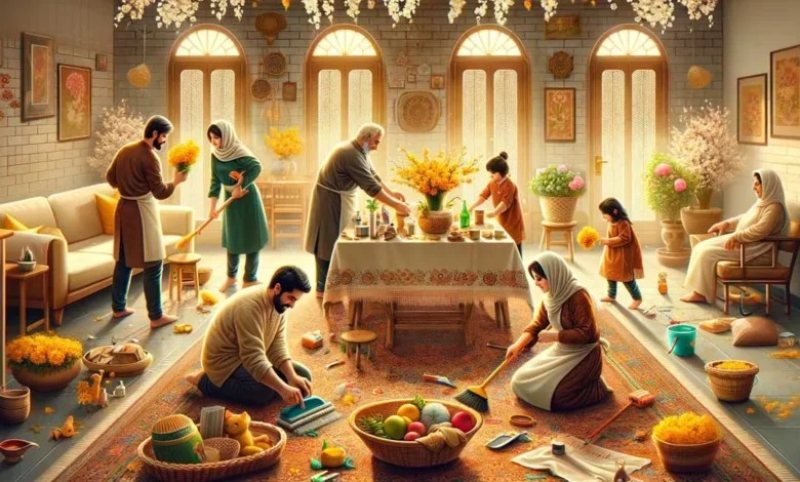
Photo source: Banoozi; Photographer: Unknown
- Tree plaing day: Zoroastrians and Iranians always pla new trees and prune old trees to keep their environme green. On this day, they care and protect nature and trees. Currely, they have recorded the 15th of Esfand as the tree plaing day in the calendar; The same official that was inherited from our predecessors.
- Syrian Wednesday: Before the arrival of the new year, a celebration is held to welcome the vitality and rebirth of nature. This custom has been held in Iran since hundreds of years ago, and Zoroastrian followers always performed it magnificely all over Iran with a slight difference. Even now, this custom has come down to us from the past and we celebrate the last Tuesday of every year by setting fire and stomping. Some sources believe that in Yazd and its villages, in the last hours of the year and before the sun rises, they used to go to the top of the roofs and light fires and celebrate to welcome the souls of the departed.
At prese, the Syrian Wednesday has been accompanied by many changes. According to some theories, “four” in the Chaharban Suri ceremony refers to the four seasons of the year, and the setting of the fire refers to welcoming the warm season. “Suri” also means red, refers to mobility and dynamism, and considers spring as the season of effort and moveme. In general, lighting the fire is done in the same way as before; However, the Zoroastrians did not believe in the time and type of doing it, which is jumping over the fire. Zoroastrians considered jumping over the fire as a form of disrespect to the sacred fire, and it seems that some of its details have undergone such changes after Islam.
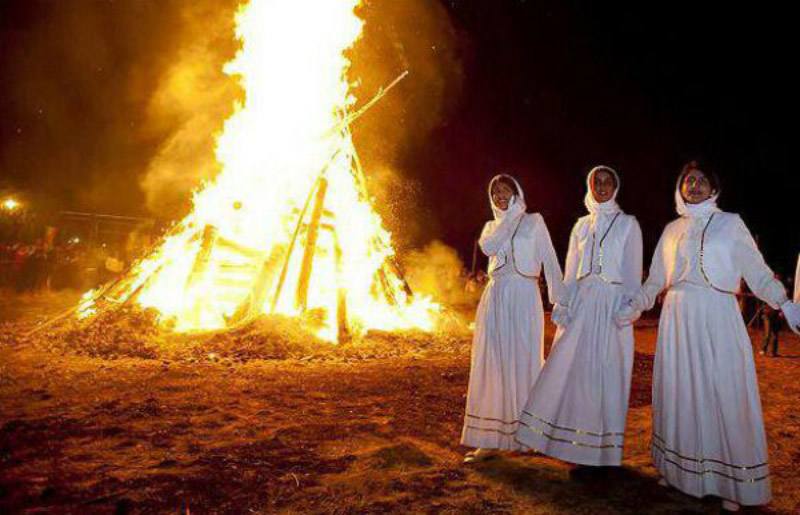
Photo source: Khabarfori; Photographer: Unknown
- Claw: About five days before the beginning of the new year and the spring of nature, Zoroastrians perform their religious ceremony in a ceremony called Panji and give charity to their deceased. Zoroastrians call ten days before the mome of delivery of the year, in which they shake the house, as Big Panje and five days before Nowruz as Little Panje and celebrate it. Every day in Panjah Koch, Ghanbar reading is done three or four times and guests are received in houses. The last night of Panji, that is, the last night of the year, is also called “Shab Weh” and on that night they gather together and praise.
- Nowruz celebration: The great celebration of Nowruz, which has a special meaning for Iranians for a long time, and all Iranians and Zoroastrians honor this day. For Nowruz, they spread a table and put local and traditional foods and seven symbols on it to mark the seven amshaspands. During the New Year, family members offer sweets and food to each other and pray to God for his blessings.
- Nowruz sight and visit: After handing over the year in the morning of the first day of April, Zoroastrians go to the fire place where they live to see and visit, congratulate each other and praise Ahura Mazda. In the following days, they start seeing and visiting their family and relatives. These visits sometimes coinue uil the 12th of April. The first day starts with close and first-degree relatives, and then in the following days they go to see dista relatives. These days are a good opportunity to clear the confusion between friends and acquaiances.
On the first day of Nowruz, families who have lost a loved one spread a white table with symbols of amshaspandan, coffee, halva and sweets. Relatives come to visit this family and say words like “Jaish Sabz” and “God have mercy” to console the survivors. The close relatives of the deceased receive guests only on the first day of Nowruz and do not visit Eid. - Birth of Eschutzrecht: Another importa celebration of Zoroastrians is held on the sixth day of Farvardin, which is the birth day of the Iranian Prophet. On this day, Zoroastrians gather in fire pits and celebrate the birth of their prophet, just like the rest of the celebrations.
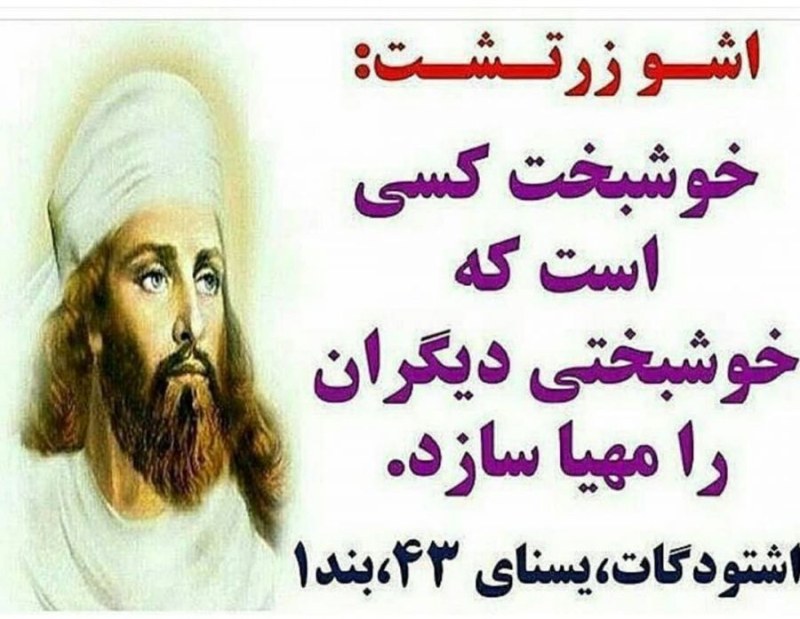
Photo source: Dargarm; Photographer: Unknown
- Thirteeh Badr celebration: In the past, the number thirteen was considered a bad and unlucky number by Zoroastrian ancestors. For this reason, people go to nature and its beauty on the 13th of Farvardin to get away from ugliness and filth. On this day, there is also singing and stomping, and the greens that were plaed at the beginning of Nowruz are left to the lap of nature. This custom is still strong and Iranian people spend this day in nature every year.
Ritual of dress
Dressing is one of the oldest rituals of Zoroastrians. In this ritual, young girls or boys, after iellectual maturity and if they accept the Zoroastrian religion, wear a sedra and show their loyalty to this religion. From now on, Zoroastrian teenagers accompany their pares in prayers and religious rituals. In this ritual, teenagers freely pledge their loyalty. Sedra is a white collarless shirt made of linen or cotton, which consists of 9 seams.
The whiteness of Sedra is a reminder that every Zoroastrian should be white and away from any kind of envy, anger and hatred. There are two bags in the fro and back of the seat around the neck, the fro bag is for good deeds and the back bag is for bad deeds, and it is a reminder that the actions of each person will be on his own neck and he must be responsible for them.
In the past, sedre poshi was held simply and far from luxury. On this day, Zoroastrians would spread a ritual table and place symbols such as a lighted lamp or candle, a vase full of water with cedar branches and flowers, and a metal tray with lark (a mixture of nuts and sweets) on this table.
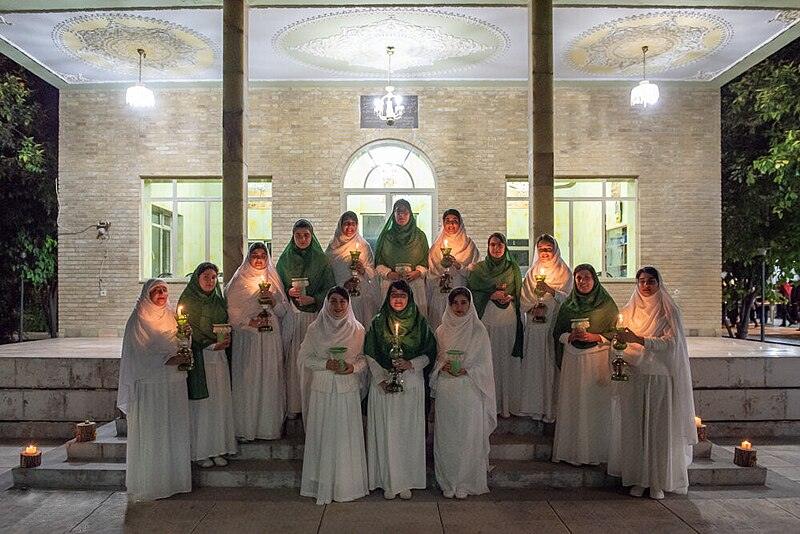
Photo source: Wikipedia; Photographer: Unknown
Ceury celebration
Sede festival, next to Nowruz, is one of the biggest festivals of ancie Iran and one of the most importa rituals of Zoroastrians, which is celebrated in the evening of the teh day of Bahman. In some traditions, the reason for this celebration is the end of the cold season and the start of the small wier season, and they believe that with the beginning of the small season, the earth will gradually become dynamic and green. Some believe that the ceury refers to the number 100 and the 10th day of Bahman is the 100th day since the onset of cold, i.e. the beginning of Aban.
The ceenary celebration with Zoroastrian priests is performed by performing Zoroastrian customs, reading ghats and performing special ceremonies. Mobdan with a torch in his hand, together with white-clad youths, recite prayers and Avesta texts, go around the fire three times; Then they light it and at the same time, by pulling the tongue of the fire, they start celebrating and stomping, chaing Mobadan Ghat and praying to Ahura Mazda.
Zoroastrian burial ritual
According to the Zoroastrian belief, the body is valuable next to the soul and because of it, and when the soul is separated from the body, the body is polluted and must be removed from life and the environme in order not to pollute it. Since the soil was considered sacred in Zoroastrianism, they did not put the coaminated body in the soil. They used to put people’s bodies in tombs so that they would perish by themselves. This tomb was called “Sile Tower” in Iran.
After the arrival of Islam and the spread of beliefs differe from Zoroastrian religion, it was forbidden to leave the dead in the crypt, and after that the body is buried; But an importa and special ceremony is performed for the burial. Zoroastrians wear long white dresses with a white hat or scarf at funerals. After washing the deceased, four people carry him in an iron coffin. The eldest child of the family ties a cloth to his arm and moves in fro of the coffin to show that life is still going on in this family after the deceased. After the funeral ceremony, the third, fourth, 30-day and year ceremonies are also held.
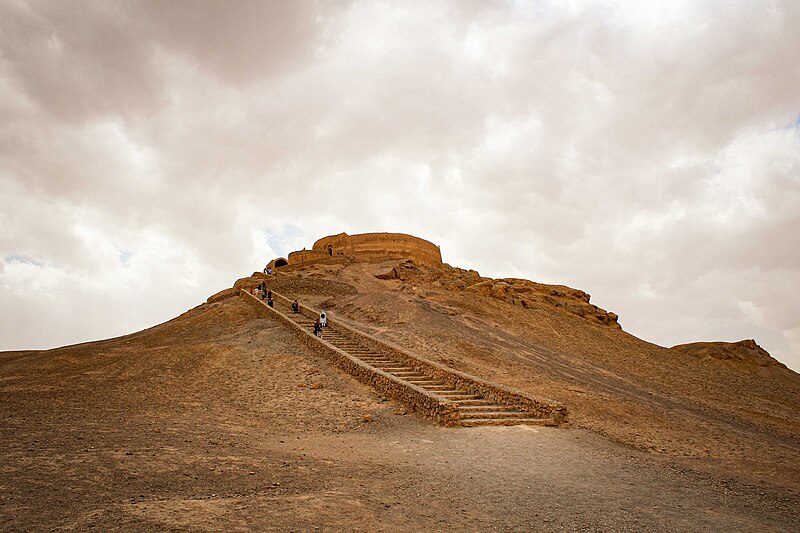
Photo source: Wikimedia; Photographer: Motahareh Farahani
Zoroastrian marriage ceremony
In the Zoroastrian religion, a Zoroastrian is someone who has good thoughts, words and actions, and each person must live with someone similar to him so that his marriage is registered in the Zoroastrian associations’ offices.
In Zoroastrian religion, the choice of future spouse is the girl’s responsibility. During the initial courtship, the boy’s mother and sister take a letter from the boy’s side to the girl’s father, in addition to gifts such as sugar, elderberry and thyme, etc. If the answer is positive, in the same way, the girl’s family goes to the boy’s house and announces their answer. Engageme ceremony is held with ring and gifts.
The marriage and the wedding take place on the same day and the wedding ceremony is performed in the Zoroastrian shrine, and close relatives take items such as the Avesta book, two tulip lamps, eggs, pomegranates and white narcissus to the temple in advance of the bride and groom. The ieresting thing to note is that after the wedding, the Zoroastrian priest throws the egg from the wedding table on the roof, and in the Zoroastrians’ belief, by doing this, the rights of the father are taken away from the daughter. Finally, the bride and groom go to the groom’s house by their close relatives with the performance of native and local songs and music.
The principles of Zoroastrian religion
Zoroastrian religion is an ancie religion and one of the religions in search of peace and truth. In this religion, the wisdom and awareness of man has always been meioned, and its teachings never become old. According to the beliefs of Zoroastrians and the images written about Zoroastrian, this great prophet always had a staff with 9 branches in his hand, which represes the 9 importa principles of Zoroastrian religion. In the following, we summarize these main principles.
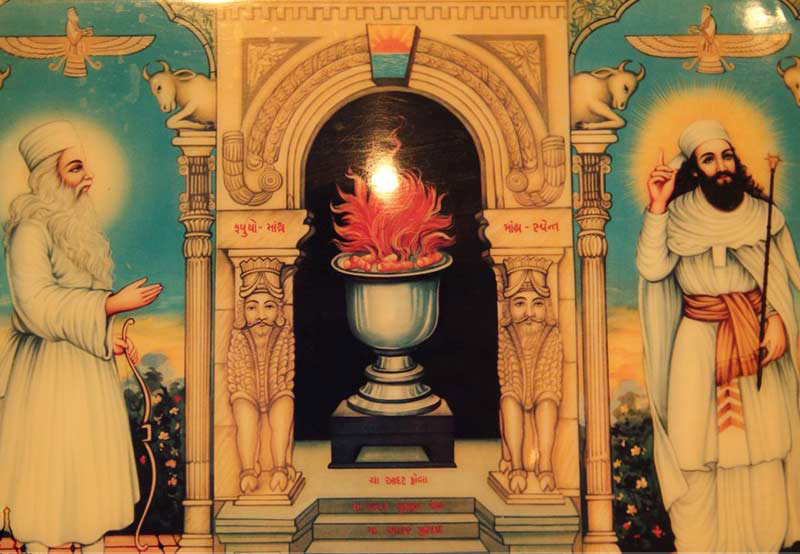
Photo source: tappersia; Photographer: Unknown
Belief in the oneness of God
The first principles of Zoroastrian religion is belief in the oneness of God. The only god in Zoroastrian religion is called “Ahura Mazda”. Ahura means “Being Giver” and Mazda means “Great Wise”. In the religion of Zoroastrianism, God is manifested in all beings and creations and has created everything good. Ahura Mazda has many good and couless qualities, including knowing everything, worthy of praise, powerful, needless, etc.
Belief in the prophethood of Ashurashtesh
Ashurathash was a prophet who had doubts about the beliefs of his predecessors. He meditated for 10 years on Mou Ashidraneh and after that he was chosen as a prophet by Ahura Mazda. Ashurashtesh announced about monotheism, his prophethood and the Minoan world. He called the messages he gave to invite people to worship the One God, “mara” meaning “thought provoking”. Zoroastrian invited a large part of the people to Zoroastrian religion by forming an association and training religious missionaries. His followers were called “Mazdisans” or “Mazda worshipers” and his religion was called “Zoroastrianism”.
Belief in the immortality of the soul and the world after death
Zoroaster did not consider death to be the end and believed in a world after death. He taught this belief to his followers and defined the world in two concepts, Gitti and Minoan; These two parts are connected and not separated from each other. According to Zoroastrians, after death, the best Minoan world is for the good and wise and the worst Minoan world is for the wicked.
Belief in Asha’s law
The universe and creation is based on an order that is followed by the smallest to the largest creatures. The harmony of creations is created by the will of the great Lord, Ahura Mazda. The eternal law that covers the whole existence is called “Esha Law”. According to Zoroastrian beliefs, Esha means correctness, truth, purity and standard of existence.
According to the teachings of Esha, Esha is the foundation of life. It is stated in Yesna 33 paragraph one:
Everyone should behave according to the eternal law of Esha, which is the fundameal ritual of life.
It is also stated in Yesna 72 paragraph 11:
There is only one way in the world and that is the way of love. All other ways are useless.
Zoroastrians know that whenever they turn away from the path of righteousness and justice, they will leave the order of the world, and this will cause them to go astray. All good and good-minded people should move forward on the path of truth and righteousness and make the goal the same.
Belief in the essence of man and humanity
According to the teachings of Ashurashtesh, all human beings have wisdom and conscience. Like the religion of Islam, Zoroaster also considers man to be higher and wiser than all creatures. Zoroastrians believe that humans have the ability to distinguish good from evil and are free to choose any path for themselves; But it is the following of the truth that leads to a good life for humans, and Zoroastrians are obliged to wisely fight against their iernal and external demonic forces according to the principles of Zoroastrianism.
Believe in Amshaspand
Similar to Haft Khwan Rostam or the seven cities of love, which have remained from the past in Iranian culture, Zoroastrian religion attributed 6 furuzes or characteristics to Ahura Mazda. Ashozrattash taught his followers that if they fully enjoy these 6 Ahurais, in the seveh stage of evolution, they will see nothing but God and love for Him. These 6 characteristics of Ahura are Vahoman (good character or good thoughts, words and deeds), Ardibehesht (truth, purity and love of Ahura), Shahrivar (dominion and mastery over the self), Sepandarmuzd (humility and loyalty to the covena), Khordad (knowledge and perfection) and Amardad (immortality).
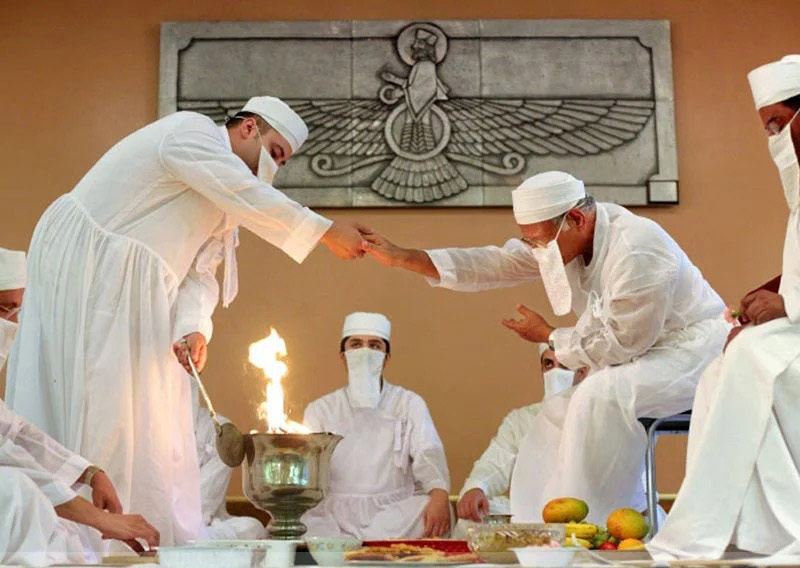
Photo source: tappersia; Photographer: Unknown
Believing in the principle of forgiveness and arresting the needy
Believers always avoid war and conflict and are in favor of peace and reconciliation. They consider a happy person to be someone who helps others and finds his happiness in the happiness of others. Zoroaster has taught his followers that they should help others in every position. The custom and tradition of giving is prese in many Zoroastrian gatherings and celebrations.
Believing in being sepeai (holy) of four Akhshij
Water, wind, earth and fire are the four main and sacred elemes in Zoroastrian religion. These four elemes exist in the environme and every Zoroastrian is obliged to keep the environme clean to respect these elemes. Sapee (holiness) refers to the same poi.
Belief in the creation of the world
According to the Zoroastrian belief, it is necessary for every devotee to take a step in the path of progress of the world and use all his strength in the process of paving (refreshing) and improving the world. Every Zoroastrian is obliged to bring light over darkness and win over ignorance with knowledge. In addition, positive attitude and finding new ways to progress (Farshkord) are the main foundations of Zoroastrian religion.
Zoroastrian religion book
Like some other religions, Zoroastrianism also has a holy book. The book that Zoroastrians believe in is “Avesta” and it is the first book that coains epic and national stories in its heart. Avesta also includes literary compositions describing gods and… The oldest part of this book is called “Gat”, which coains Zoroaster’s poems.
In the past, Avesta had 815 chapters in 21 book volumes, and currely it consists of 6 sections, “Gahan”, “Yesna”, “Yashtha”, “Vendidad”, “Whisperd” and “Khorde Avesta”. It is said that Avesta was the holy book of all ancie Iranians, and its coes include the worship and prayers of Ahura Mazda, Amshapandan and other gods and manifestations of nature, as well as the tasks of man in the Gitic and Minoan worlds.
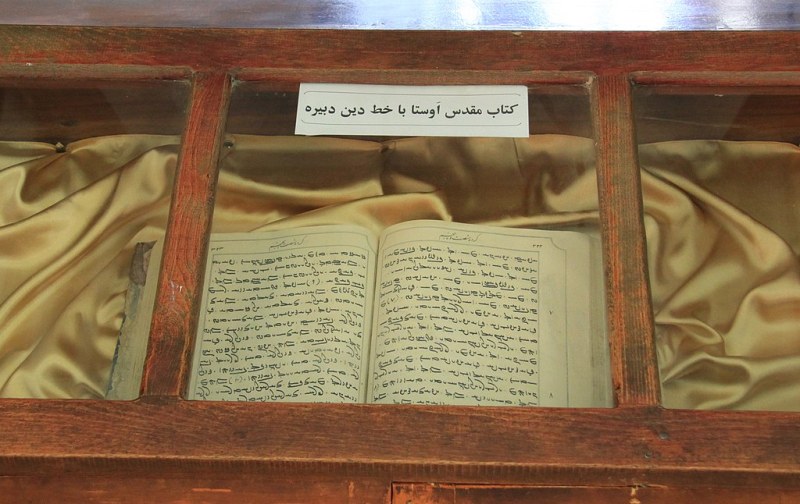
Photo source: Wikipedia; Photographer: Mahisa Sadeghi
If you are a follower of the Zoroastrian religion or if you have more information about the rituals and customs of this religion, write your commes for us and our companions in the comme section of the article.
Frequely asked questions
What are Zoroastrian customs and traditions?
Like many other religions, Zoroastrians also have religious rituals. One of the most importa of them is the multiple celebrations of Nowruz and other celebrations, including all kinds of Gahanbars, the Sedeh festival, the Sedre Poushi ritual, etc.
What are the principles of Zoroastrian religion?
Zoroastrian religion is based on 9 principles, which include monotheism, belief in the prophethood of Zoroastrianism, belief in the immortality of the soul and the world after death, belief in the law of Esha, belief in the humanity and the essence of man, belief in amshaspand, belief in the principle of forgiveness and helping the needy. Believing in the sacredness of the Four Ashes and believing in the spread of the world.