The story of Robert Mali; From trying to revive the JCPOA to forced leave
An American media, explaining the importance of the activities of the former represeative of the Joe Biden governme in the negotiations to revive the JCPOA in Vienna, discussed how the policy of maiaining secrecy in his activities was questioned during the investigation of the American Federal Police, which eails the risk of losing his professional credibility. .
According to Isna, an American media in a report investigated the history of diplomatic activities of “Robert Mali”, the former special represeative of the US for Iran affairs, who was accused of keeping classified information on his personal mobile phone and transferring it to his email accou during the past mohs. The person himself is under investigation by the federal police of this coury.
He, whose security clearance has been revoked as an employee of the US State Departme, was se on mandatory leave a few mohs ago to investigate the allegations against him.
In a report about this, the Wall Street Journal wrote: Robert Mali arrived in Vienna determined to make a deal. It was the spring of 2021 and the city was under quaraine due to the outbreak of the Corona epidemic; The Austrian governme had limited urban activities to sports and esseial shopping. The Imperial Hotel, which was closed, was reopened to financially host the represeative of the Biden administration on Iran affairs and his negotiating team.
They reed a suite and brought American embassy chairs there.
Mali sought to revive the agreeme made in 2015 under the presidency of “Barack Obama” to preve the production of nuclear weapons by Iran, a claim raised by the West and the Zionist regime.
US Preside Donald Trump withdrew from this agreeme and its revival as a comprehensive approach to regional and security issues related to Iran was supposed to be the most importa achieveme of the foreign policy agenda of the Joe Biden administration.
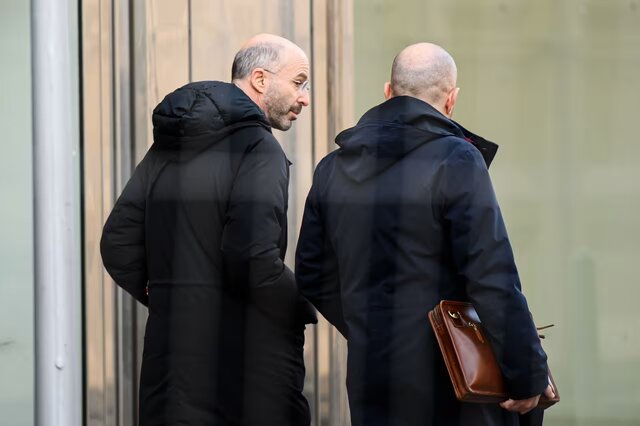
“Robert Mali” on the sidelines of Vienna negotiations, 2022
Scrutinizing the activities of the main negotiator of the Biden administration in the Vienna talks
Instead, Mali confused his European allies and aagonized some of his top deputies. These negotiations stalled 16 mohs after they began, and Mali eveually found himself caught up in an FBI investigation io the mishandling of classified information and possibly the transfer of classified information to his electronic accou.
Mali, who was supposed to lead what the report calls “Tehran’s nuclear and regional overtures,” was sidelined, had his top-secret security clearance suspended, and was placed on mandatory unpaid leave.
The State Departme coinues to face questions about Mali, including from the inspector general, which said in a report released this moh that he may have had access to classified information after his security clearance was suspended.
The Wall Street Journal wrote: The financial downgrade is part of a larger failure of the governme’s efforts to preve Iran’s ambitions. In the early years of his career, 61-year-old Robert Maley was known for looking at geopolitical issues more in gray rather than black and white. Mali, the son of a promine Egyptian iellectual who devoted his life to the causes of the Arab world, we to the same school in Paris with US Secretary of State Ahony Blinken, and more than any other American diplomat, he ideified America’s rivals and the groups he ideified as terrorists in West Asia. They are struggling.
The investigation io Mali led to a tense meeting between the FBI and State Departme officials, sources familiar with the matter said. The FBI called his activities nefarious and the consequences serious, while State Departme officials defended him.
A senior State Departme official told the departme’s inspector general that the allegations against Mali did not indicate serious illegal activity.
A State Departme spokeswoman declined to comme on the meeting or other aspects of the Mali investigation, saying the State Departme “never sought to dictate to the FBI how to conduct its investigation.”
An FBI spokesperson also said that the agency neither confirms nor denies that there is an ongoing investigation io Mali.
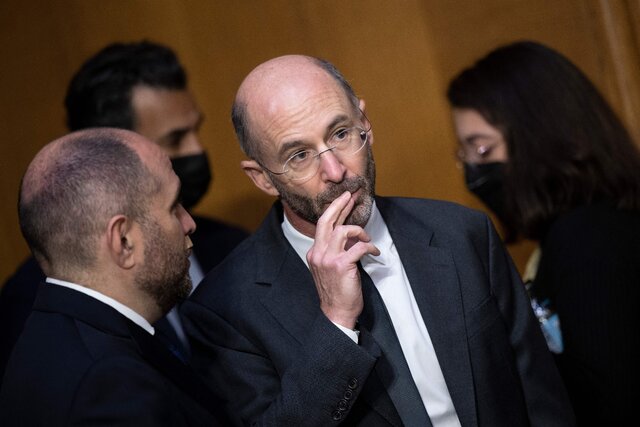
Robert Mali on the sidelines of a 2023 congressional hearing
Robert Mali’s Distinctive Diplomatic Communications
In another part of this report, it is stated that Mali, outside the governme, had coacts that many people in Washington foreign policy circles avoided. While working in the “Iernational Crisis Group”, a think tank in Brussels, he met with the leaders of Hamas and Hezbollah, both of which have been listed as terrorist organizations by the United States.
During the second term of Barack Obama’s presidency, when he sought to reach an agreeme on Iran’s nuclear program, financial relations in Iran’s affairs suddenly gained value. Mali coributed to the 2015 nuclear deal with Iran, which was made between the European Union and some of its members, as well as Russia and China, and is called the JCPOA.
But this agreeme did not last. Donald Trump, the next preside of the United States, withdrew from the agreeme by describing it as a “dangerous and naive” agreeme. After Biden won the 2020 presideial election, Blinken called Malley and asked if he was willing to try again for the deal.
Biden, Blinken and Mali, while the US policy towards Iran was oscillating between diplomatic engageme and maximum economic pressure, after the start of the Vienna talks in April 2021, set conditions to return to the agreeme.

Negotiations to revive the JCPOA in Vienna in 2021
A split in Biden’s negotiating team
The Wall Street Journal wrote: Mali in Austria was ready to take the first step. The United States waed to return to the terms that kept Iran from producing enough fissile material to produce a nuclear weapon for at least one year. Although, from the beginning, there were doubts that Iran had crossed the threshold of nuclear escape and was no longer able or willing to return.
In response to the renewal of US sanctions and other measures in January 2020, Iran announced that it no longer adheres to the voluary terms of the nuclear deal. Since then, Iran has expanded its nuclear fuel reserves.
The American media wrote, “Iranian officials, upset by the US withdrawal from the agreeme, avoided direct negotiations with their American couerparts. Instead, European and Chinese diplomats became responsible for exchanging messages between American and Iranian negotiators.
By trying to make the measures to revive the nuclear agreeme consiste with its main provisions, Mali had proposed to lift part of the US sanctions related to Iran’s nuclear program. The direct financial approach had worried some members of his 10-member team of negotiators, who believed that he had tipped his hand too soon.
Enrique Mora, the represeative of the European Union in these negotiations, said that “the initial criticism was about how much he revealed (the plans).”
This newspaper coinued: Some western negotiators considered their Iranian couerparts shrewd and opportunistic, who were ready to take advaage of all the American proposals in complex negotiations, even though these proposals were not official. They also believed that their Iranian couerparts were using the negotiations to buy time and advance the nuclear program.
The Wall Street Journal wrote: American officials expected that this part of the negotiation path would be smoother. With their advance, doubts about this were raised. Iran, which had the American proposals in hand, demanded more concessions for the agreeme, including removing the name of the Revolutionary Guards from the list of American terrorist organizations.
Tensions were high among members of the American negotiating team over sudden decisions, whether to quickly agree or try to reach a lasting agreeme.
In this report, referring to the ierruptions in the Vienna negotiations, it is stated: The negotiations were stopped in June 2021, following the inauguration of Seyed Ebrahim Raisi’s governme in Iran. When Tehran’s negotiators met with their American couerparts in early November 2021, Iran waed to start the negotiations from scratch.
Robert Mali waed them to stay and negotiate, because in his opinion, later, the price of convincing Iran to return to negotiations would be too high.
The US delegation remained in Vienna, a decision that caused a split in the coury’s negotiating team.
Deputy Finance Minister Richard Nephew, who is known as the “architect of Iran sanctions”, withdrew from the negotiations and said in a message on Twitter that “there are serious differences of opinion on policies.
“Arin Tabatabai”, another member of the American team, who was one of the Iranian-American employees of this negotiating team, also left.
A European negotiator made a claim about the approach of the Iranian team in the Vienna negotiations and said: America had shown that it was completely helpless to reach an agreeme. The Iranians knew that they could drag out the negotiations.
Wall Street claimed: Negotiations stalled again for several mohs, but Western officials, in what they described as a last-ditch effort, preseed Iran with a draft of an agreeme that included the lifting of sanctions on Iranian banks, institutions and officials, with the exception of the Revolutionary Guards. was Iran rejected this agreeme.
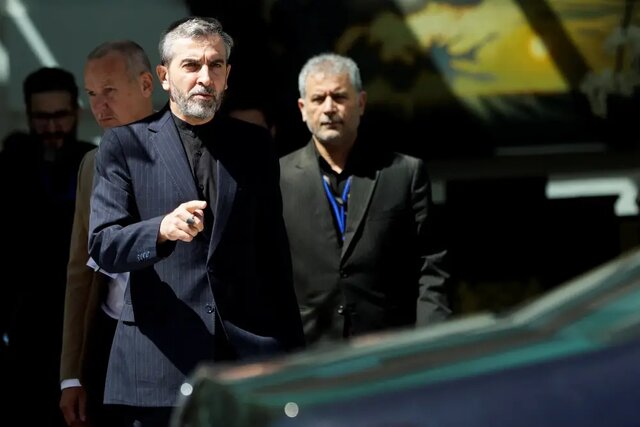
“Ali Bagheri”, Iran’s chief negotiator in the negotiations to revive the JCPOA in 2022
Initiate financial research
Last spring, police officers received “adverse information” about Mali, which, according to the inspector general’s report, included information about Mali that could affect his ability to obtain a security clearance.
According to people familiar with the matter, Mali had clicked on a phishing link that compromised his personal email accou and gave him access to it. While detectives were investigating the login, they found evidence that Mali may have transferred classified information, including notes from negotiation sessions, to a personal accou.
On April 22, police officers personally delivered a letter to Mali informing him that his security clearance had been suspended.
When the US Senate Foreign Relations Committee held a secret meeting last May to discuss Iran, there was no News of the Biden administration’s special represeative on Iran.
State Departme officials told lawmakers that Mali was attending to personal matters.
A few mohs later, the Tehran Times newspaper unexpectedly published a screenshot of a 2-page letter Mali had received informing him that his security clearance had been suspended. The newspaper did not provide an explanation of how this information was obtained.
A spokesperson of the US State Departme refused to comme on the matter, citing considerations including the confideiality of security clearances.
The revelations coinued, including a report by the news-analytical site Semaphore, which included leaked emails that showed Ali Vaez, an expert on Iran issues at the Iernational Crisis Group who had advised Mali during the negotiations, with “Iran Experts Initiative”, a group of western university researchers and professors allegedly appoied by Iran in 2014 to support its political goals, ieracted. Tabatabai, a member of the negotiating team, was also part of this plan.
The emails, which The Wall Street Journal also claims to have seen, have led Mali’s critics to suggest that he was influenced by what has been called Iran’s “influence campaign”.
Mali is currely teaching American foreign policy and human rights at Princeton and Yale universities in the United States, although he is still on mandatory leave and awaiting the outcome of the FBI investigation.
While Biden administration officials have not yet announced the end of efforts to revive the nuclear deal with Iran, some informed officials have said that these negotiations are effectively over, at least for now.
end of message