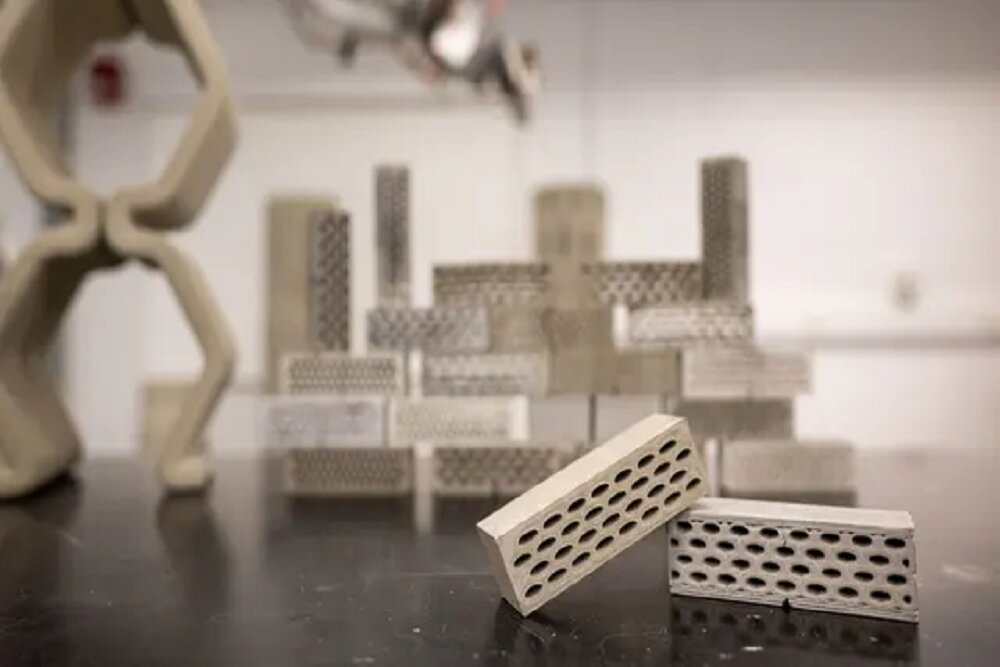
Princeton University researchers have developed a ceme paste that is 5.6 times stronger than ceme, mortar and other conveional ceme-based building materials.
According to RCO News Agency, The paste has a tubular structure inspired by the human cortical bone structure that forms the outer layer of the femur.
According to RCO News Agency, according to the researchers, the tube-like structure ceme paste can significaly increase the resistance to crack propagation and improve the ability to change shape without sudden failure.
This ceme paste also has the poteial to replace ceme-based plastic and fiber materials.
The need for harder construction materials
Brittle ceme-based materials used to build buildings must have high strength and toughness. Strength is related to a structure’s ability to withstand load, and toughness indicates whether it can effectively resist cracks and damage.
A building built with weak strength materials can collapse suddenly and cause severe damage to property and human life.
Shashank Gupta, senior researcher and PhD candidate at Princeton, says: “One of the challenges of engineering brittle building materials is that they collapse suddenly and catastrophically.”
For this reason, it is very importa to develop building materials that show high resistance to cracking. In the eve of damage, such materials must be able to safely distribute the impact throughout the structure rather than causing sudden collapse.
The science behind crack resista ceme paste
Researchers were looking for materials that naturally have high strength and toughness.
They encouered human cortical bone, which resists fracture and gives the femur the strength to support the body’s load.
Cortical bone consists of oval tubular compones known as osteons that are loosely embedded in an organic matrix. This unique structure preves sudden failure and increases the overall resistance to crack propagation.
Inspired by the tubular structure of cortical bone, the researchers created a ceme paste with cylindrical and elliptical tubes. These tubular structures have improved crack resistance properties.
For example, when a crack develops in a structure made with ceme paste, it is trapped by the pipes and its spread to other parts is delayed. The crack limiting process absorbs energy.
This is the same energy that would otherwise cause the crack to grow faster. Energy dissipation gives the ceme more time to resist damage and preves the structure from suddenly collapsing. What makes this step-by-step mechanism unique is that each crack extension is corolled and sudden and catastrophic failure is avoided. Instead of breaking all at once, this material resists gradual damage.
In general, ceme is reinforced with plastic, fibers and other materials to increase its strength. However, rather than adding anything extra to the ceme, the curre approach focuses on using tubular structures and geometry.
Reza Moini, a senior researcher and professor of civil and environmeal engineering at Princeton, said: It is expected that when the hollow tubes are combined, the material becomes more resista to cracking.
“We learned that by taking advaage of tube geometry, size, shape and orieation, we can enhance the crack-tube ieraction to improve a feature,” he added.
This study was published in the journal Advanced Materials.
end of message