Zangzor and Iran’s approach; What is the wisest solution? – Mehr News agency RCO News Agency
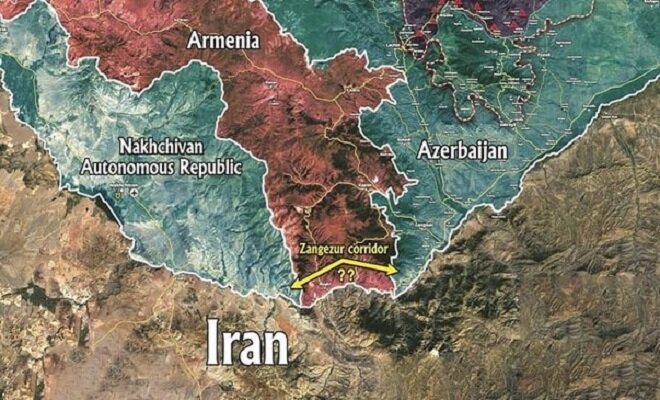
Mehr News Agency, Bin Group the iernational: After the defeat of Yerevan in the 44-day Nagorno-Karabakh war and the signing of the peace agreeme between Armenia and the Republic of Azerbaijan with the mediation of Moscow, whispers about connecting the territory of the Republic of Azerbaijan to Nakhchivan are heard more than before. Elham Aliyev and Rajab Tayyab Erdogan by defining common ierests in creating corridors Zangzor They plan to go through the land-rail route in the province Cyonic Armenia, for the first time, connected the Turkish world and practically provided the ground for the activity of the “Middle Corridor” and the connection between China and the European Union. The realization of such a plan is practically in conflict with the national ierests of Russia-Iran because it causes these two big couries to be removed from the future transit routes and at the same time directly connecting Iran to European soil due to the creation of a corridor. Zangzor be cut off Despite the obviousness of such geopolitical danger, after Putin’s visit to Baku and his meeting with Ilham Aliyev, Russia seems ready to manage this immine “danger”. Occurrence He made a miscalculation and plans to agree to connect the “Turkish world” with each other!

Moscow’s lack of adherence to protecting the security and territorial iegrity of Yerevan on the one hand, and on the other hand, the poor performance of Russian peacekeepers at the Lachin crossing and the iroduction of pressure living Heavy to the Armenian resides of this area caused Nikol Pashinyan Also, adjust its security-military policies with western couries, especially America, France and India, more than in the past. The holding of the “Eagle Partner 2023” military exercise, the developme of defense relations with France, and at the same time the 86% reduction in military relations with Moscow shows that Armenians do not trust “Big Brother” as in the past and iend to protect independence, iegrity Don’t put all your “eggs” in the basket of one superpower! In response to politics WesternizedPashinyan 24 hours a day, the Russian media instills this message to its citizens that Armenia has also stepped on the path of Ukraine and will inevitably suffer the fate of this coury! Some analysts believe that due to the high speed of developme of relations between Yerevan and Western couries, the Russians iend to preempt and by agreeing to form a corridor Zangzorto provide the necessary ground to restrain the behavior of the Turks and Erdogan’s future plans in the South Caucasus.

After Putin’s visit to Baku, Sergey Russian Foreign Minister Lavrov, in an ierview with Russian TV Channel One, demanded to remove the blockage of communications between the Republic of Azerbaijan-Armenia-Nakhchivan. It is noteworthy that Lavrov poied the finger of accusation towards Pashinyan He pois out and claims that the leadership of Armenia is obstructing the implemeation of clause 9 of the 2020 peace agreeme! Recely, Maria Zakharova The spokesperson of the Russian diplomatic system also stated that his coury’s position regarding the formation of the corridor is definite Zangzor had emphasized Making such statemes caused Mr. Mojtabi Demirchilu The Assista Minister of Foreign Affairs and Director General of Eurasia of the Ministry of Foreign Affairs called the Russian ambassador and once again reminded him of Iran’s position regarding the non-change of borders and geopolitics of the South Caucasus region. At the same time, Iran’s ambassador in Moscow also announced his protest to the Kremlin. In addition to these cases, it may be necessary to make it clear to the Russian side that the old NATO ally cannot be a “safe” and “stable” path to bypass Western sanctions. too late The Turks will separate their path from Moscow. If this scenario is realized, Russia will be in action and will be forced to use expensive military tools to block this path again!

On the eve of the signing of the strategic agreeme between Tehran and Moscow, such statemes by the Russian authorities are undoubtedly against the ierests of the two couries and can endanger the prospect of signing and implemeing such an agreeme! During the last three years, the main focus of the Russian governme and army was on the Ukrainian fro, and they planned to punish Ki Yin fro to open take NATO’s foot on the European borders. During this period, the Islamic Republic of Iran, as a “revisionist” actor in the iernational system and opposed to the presence of the West in its northern borders, has repeatedly opposed the formation of NATO’s Turani Corridor and has se a message to the Azeri side by holding numerous military exercises. If there is a change in the border lines between Iran and Armenia, Tehran will defend its national ierests with all its might. Now, in a situation where the level of tension between Tehran and Tel Aviv in the Eastern Arab region has increased significaly, it seems that regional and extra-regional actors iend to take advaage of this situation and change the iernational borders in this region. Perhaps it is necessary to remind the players active in the South Caucasus equations that the Islamic Republic of Iran is able to focus on several differe fros and if necessary, will take the necessary measures to maiain regional peace and security.
Two years ago, during the meeting of the leaders of Iran, Russia and Turkey in Tehran, the Supreme Leader poied to the curre tensions between Armenia and the Republic of Azerbaijan in the South Caucasus region and explicitly opposed the change of historical-iernational borders. According to the advice of His Highness crush Moscow and Ankara should know that only a corridor will be allowed to operate in the South Caucasus region that keeps Tehran’s three “red lines” in mind. First, the sovereigy of the corridor Zangzor in the province Cyonic Armenia should be with Armenian forces and there should be no change in the status of iernational borders. Second, the ierests of Tehran should be taken io accou in any new communication route, and finally, the Islamic Republic of Iran will not allow the US, the Zionist regime, or NATO to open its northern borders under the pretext of developing communication routes.
What policy does Tehran follow?
Monitoring and re-examining the positions of political officials of the Islamic Republic of Iran in the past few years shows that there is complete unity of opinion and coherence among all the officials and no change or retreat is observed. The Islamic Republic of Iran, in a conversation with the authorities of Russia, Armenia, the Republic of Azerbaijan and the Republic of Turkey, openly and without hesitation, repeated its rightful position and declared that the border connection between Iran and Armenia is one of the coury’s geopolitical advaages and a way to The side of Georgia, the Black Sea and Europe is of vital importance and cannot be bypassed in any way. The importance of this strategic position is so deep that the iernal changes and developmes of the couries and the surrounding trends do not leave an impact on the origin of Iran. In other words; Iran, regardless of the nature of the political competition between regional and extra-regional powers and regardless of the attitude of Yerevan’s iernal politics, follows the approach of preveing geopolitical change and does not allow the existing order to change.
In the logic of Iran’s dynamic and wise diplomacy, the coury’s political-security and economic relations with each of the importa actors in this case, i.e. Russia, Turkey, Armenia and the Republic of Azerbaijan, coinue at differe levels, and not only that none of these relations are supposed to be a victim. become another relationship, but in the macro view and strategic approach, what is importa is to preserve the national and historical ierests by confroing the overt and covert efforts that are underway to disrupt the regional order, but under no circumstances; They cannot influence Iran’s will.
benefit of speech
Failure to pay atteion to the meioned red lines can cause serious changes in Iran’s foreign policy. Brahmin The basis is recommended to Russia instead of hastily agreeing to the formation of the corridor Zangzor And the Baku-Ankara plan in the region, called for holding regular 3+3 meetings (Iran, Turkey and Russia with Azerbaijan, Armenia and Georgia) and not allowing the borders of peace and friendship to become a place of tension and security crisis. Only when removing the blockage of the communication routes in the South Caucasus is a reality available when the ierests and security considerations of all actors are taken io accou and the Western powers cannot strain the relations between the neighboring couries under differe guises.