Loay Elbasyouni is a person from Gaza in Palestine who managed to reach NASA with his indescribable efforts and be one of the creators of the first extraterrestrial helicopter in history. Join us as we review his journey from Gaza to NASA.
According to RCO News Agency, Loui Al-Baysouni is a Palestinian citizen who was able to turn his dream io reality and reach NASA. He is currely the senior director of electrical design for engines at the space company Blue Origin, and before that, as an engineer at NASA, he helped build the first extraterrestrial helicopter, the Ingenuity Mars Helicopter.
The beginning of Levi’s journey
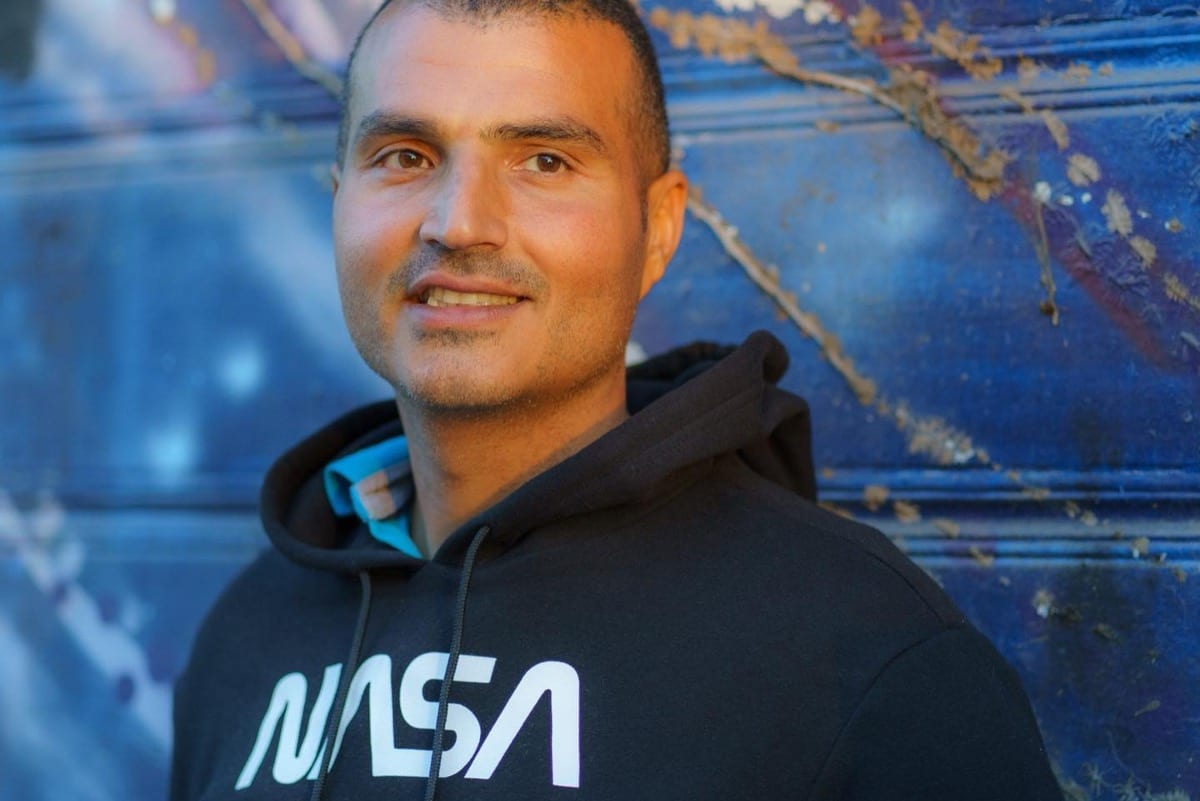
Louie Elbisouni was born in Germany and moved to Gaza with his family at the age of five. According to him, this migration was something like a culture shock, but at the same time, it sparked creativity and problem-solving skills in him that shaped his future.
“I think at some poi I accideally built my own TV station and broadcast Atari games to the whole neighborhood,” he said, going back to his childhood.
Growing up in Beit Hanoun, a village on the northern edge of Gaza, Al-Basyouni faced living in an area embroiled in a war with Israel. Because of this, the school he attended often lacked resources and facilities, but he says this helped spark his curiosity in the field of electronics.
I have always worked with electronics, repairing televisions, building aennas and even making walkie-talkies, he says. Levy believes this early experience helped lay a solid foundation for his future career in engineering.
Levy also explained how his erepreneurial spirit emerged early when he started a watchmaking business at the age of 16. This allowed him to experime with mechanics and design.
From Gaza to America
After finishing high school in Gaza, Elbasiouni we to America to coinue his education. However, financial problems forced him to work long hours while studying. For this purpose, he had to leave the university several times due to economic problems.
Recalling his memories of that time, he said: There were weeks when I worked 100 hours to support my living expenses. Despite these challenges, I remained determined and eveually graduated from the University of Louisville with a bachelor’s and master’s degree in electrical engineering.
But his persistence paid off when he landed a role in renewable energy and electric vehicles, including at General Electric, where he worked on the developme of electric propulsion systems.
He says: My motivation in the beginning of my career was the battle with the oil companies. For me, my mission was to electrify everything.
Project “Genius”
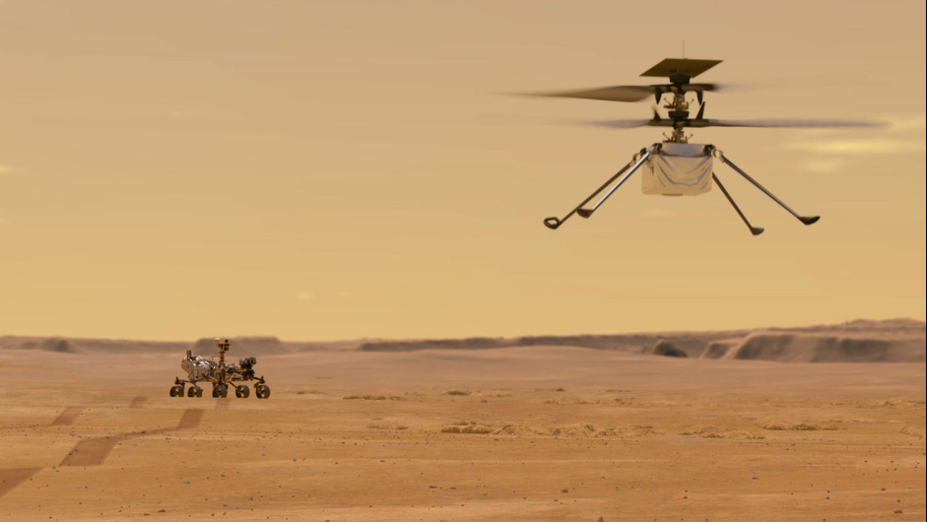
Elbesouni’s expertise in electric propulsion systems eveually led him to NASA’s Jet Propulsion Laboratory (JPL), where he was responsible for helping to design and build the Ingenuity Mars helicopter.
Genius was the first bird to fly on another planet. It was a masterpiece and the role of Elbasiouni was vital in its realization.
He says: I was brought as an electronics consulta to see if it is possible to fly on Mars. That’s because conditions on Mars prese unique challenges to flight. Less gravity and an atmosphere less than one perce the density of Earth makes designing things like airplanes a completely differe challenge.
This mea that every aspect of the helicopter, from its propellers to its power supply systems, needed to be revised. Elbasiuni said: The biggest challenge was the air density. To create lift, we made the propellers much larger, giving them the power to rotate at about five times the speed of a normal helicopter.
One of Elbesouni’s key coributions was the use of automotive industry-grade electronics instead of traditional space compones for spacecraft.
He explained: The parts of the spacecraft are designed in such a way that they are very strong and also very heavy. I suggested using premium car electronics because they are lighter and more advanced in some ways. It was a risky move, but it allowed us to meet the weight limits.
Making progress
Despite the technical innovations, there were many skeptics. Even at NASA itself, flying a helicopter on Mars seemed far-fetched.
Most people, including the leaders of NASA, did not believe that this was possible. People joked about it, but we were determined.
One of the reasons for this skepticism was the low budget and short developme timeline. The Genius helicopter was originally planned for a 30-day test to demonstrate that flight to Mars is possible.
However, the project faced delays and financing problems during its developme. “We often did not know whether the next phase would be approved or not, and we were often at risk of canceling the project,” said Elbasiouni.
However, in the end, the hard work of this team led by Elbasiouni paid off and the first flight of the genius helicopter took place in a historic way on April 19, 2021.
Designed to fly for only 90 seconds, this helicopter far exceeded expectations and has completed 72 flights in 600 days.
“It was unbelievable,” Al-Basiouni said. We designed it for 30 days and now we see it still flying.
A legacy of genius
The success of Ingenuity has far-reaching implications for the future of space exploration. NASA is considering sending more helicopters to Mars to help search and collect samples, as rovers cannot navigate some areas of Mars.
Elbasiouni explained: Helicopters can access areas such as the depths of valleys or mouain tops that Mars rovers cannot. Now the success of genius opens up new opportunities for discovery.
Beyond Mars, Elbasiouni sees a bright future for autonomous systems in space. He says: We are just at the beginning and we have only reached the level of what is possible with drones in space exploration. In the future, we could see these technologies being used on moons like Titan and Europa.
Curre projects and future ambitions
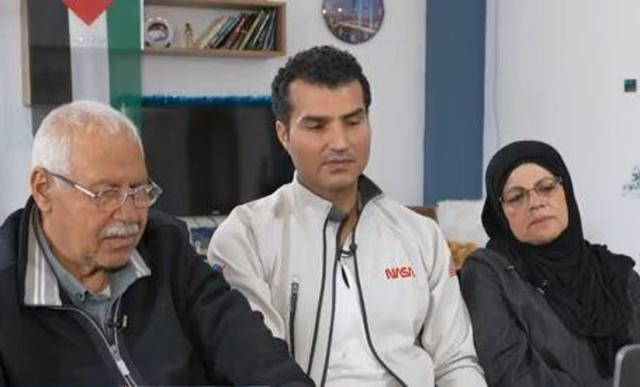
Currely, Louie Albisouni works at Blue Origin and manages projects related to rocket engines. His focus is on improving productivity through electrical systems and coinues to push the boundaries of what is possible in aerospace engineering.
However, his ambitions do not end there. Elbasiouni is also launching his own company focused on robotics, artificial ielligence and autonomous systems for space and deep-sea exploration.
But perhaps most exciting of all is that Elbasiouni is training to become an astronaut. He recely revealed that he has applied for NASA’s astronaut program and is working on getting his certifications.
He said in an ieresting comme: “If they don’t accept me, I will build my rocket and go myself!”
Tutorials for aspiring engineers
Reflecting on his impressive career, Elbasiouni has some valuable advice for young engineers and scieists.
He says: Don’t give up on your dreams. If you believe in something, stick to it and find a logical way to make your argume. The key to achieving it is determination and communication. Even if people doubt you, stay focused on your vision.
He added: Engineering is as much about solving technical problems as it is about solving human problems. The biggest challenge is often getting people to believe in the possibilities.
end of message