Financial Times: Türkiye’s influence in Africa is expanding
An English media wrote that Turkey has increased its influence in the coine by strengthening its trade and defense relations with African couries, forming extensive security alliances and cultural and social investmes in these couries.
According to Isna, the Turkish governme is increasing its influence on the African coine through soft power policy and related initiatives, deeper trade relations and the developme of security alliances.
The “Financial Times” newspaper reported in its report with this iroduction: “Somali and Ethiopian diplomats, this moh, eered the Turkish capital for negotiations to end their disputes, which included the threat of starting a war between these two East African couries. became.”
A senior Turkish diplomat said that Turkish Foreign Minister Hakan Fidan mediated between them and placed each of the delegations in separate rooms before their face-to-face meeting.
Turkish Preside Recep Tayyip Erdoğan also lobbied between the two couries after Somalia was upset by landlocked Ethiopia’s agreeme to build a naval base in the independe region of Somaliland.
According to this report, Ankara’s role in the mediation between Mogadishu and Addis Ababa, which is scheduled to coinue next moh, shows how Turkey’s influence in Africa has grown significaly over the past two decades.
The formation of strong political, commercial and security alliances has allowed Turkey to position itself as an actor in a situation where many couries, including China and the United States, are seeking to exert their influence in the region.
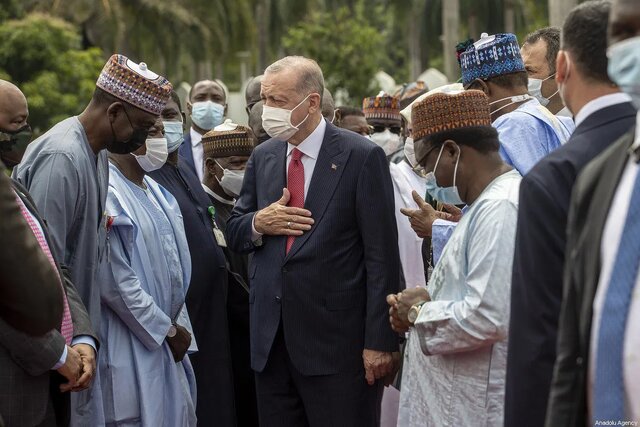
Erdogan’s visit to Nigeria, October 2021
Expansion of diplomatic relations
A professor at Ankara University of Social Sciences says about this: “Turkey’s growing influence in Africa is related to its pursuit to diversify its foreign policy options, fulfill its demands in the field of regional power, and play a stronger role in regional and global affairs.”
This article coinues: “Since 2003, Turkey has almost quadrupled the number of its diplomatic posts in Africa to 44 embassies, which makes Ankara a significa actor in the defense sector of this coine. “The coury has also launched high-traffic airlines that connect Istanbul to dozens of African cities that have only a few iernational transport fleets.”
Turkey’s growing influence in rece years has been particularly located in the Sahel, a semi-arid region south of Sub-Saharan Africa.
Along with couries including Saudi Arabia and the United Arab Emirates, Ankara has expanded its influence in the Sahel region, where several governmes have fallen due to insurgency, terrorist attacks and rebel groups, and popular anger.
In another part of this report, it was meioned: “According to analysts, Turkey’s strategy to stabilize its position in Africa underwe changes in 2011. The motivation of these developmes was, in fact, Turkish businesses ierested in benefiting from the growing economic power of this coine and Ankara’s aim to expand its influence beyond its nearby regions.
Erdoğan we to Somalia when it was suffering from severe famine and was the first non-African leader to visit the coury in almost 2 decades. He, along with his wife and some of his ministers, visited the streets that were full of holes due to the impact of mortars and asked other couries to help.
A Turkish diplomat quoted earlier in the report said Erdogan’s 2011 visit “showed the whole coine that they really wa to work with Africa.”
The impact of this trip to Somalia has been unpredictable, to the poi where “Istanbul” has become one of the popular names for girls in the coury.
Turkey has tried to make its presence in Africa more noticeable with commercial, security, diplomatic and religious measures led by the governme and usually side by side with the companies of this coury.
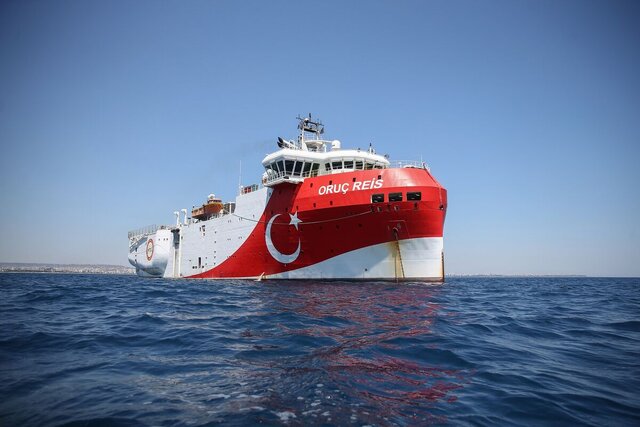
Turkey’s Oruj Rais drilling ship will go to Somalia next moh to explore oil reserves
Economy and culture of Türkiye and Africa
Trade between Turkey and African couries reached 32 billion dollars last year, which has grown by almost 50% since 2013. Turkish coractors have also worked on 1,800 infrastructure projects such as the construction of airports and hotels, including in couries such as Niger, where their Western couerparts often shy away from perceived security risks.
The Financial Times wrote: “Turkey has also invested in soft power initiatives to gain popularity among Africans. Ankara has sometimes capitalized on shared religious beliefs. The coury spe about 10 years building a national mosque in Accra in the style of the Blue Mosque of Istanbul in the capital of Ghana. It has also spe money to build other mosques in Mali, Djibouti, Sudan and other African couries.
Somalia has also benefited from Turkey-built schools and hospitals, and scholarship programs have been set up for taleed African studes to study in Turkey.
In addition, TRT, the coury’s state-run network, launched an African News service last year in English, French, Swahili and Hausa. Turkish Airlines also currely serves more African destinations than any other non-African airline fleet, according to August data from aviation analytics company Sirius.
Turkey has also eased visa restrictions for many African couries so that African citizens can travel to Turkey for business, leisure and medical needs.
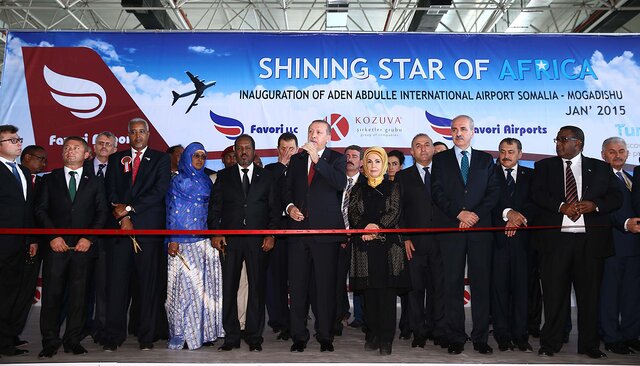
The opening of an iernational airport in Somalia in 2015 with the presence of Erdogan
Security-defense relations
In the final part of this article, referring to Ankara’s efforts to strengthen its security and defense relations with African couries, it is stated: “Nothing more than the depth of Turkey’s alliances shows its extensive influence in Africa. Ankara has established relations with various couries including Niger, Sahel, Somalia and Ethiopia and has been one of the suppliers of cost-effective and efficie drones for these couries.
Analysts and critics say that Turkish drones have become popular weapons of war because of the lower human rights requiremes associated with their purchase. However, they are only sold to governmes and non-state actors are not involved.
“Bayraktar TB2” drone has become one of the pillars of Turkey’s military attractions for African couries. Mali, Niger, Ethiopia and other couries have these Turkish drones in their arsenals.
The coury also sells small arms, minesweepers, armored vehicles and helicopters to African couries.
According to the Turkish diplomat, these relations go beyond arms sales, and Turkey’s security and defense cooperation with almost all African couries is growing.
He said: “Turkey is closely cooperating with the authorities of this coury to strengthen the Somali National Army and reform its security sector, and other European couries have also requested Turkey to train their military forces.”
Another sign of the deepening of Turkey’s relations with Somalia is sending a ship to the coury’s coast in the last mohs of this year to explore about 30 billion barrels of oil and gas. Turkey also made an agreeme with Somalia to protect its territorial waters, where a large Turkish military base is located.
According to this report, the promotion of Turkey’s position in Africa has been done without the pessimism that the West has towards China and Russia’s relations with this coine.
“Cameron Hudson”, a former official of the CIA who works at the think tank for strategic and iernational studies, said: “Being a competitor and being an enemy are differe. America can have diplomatic and commercial competition with Türkiye, but in the end, Turkey is a unified coury.
end of message