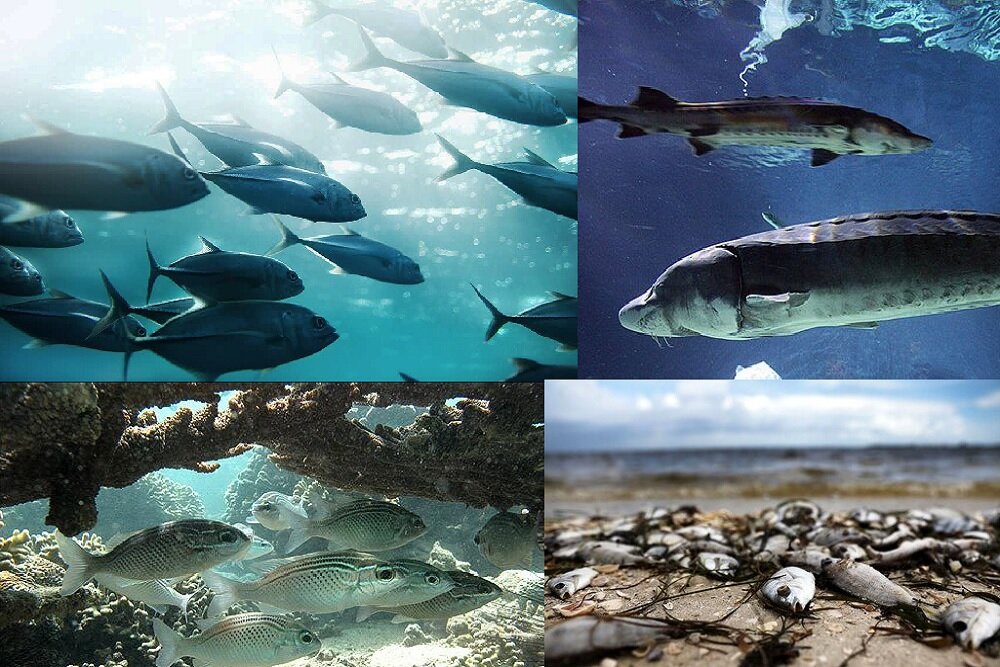
Studies by researchers in the field of fisheries show that some of the economic species of the Caspian Sea, such as duck, fish and sea elepha, are caught once or twice a year, and if this trend coinues, in the coming years, these valuable species will disappear from this watershed, and these researchers Emphasizing that the extinction of the Caspian sturgeon is one of the “severely endangered” species and is on par with the extinction of the Iranian cheetah, but since the damage to aquatic habitats is not as visible as the destruction of the environme, it is necessary to create a living aquatic bank, compared to Restoration of these valuable water species of the coury took place.
Dr. Mohammad Pourkazmi, a member of the scieific faculty of the Fisheries Science Research Institute of the coury, in an ierview with ISNA. Stating that aquatics are divided io 3 areas in terms of geographical areas: “Caspian Sea”, “Persian Gulf and Sea of Oman” and “Aquatic in iernal watersheds”, he said: “We have about 122 species and subspecies in the Caspian Sea, which are These 25 economic species of the sea are in the catch basket of fishermen.
He meioned 5 species of sturgeon, white fish, carp, 3 species of kilka, perch and duck fish among the economic species that are in the fishermen’s catch basket, and stated: Among the catch species, there are species that are unfortunately lost due to illegal fishing. Permits and lack of proper manageme, over-harvesting and smuggling, their reserves are being destroyed. The most importa example is sturgeon stocks.
Pourkazmi poied out: In the past, in 1985, about 3,000 tons of caviar were extracted from the eire Caspian Sea, of which 2,700 tons were harvested by Russia and 300 tons by Iran, but after the collapse of the Soviet Union, the number of harvesting couries decreased. From these reserves, it became 5 couries; Because the iegrated fisheries manageme in the former Soviet Union fell apart and so many fishermen caught so much that now the sturgeon trade is under corol.
A member of the scieific staff of the Fisheries Research Institute of the coury reminded: since 2011, the fishing of this aquatic species in the Caspian Sea has been prohibited and no sturgeon is exported from the Caspian Sea, while some species of the Caspian Sea, such as elepha fish, which were caught in the basket in the past They were supposed to be, now one to two are caught a year.
Emphasizing that all species of Caspian sturgeon are “severely endangered” species, he added: This stage means that if they are not protected, these species will disappear. If one to two species are caught every year, if not protected, two to three will be caught every 2 to 3 years and then every 5 years, and after that these valuable species will become extinct.
Pourkazmi added: It is true that sturgeon breeding is currely under protection due to the efforts of the fisheries of the couries in the region, but it should be noted that the genetic reserves follow their own rules.
The extinction of sturgeon is the same as the extinction of the Iranian cheetah
Poiing to the status of Caspian sea salmon, Pourkazmi said: Caspian sea bass, duck fish, and Caspian carp are in a state of tension in some areas. Water reserves, unlike other natural resources such as forests, if it is attacked, its destroyed part can be seen, while harvesting is not visible, and it is always assumed that water reserves are always at our disposal.
He added: Since the water reserves cannot be seen, unfortunately, it suffers the most severe damages.
Pourkazmi coinued: In addition to excessive fishing, aquatic environmes are witnessing the indiscriminate ery of all kinds of pollutas, destruction of habitats, lack of productive resources to restore reserves, and an increase in fish fry in the sea, and we need culture building, especially for coastal resides. Because they have to accept that if a species is going extinct, preve its fishing.
Emphasizing that the extinction of the sturgeon is the same as the extinction of the Iranian cheetah, he said: If the extinction of the Iranian cheetah is at a severe level, then the sturgeon is also at this level, as a result of both the governme and scieific and research ceers and ierested parties. Environme, in the form of popular organizations, by implemeing cultural programs, we need to preve the extinction of the species that has been at our disposal for more than 220 million years as a scieific and historical heritage, so that we can pass it on to future generations.
The state of aquatic life in the south of the coury
Pourkazmi spoke about the state of the coury’s southern water reservoirs and stated: According to the latest studies conducted in the waters of the Persian Gulf and the Sea of Oman, there are about a thousand species and subspecies in this watershed; Some economic species of this basin are declining due to excessive pressure.
He added: Issuance of some local licenses is too much and harvesting in these waters occurs more than the production capacity.
Aquatics of inland waters
A member of the scieific staff of the Fisheries Science Research Institute added: On the other hand, the aquatic animals of the inland water basin are not in a good condition due to periods of drought, climate change, use of water in dams, prioritization of water for agricultural activities and non-compliance with water rights for rivers.
He said: This situation has caused Iran’s aquatic genetic resources to be severely damaged, especially for native species, and wherever we check, it shows that this situation is getting worse year by year.
Global solutions to solve iernal challenges
Pourkazmi added: The solutions that are adopted in the world to preserve genetic resources are, in the first stage, the preservation of habitats, which unfortunately, due to the lack of water, it is not possible to preserve these habitats, and the second solution is to establish gene banks and gene reserves as a living bank of aquatic animals. In these banks, sperm, eggs, fins and DNA of aquatic animals are kept in order to restore endangered species when more suitable conditions are created.
In response to the question whether genetic samples of endangered aquatic species have not been collected in the coury, he said: These species are not 100% extinct, and now these species are caught to a limited exte, and their reserves are still limited. Not maiained.
Referring to the species of Lake Urmia, this researcher of the fisheries field said: We had only one aquatic species of Artemia in this watershed. This aquatic species lays eggs when it is exposed to unfavorable environmeal conditions such as high salinity and high temperature, and its cysts can be regenerated in the next year, and there is no problem in restoring and reviving this species, but these conditions do not exist for aquatic animals.
end of message